A Tropical Butterfly That Barely Ages Could Hold Clues to Longevity
Heliconius butterflies live up to three times longer than their close relatives — and one species shows almost no physical decline with age, a new Nature Communications study reports.
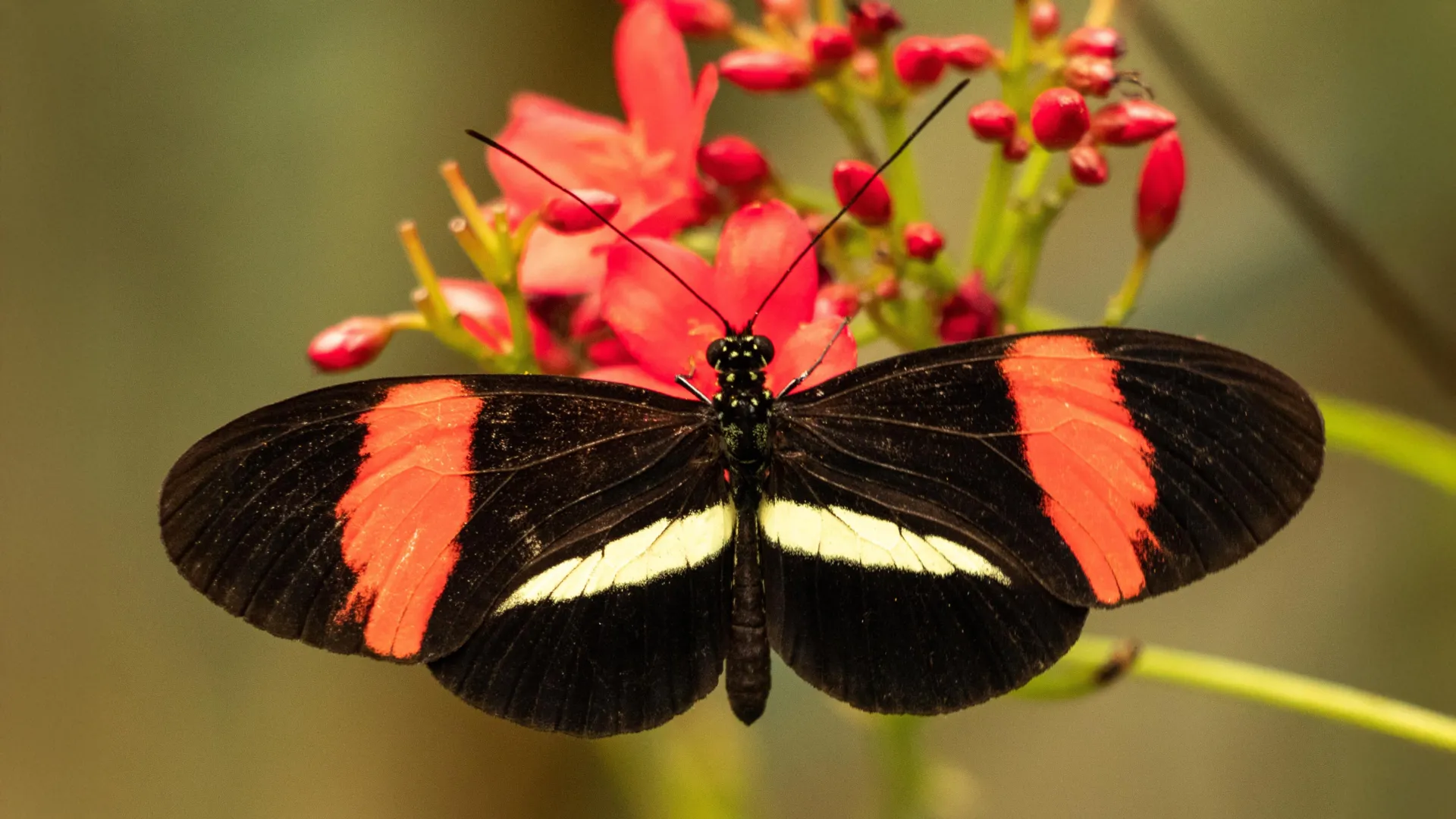
A tropical butterfly that seems to defy the normal rules of aging may offer fresh clues to the biology of longevity. A new study finds that Heliconius butterflies have evolved an extraordinary lifespan compared with their closest relatives, living about three times longer on average — and up to 25 times longer in the most extreme cases.
Even more striking, some Heliconius species show little detectable physical decline as they age, holding onto muscular function and body mass well into what would count as advanced old age for an insect. At least one species, Heliconius hecale, appears to show little or no physiological decline at all, a pattern of near-negligible aging that is rare in the animal kingdom.
The research, published in Nature Communications, was led by Dr. Jessica Foley, a postdoctoral scholar at the University of Bristol, alongside colleagues from the university and the Smithsonian Tropical Research Institute. The team compiled decades of butterfly-house records, wild field studies and laboratory experiments to compare lifespans across the group and pin down just how unusual the Heliconius butterflies are.
The numbers are dramatic. The longest-lived species in the study, Heliconius hewitsoni, reached a maximum lifespan of 348 days, while one of its shortest-lived relatives, Dione juno, survived just 14 days — a 25-fold difference in maximum lifespan between butterflies that are evolutionary cousins. That gap makes the genus a natural laboratory for asking what biological changes allow some species to live so much longer than others.
Part of the answer appears to lie in diet. Unlike most butterflies, Heliconius feed on pollen as well as nectar, a protein-rich habit linked to their extended lifespans. But the study found that the longevity persists even when pollen is removed, indicating that both dietary factors and deeper evolved mechanisms are at work — the butterflies are not simply living longer because they eat better.
Because aging is governed by processes shared across much of the animal kingdom, researchers hope that understanding how a butterfly slows or sidesteps physical decline could illuminate the broader biology of growing old. The Heliconius group, with its huge spread of lifespans and its resistance to the usual wear of age, gives scientists an unusually clear window into how evolution can rewrite the timetable of a life.