Scientists Flip a Hidden Switch and Regrow Bone and Joint Tissue in Mice
Texas A&M researchers used a two-step growth-factor treatment to coax adult mice to rebuild bone, joints, ligaments and tendons after amputation — evidence that mammals may retain a dormant capacity to regenerate.
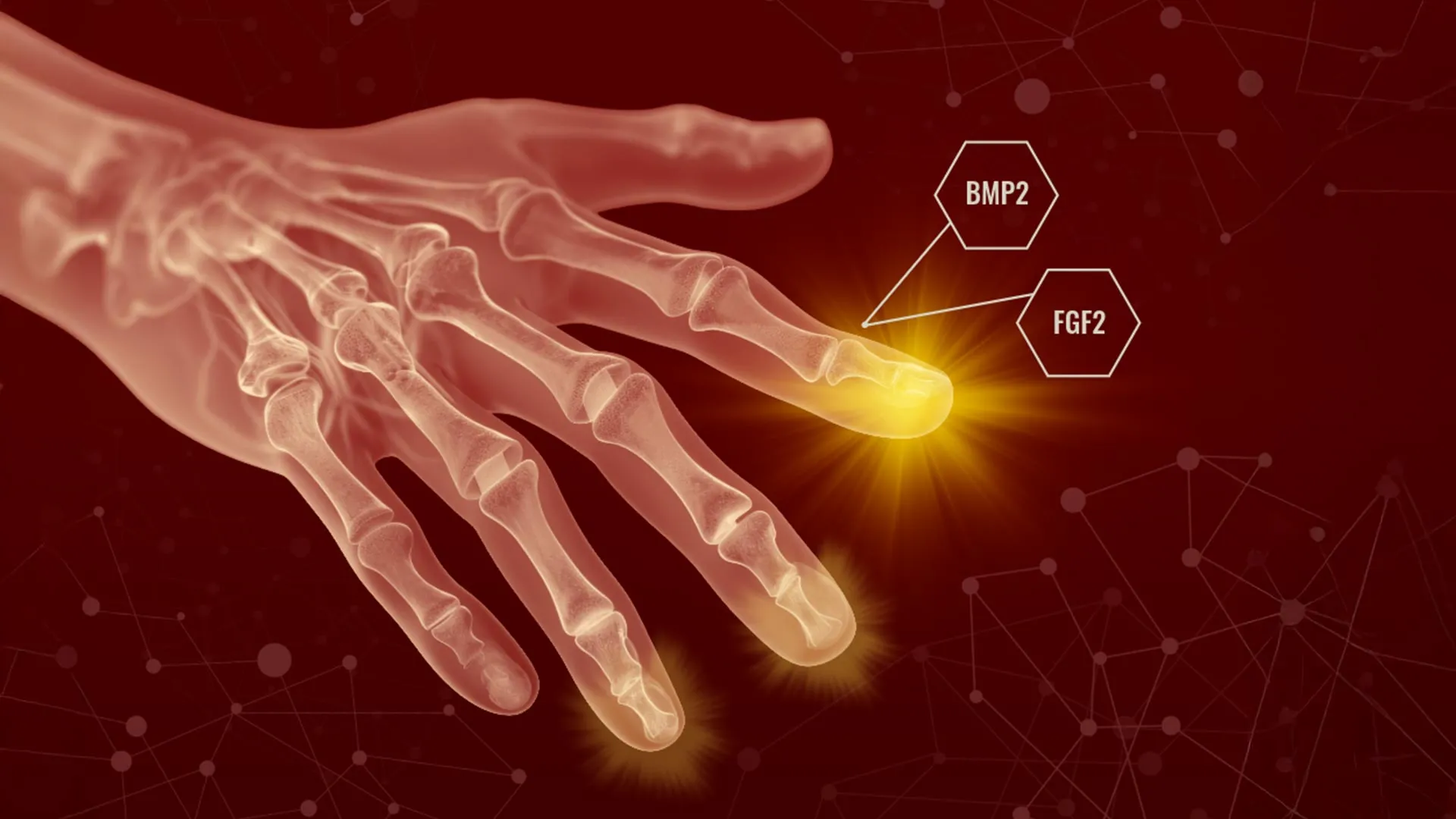
The ability to regrow a lost body part has long seemed the exclusive province of salamanders and starfish. But a new study suggests that mammals — humans included — may carry the same machinery, simply switched off, and that the right molecular nudge can switch it back on.
Researchers at Texas A&M University's College of Veterinary Medicine and Biomedical Sciences report that they triggered the regrowth of bone, joint structures, ligaments and tendons in mice following amputation, without transplanting a single external stem cell. The work was led by Dr. Ken Muneoka and Dr. Larry Suva and published in the journal Nature Communications.
The key was a two-stage treatment delivered in sequence. The team first applied fibroblast growth factor 2, or FGF2, to coax wound cells into forming a blastema-like structure — the cluster of unspecialized cells that amphibians use to rebuild limbs. They then added bone morphogenetic protein 2, or BMP2, to direct those cells to build new tissue.
"You don't have to actually get stem cells and put them back in. They're already there," Muneoka said, describing the latent regenerative potential the experiment appeared to awaken. Suva put it more bluntly: "The capacity is not absent — it's just obscured."
The two-step strategy is notable in part because both ingredients already have a foothold in medicine. BMP2 is approved by the Food and Drug Administration for certain bone-grafting procedures, and FGF2 has been tested in human clinical trials, which could ease the path toward eventual human applications.
Salamanders and other champion regenerators rebuild lost limbs by forming a blastema and then carefully reactivating the developmental genes that built the structure in the embryo. Mammals, by contrast, typically respond to amputation by sealing the wound with scar tissue — a fast but final repair. The Texas A&M work suggests that the difference may lie less in missing biological hardware than in which programs the body chooses to run, and that the right sequence of signals can tip wound cells toward rebuilding rather than scarring.
For now, the results are confined to mice and to the regrowth of specific tissues rather than entire limbs. But the findings strengthen a provocative idea building across biology: that the dramatic regeneration seen in some animals reflects programs that mammals never fully lost. If researchers can learn to coax those programs awake reliably and safely, the implications for treating amputations, severe injuries and degenerative joint disease could be profound.
Originally reported by ScienceDaily.