Scientists Devise a Statistical 'Fingerprint' That Could Reveal Alien Life in Existing Mission Data
A team at UC Riverside and the Weizmann Institute found that living chemistry spreads amino acids more evenly than non-life — a test that could be run on data from Mars, Europa and Enceladus.
Searching for life beyond Earth may come down not to finding a single exotic molecule, but to spotting a statistical pattern hidden in ordinary chemistry. Researchers say they have identified a mathematical "fingerprint" that distinguishes the chemistry of living systems from that of lifeless processes — and that it could be applied to data missions have already collected.
The work, led by first author Gideon Yoffe of the Weizmann Institute of Science with co-author Fabian Klenner of the University of California, Riverside, focuses on how the building blocks of life are distributed. The team found that living organisms tend to produce amino acids that are both more varied and more evenly distributed than those generated by non-biological chemistry. Fatty acids, intriguingly, show the opposite tendency: nonliving processes create more uniform distributions than life does.
"Life also produces an organizational principle that we can see by applying statistics," the researchers said, capturing the central insight — that biology leaves a telltale signature not in any one compound, but in the overall balance and spread of the molecules it makes. That makes the test harder to fool than a search for individual "biosignature" molecules, which can sometimes be produced by geology or chemistry alone.
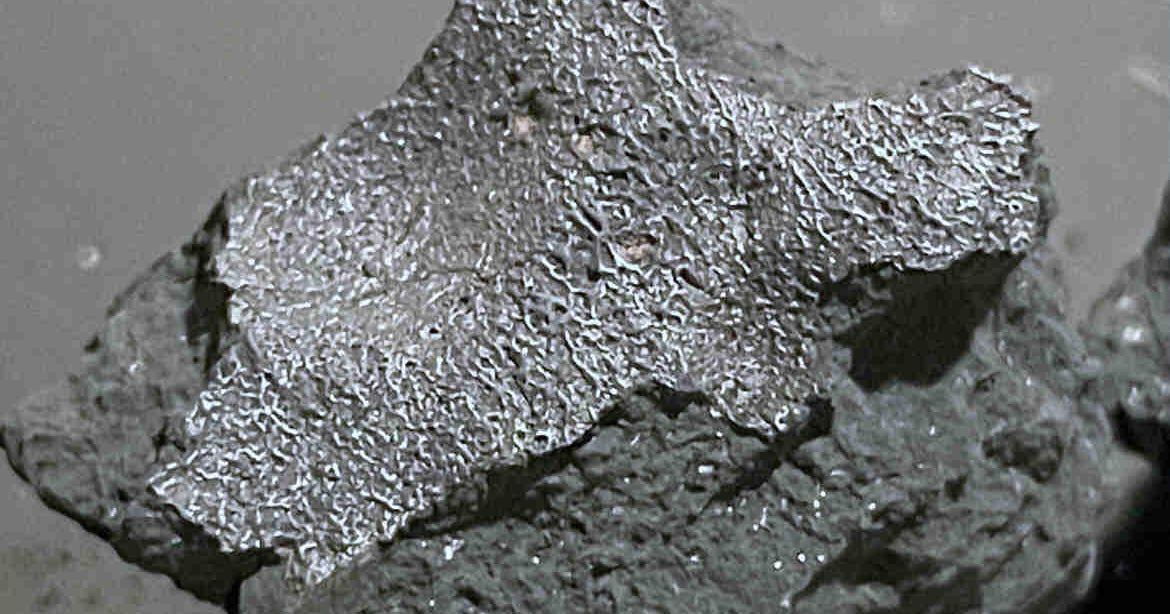
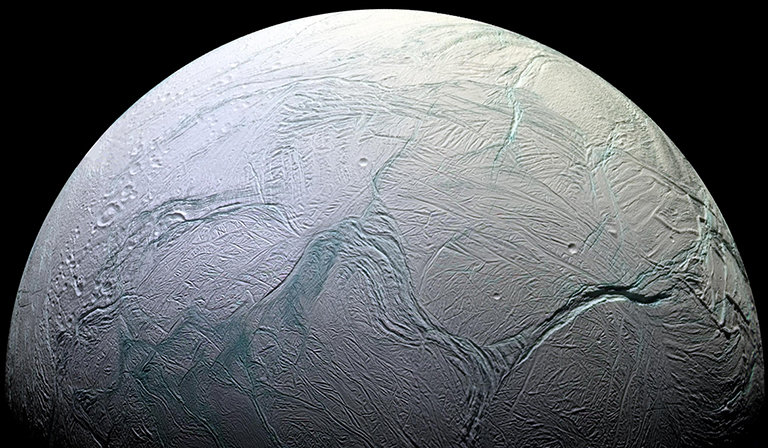
Crucially, the method does not require new instruments. Because it relies on statistical analysis of chemical measurements that spacecraft are already capable of making, it could be turned loose on data gathered from Mars, Jupiter's icy moon Europa and Saturn's geyser-spouting moon Enceladus — all prime targets in the hunt for extraterrestrial life. That compatibility with existing and planned missions makes the approach unusually practical.
The approach speaks to a long-standing problem in the search for life: almost any single molecule once hailed as a potential "smoking gun" can also be produced by non-living chemistry, leaving scientists wary of false alarms. By looking instead at the statistical shape of an entire chemical inventory, the new method aims to sidestep that trap. It could be brought to bear on plume samples like those Cassini collected at Enceladus, on measurements from NASA's Europa Clipper, and on data from Mars rovers already combing the planet's surface for organic chemistry.
The findings were published in the journal Nature Astronomy. Scientists stressed that no claim of life is being made; rather, the team has handed astrobiologists a sharper tool for interrogating whatever chemistry future probes scoop up from the worlds most likely to harbor it — and perhaps for taking a fresh look at measurements already sitting in mission archives.