Scientists Spot Hidden Skin Damage Long Before It Becomes Visible, Using a Collagen 'Twist'
A new optical technique detects the loss of collagen's molecular chirality — an early warning sign of aging that appears before fibers visibly thin or break.
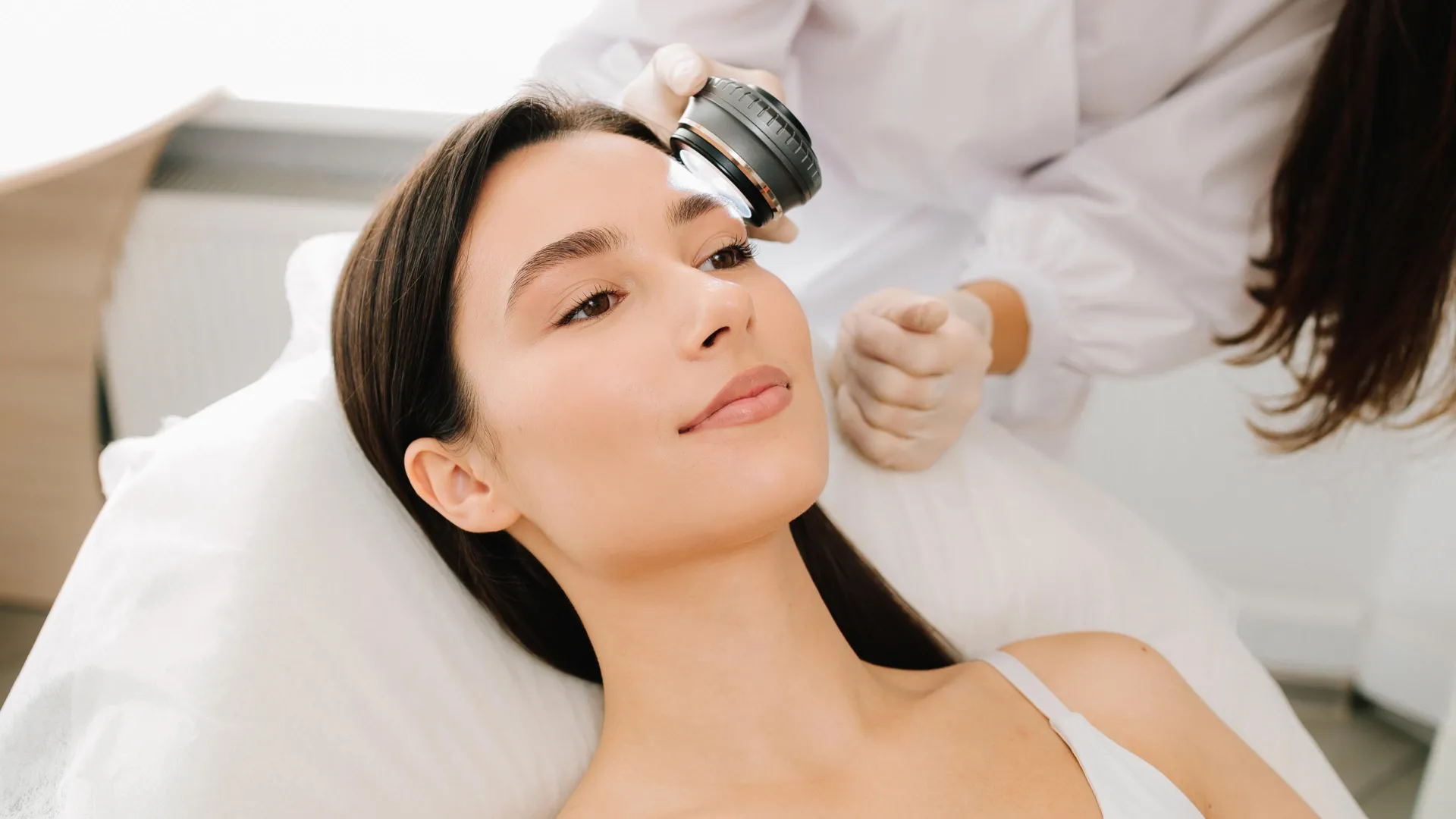
Scientists have found a way to detect skin damage at its earliest, invisible stage — before collagen fibers visibly thin, fragment or lose their connections — by tracking a subtle change in the molecule's microscopic "twist." The advance could eventually help doctors and researchers catch the first signs of aging and disease in tissue that still looks perfectly healthy.
An international research team led by Hiroshima University reported the technique in the journal ACS Nano on July 16. Their central insight is that healthy collagen has a highly ordered molecular chirality — a consistent handedness or twist — that produces a strong, distinctive optical signal. As collagen begins to age or deteriorate, that twist is gradually lost long before the fibers themselves start to break apart.
In practical terms, that means skin tissue can appear structurally intact under conventional imaging even after important changes have already begun at a deeper, molecular level. The ordered twist erodes first; the visible damage comes later. By measuring the twist directly, scientists can effectively read an early warning sign that standard scans miss.
To capture it, the team combined advanced optical imaging with chiroptical spectroscopy, using techniques known as synchrotron radiation vacuum-ultraviolet circular dichroism, or SR-VUVCD, and multi-dimensional quantum cascade laser vibrational circular dichroism, or MultiD-QCL-VCD. The combined framework let the researchers map both the presence of collagen and the integrity of its chiral structure within the exact same slice of tissue.
Collagen is the most abundant protein in the human body and the scaffolding that gives skin its strength and elasticity, so a tool that flags its breakdown early could have wide uses. Potential applications range from cosmetics and dermatology, where the method could test how treatments protect or restore skin, to medical research on wound healing, scarring and diseases that attack connective tissue.
The researchers cautioned that the approach relies on sophisticated instruments and, for now, is a laboratory technique rather than a bedside test. But by demonstrating that the loss of collagen's molecular twist precedes visible damage, the study opens a new window onto how tissue ages — and offers a target for spotting trouble while there may still be time to intervene.