Paleontology Rocked by Discovery of Organic Molecules in 66-Million-Year-Old Dinosaur Bones
Scientists find compelling evidence that Edmontosaurus fossil retains original collagen proteins, overturning long-held beliefs about fossilization.
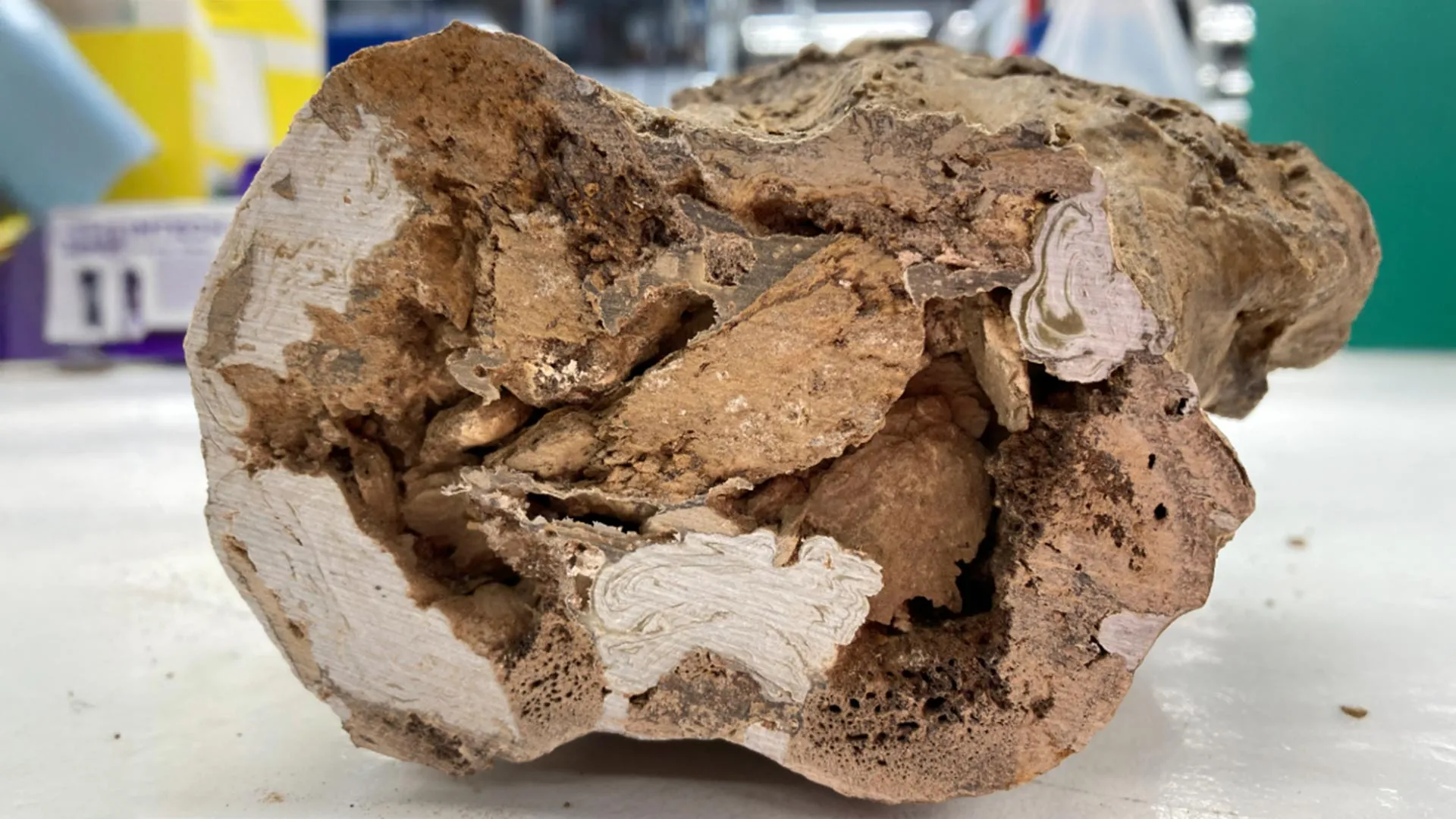
Scientists have uncovered extraordinary evidence that dinosaur fossils may still contain traces of their original proteins, fundamentally challenging the long-standing belief that fossilization destroys all organic material over geological time scales. In a remarkably well-preserved Edmontosaurus fossil from South Dakota's Hell Creek Formation, researchers detected remnants of collagen—the primary structural protein found in bone—using advanced mass spectrometry and protein sequencing techniques.
The 22-kilogram Edmontosaurus sacrum, representing part of the duck-billed dinosaur's hip region, dates back approximately 66 million years to the end of the Cretaceous Period when these plant-eating giants lived alongside Tyrannosaurus rex. The University of Liverpool-led research team employed multiple independent testing methods, including several forms of mass spectrometry and chemical analysis, to confirm the presence of degraded collagen fragments embedded within the fossilized bone matrix.
Professor Steve Taylor, chair of the Mass Spectrometry Research Group at Liverpool's Department of Electrical Engineering & Electronics, emphasized the significance: "This research shows beyond doubt that organic biomolecules, such as proteins like collagen, appear to be present in some fossils. Our results have far-reaching implications. Firstly, it refutes the hypothesis that any organics found in fossils must result from contamination."
The discovery adds powerful support to controversial claims that have divided paleontologists since the early 2000s, when paleontologist Mary Schweitzer first reported soft tissue structures in Tyrannosaurus rex fossils. Critics had argued such findings represented modern contamination or bacterial residue rather than authentic dinosaur molecules, but the new Edmontosaurus analysis used multiple independent methods specifically designed to rule out contamination.
UCLA researchers also identified hydroxyproline, an amino acid strongly associated with bone collagen, providing additional confirmation of genuine protein preservation. The findings suggest that under exceptional preservation conditions, organic molecules can survive far longer than previously thought possible, potentially revolutionizing understanding of the fossilization process and opening new avenues for studying ancient life through molecular paleontology.