A T. Rex Tooth Lodged in a Dinosaur's Face Captures the Final Moments of a Prehistoric Attack
A duck-billed Edmontosaurus skull from Montana still carries the broken tooth of its attacker — rare, direct evidence of how the tyrant king hunted.
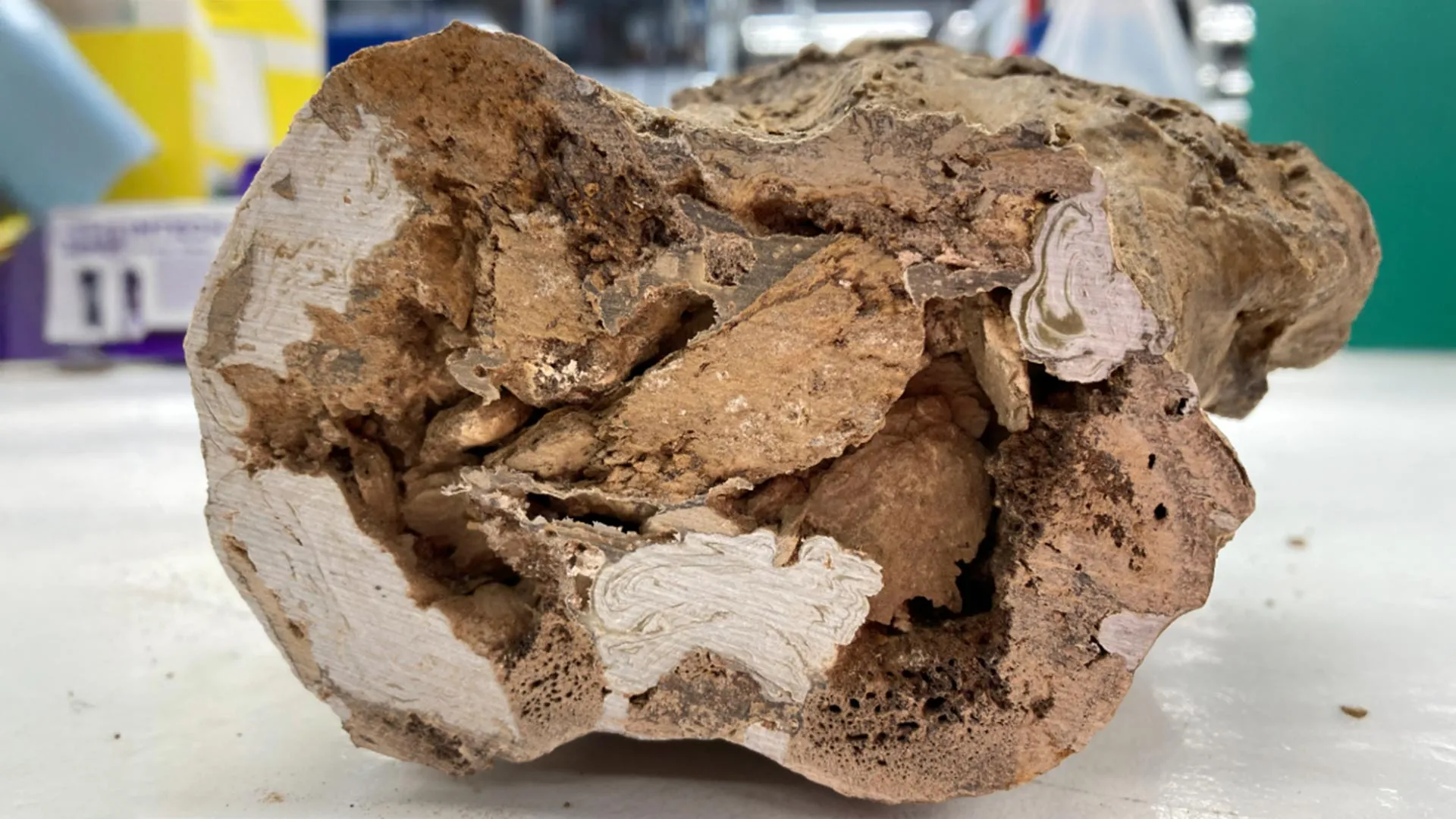
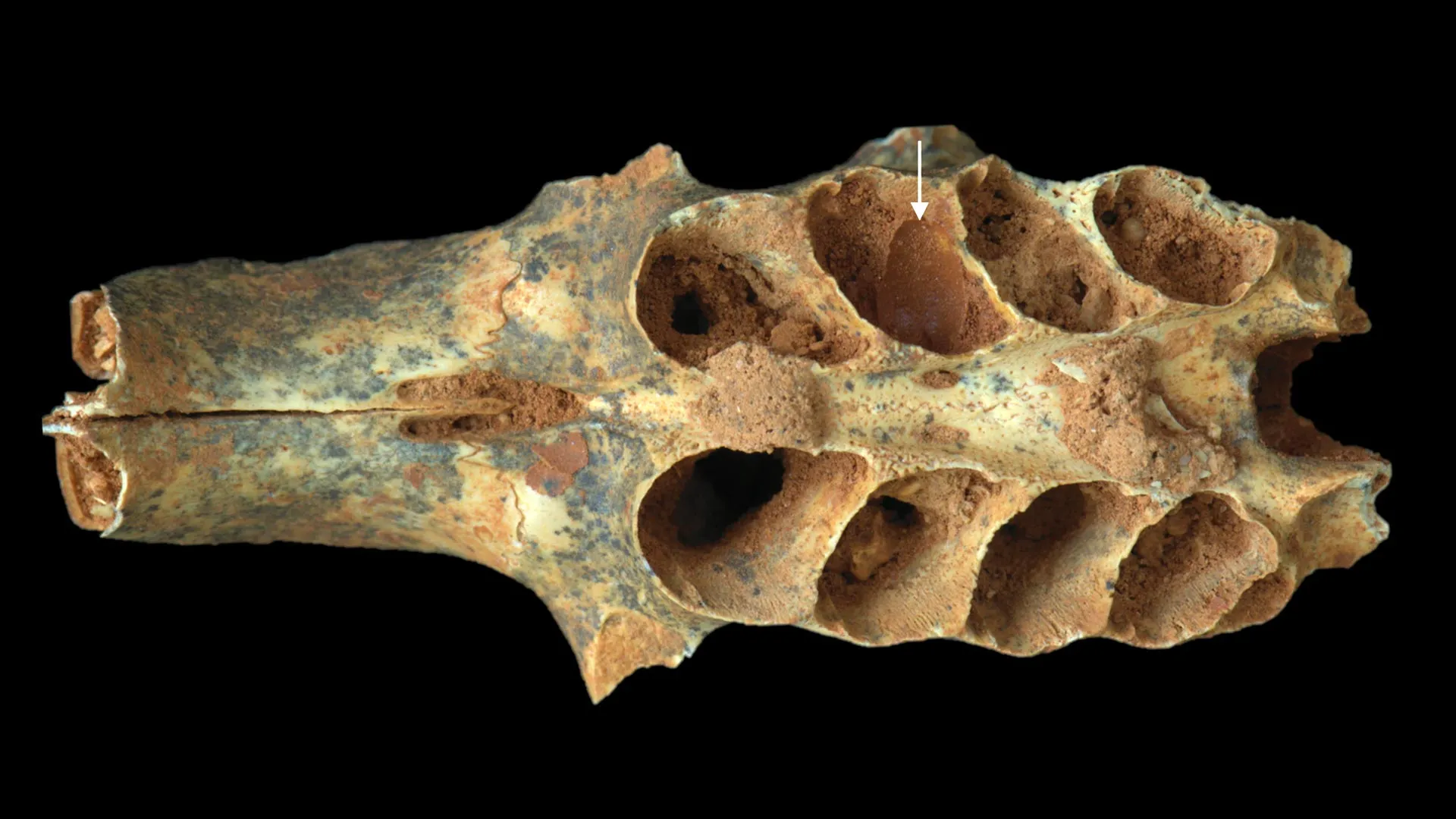
A fossilized dinosaur skull with a broken Tyrannosaurus tooth still buried in its face is giving scientists an extraordinarily rare glimpse of a violent predator-prey encounter frozen in stone some 66 million years ago.
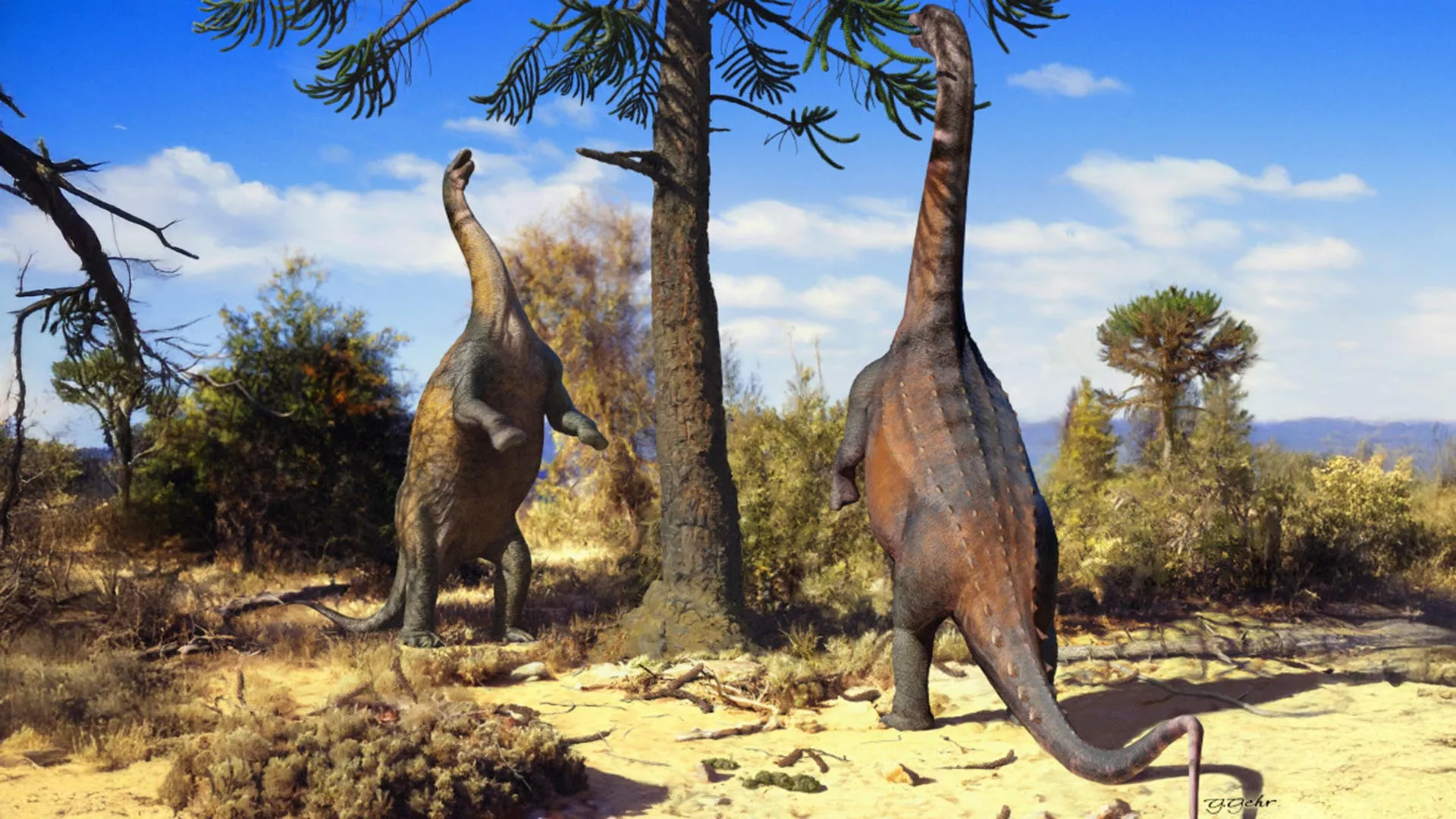
The skull belongs to an Edmontosaurus, a large, plant-eating duck-billed dinosaur that shared its world with Tyrannosaurus rex. Researchers uncovered the nearly complete skull in 2005 in the Hell Creek Formation of eastern Montana, and it now resides in the paleontology collection of the Museum of the Rockies. One feature immediately sets it apart: a tyrannosaur tooth, snapped off at the crown, lodged directly in the animal's face.
The find is described in a study titled "Behavioral implications of an embedded tyrannosaurid tooth and associated tooth marks on an articulated skull of Edmontosaurus from the Hell Creek Formation, Montana," by Taia C.A. Wyenberg-Henzler and John B. Scannella, published in the journal PeerJ. "Finding an embedded tooth is extremely rare," Wyenberg-Henzler said, noting that such fossils offer direct evidence of behavior that bones alone usually cannot provide.
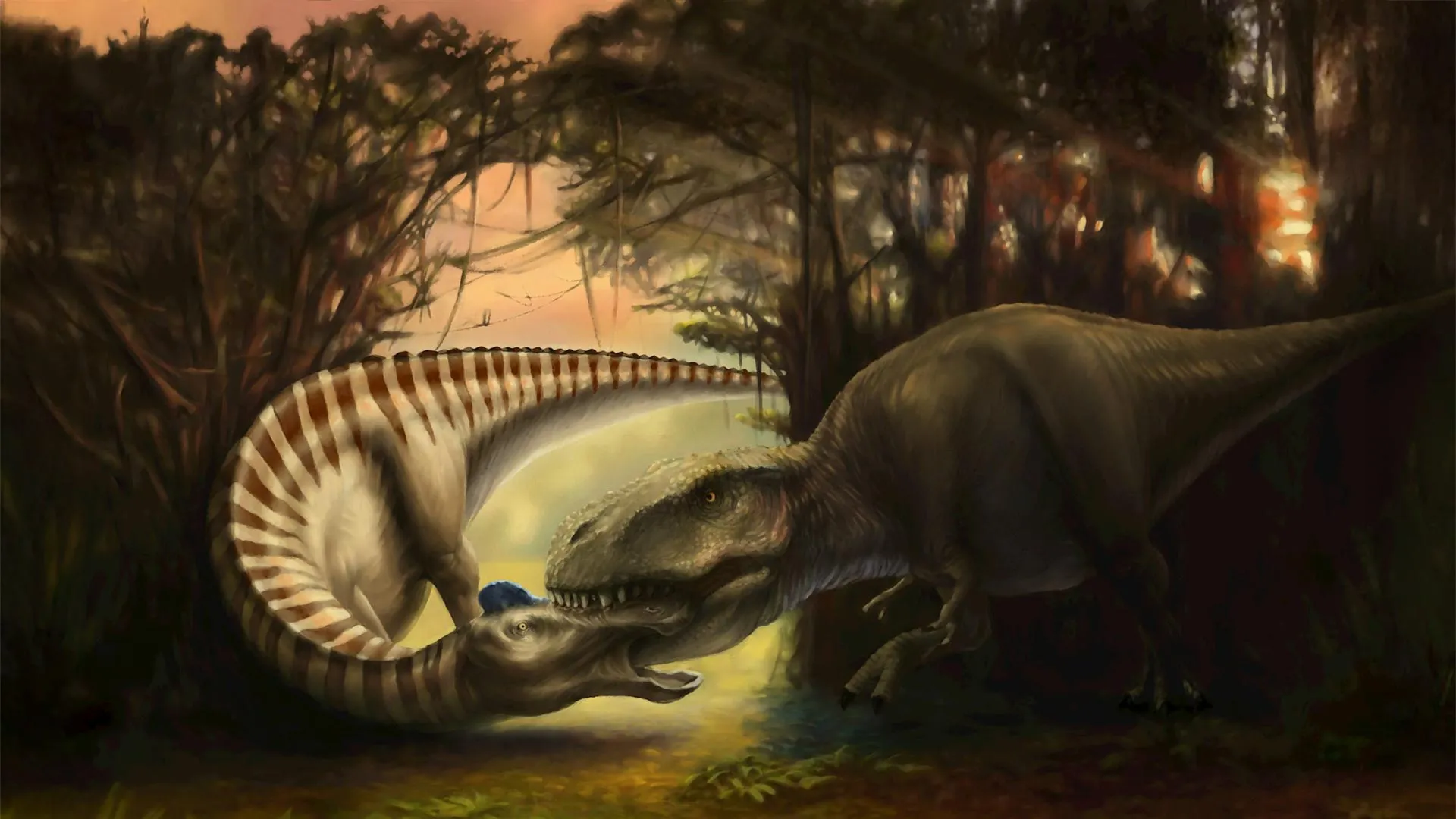
Crucially, the skull shows no sign of bone healing around the embedded tooth. That absence suggests the Edmontosaurus did not survive long after the bite, if it survived the encounter at all — pointing to a lethal or near-lethal attack rather than a wound the animal shrugged off. The tooth marks and the position of the strike suggest the tyrannosaur delivered a powerful, face-to-face bite, clamping down on the front of its prey's head.
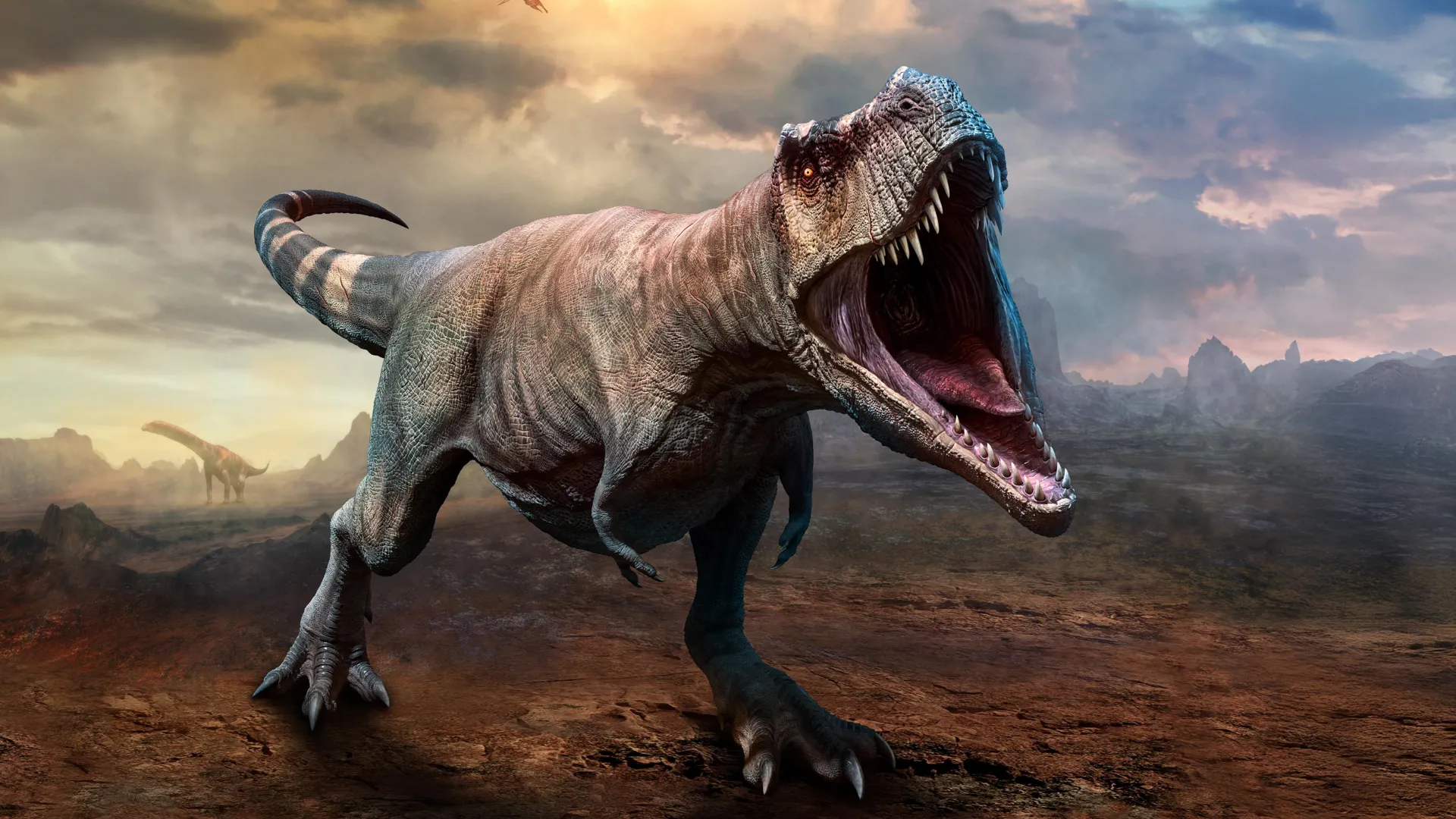
That detail matters because paleontologists have long debated exactly how T. rex made its living — whether it was primarily an active hunter or a scavenger picking over carcasses. Direct traces of predation, like a tooth left behind in a victim, help tip the evidence toward active hunting and reveal the sheer force the animal could bring to bear when it clamped its jaws.
Fossils that record a specific moment of interaction between two animals are among the most prized in paleontology, because they capture behavior rather than just anatomy. Here, in a single articulated skull, scientists can read the story of an attack that played out at the very end of the age of dinosaurs — a snapshot of the tyrant king in action, preserved by the tooth it left behind. Edmontosaurus, which could grow to more than 30 feet long, roamed the floodplains of ancient North America in herds, and its size and numbers would have made it a natural target for the largest predator of its day.