Trees Keep Soaking Up Carbon Long After They Stop Growing, Study Finds
Oaks continue absorbing carbon dioxide for months after their wood stops adding rings — a finding that could reshape how climate models treat forests.
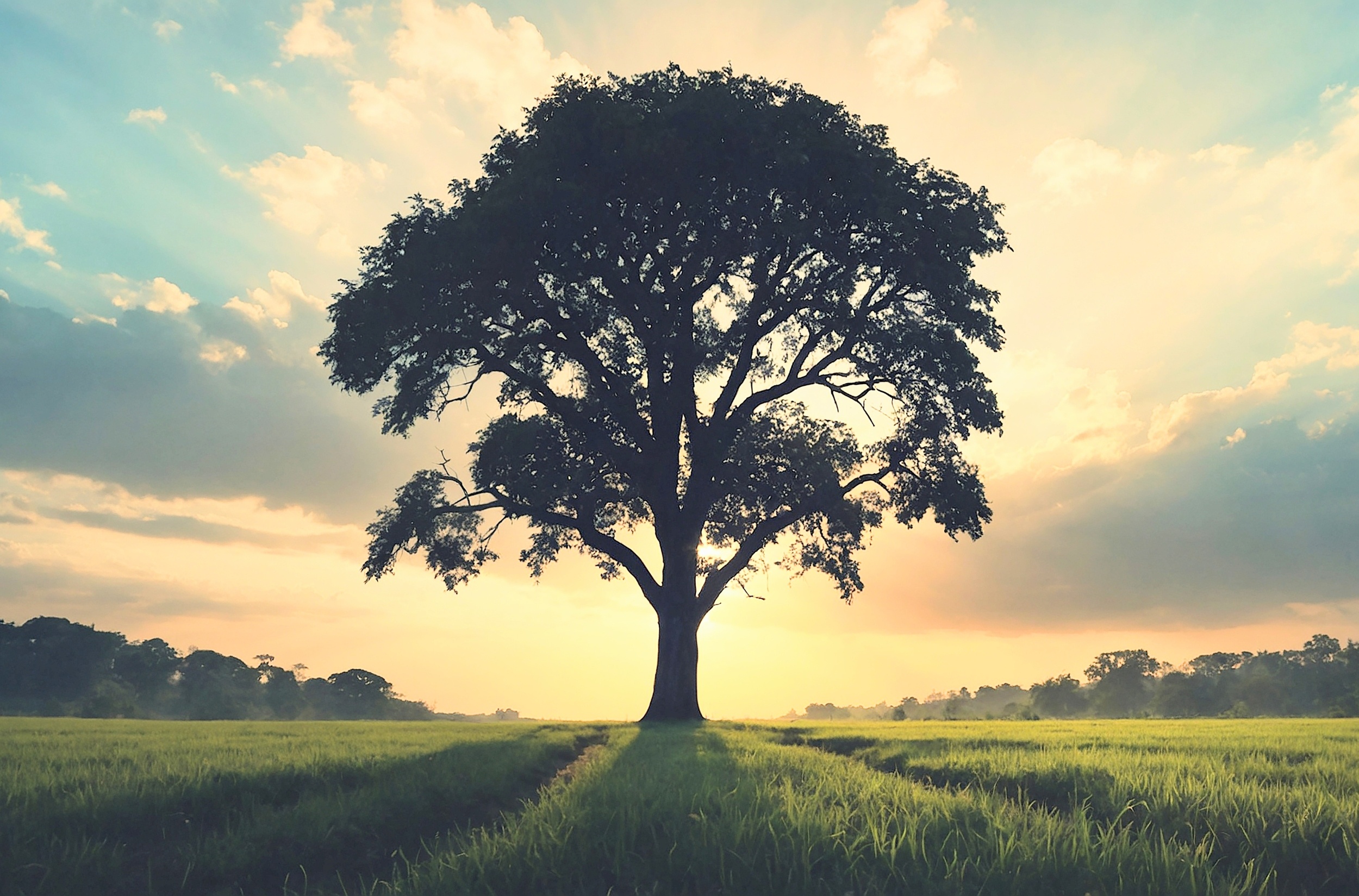
Trees keep pulling carbon dioxide out of the air long after their yearly growth has ended, according to new research that challenges a basic assumption about how forests store carbon. The finding, drawn from a close study of oak trees, suggests that photosynthesis and wood production are far less tightly linked than scientists have long believed — with potentially important consequences for climate projections.
Studying oak trees in the eastern United States, researchers found that the trees generally added wood from May through July, yet continued photosynthesizing well into October. Overall, between 26 and 36 percent of the carbon a tree absorbed over the year was taken in after its measurable growth had already stopped. In the oaks studied, roughly 36 percent of annual carbon assimilation occurred once the season's stem growth had ceased.
That gap upends a long-standing idea that higher rates of photosynthesis translate directly into more tree growth. If the two were tightly coupled, a tree would stop absorbing much carbon once it stopped adding wood. Instead, the trees kept working, raising the question of where all that late-season carbon actually goes.
The researchers suggest the carbon absorbed after growth stops may be routed into leaves, roots, temporary starch reserves, compounds released into the soil, or simply the basic cellular maintenance that keeps a tree alive — rather than being locked away in long-lasting wood. That distinction matters, because wood stores carbon for decades or centuries, while carbon shunted into short-lived tissues or soil compounds may return to the atmosphere far sooner.
The study was led by Mukund Palat Rao, an ecoclimatologist at the Lamont-Doherty Earth Observatory, part of the Columbia Climate School, and published in the journal Science Advances. By separating the timing of photosynthesis from the timing of growth, the work gives scientists a more detailed picture of how a tree manages its carbon budget across a full year.
The implications reach into the climate models that governments rely on to forecast warming. Many of those models assume a straightforward link between how much carbon a forest takes in and how much it stores, an assumption the new results complicate. If a significant share of absorbed carbon does not end up in durable wood, forests may bank less carbon over the long term than some projections suggest — a sobering possibility for strategies that count on trees to help offset emissions.
The researchers cautioned that oaks are only one type of tree and that other species may manage their carbon on very different schedules, making broader measurements essential. Even so, they said, the core lesson is clear: to understand how much carbon a forest truly banks, scientists must track not just how fast trees grow but how long they keep breathing in carbon after growth has stopped.