Invasive Asian Mantises Are Sweeping Across Europe, Devouring Native Wildlife
Two fast-breeding mantis species from Asia have been formally declared invasive as they push northward across the continent, preying on pollinators, small vertebrates and even native mantises.
Two striking praying mantis species from Asia that have quietly spread across Europe over the past decade have now been formally classified as invasive, and scientists warn they are reshaping local ecosystems as they push ever farther north.
The species, Hierodula tenuidentata and Hierodula patellifera, have been present in Europe for roughly ten years, but their populations have surged dramatically in recent years across both Mediterranean and continental regions. In a study published in the Journal of Orthoptera Research, Roberto Battiston and colleagues from the Museum of Archaeology and Natural Sciences "G. Zannato" designated the two mantises as invasive alien species and laid out the mounting evidence that they pose a genuine threat to native wildlife.
Several factors are driving the invasion. A warming climate is opening up new territory to the north, allowing the heat-loving predators to establish themselves in places that were once too cold. The mantises are also prolific breeders: each egg case can produce around 200 young, nearly double the output of native European species, letting their numbers explode once they gain a foothold. Urban and suburban environments appear to suit them especially well, offering abundant hunting grounds and, in the form of garden features like insect hotels, ready-made shelter that extends their active season.
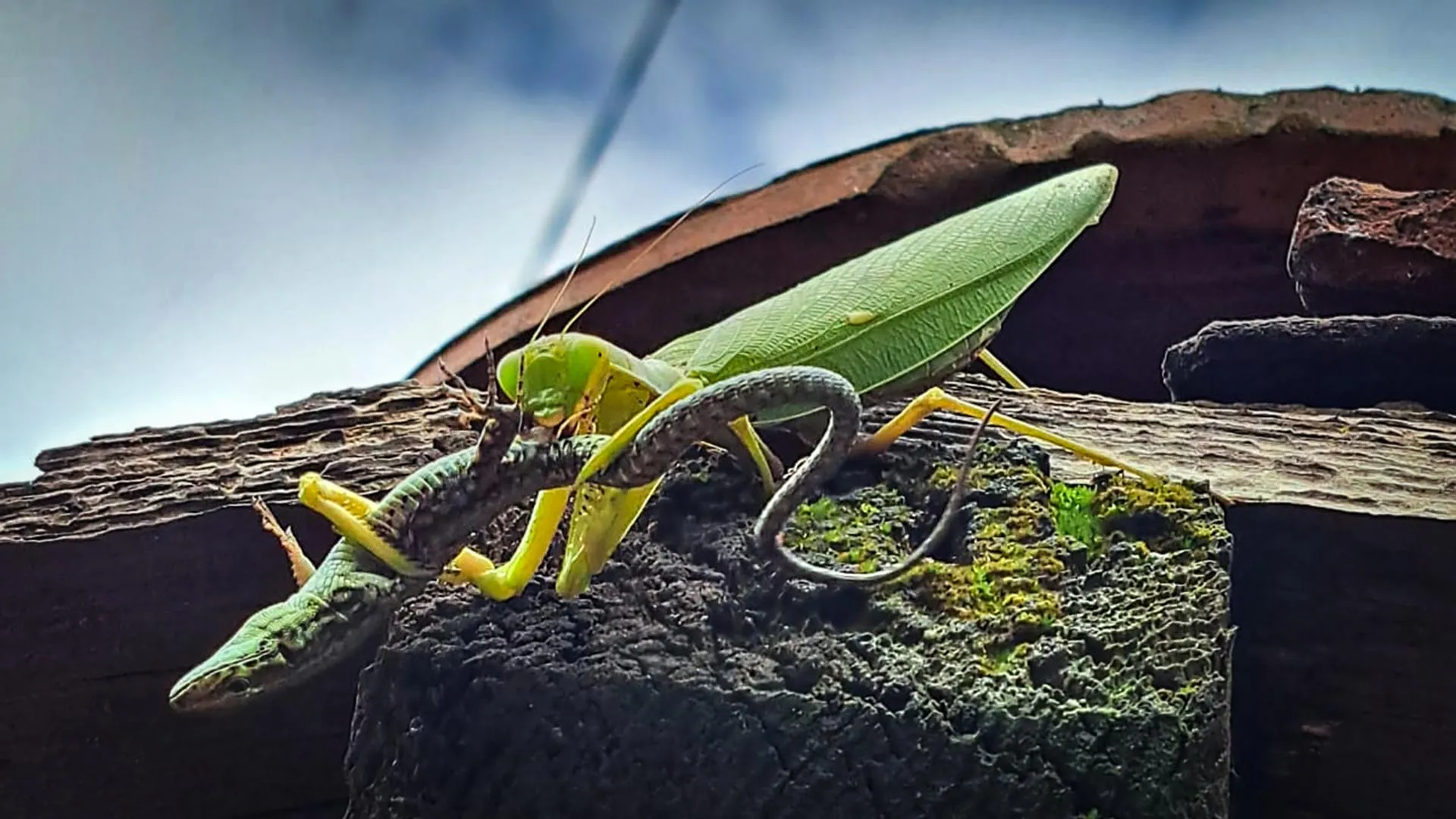
The ecological consequences are broad. The invaders are voracious generalist predators, feeding on native insects, honeybees and other pollinators, and even protected small vertebrates such as tree frogs and lizards. That appetite puts pressure on species already stressed by habitat loss and pesticide use, and threatens the pollinators that many plants and crops depend on.
The newcomers also strike directly at Europe's own mantises. Researchers found that invasive females can attract and then kill native male mantises during fatal mating attempts, a grim dynamic that helps drive down populations of the native European mantis, Mantis religiosa. Combined with straightforward competition for prey, that behavior gives the Asian species a powerful edge.
"They are pushing increasingly further north, thanks to climate change," Battiston said, underscoring that the invasion is unlikely to stall on its own. The study's authors argue that formally recognizing the mantises as invasive is a necessary first step, allowing conservation agencies to monitor their spread, alert the public and consider measures to slow an advance that is already rewriting the balance of predators and prey across large parts of the continent.
The researchers also called on the public to help, urging people who spot the large, distinctive insects to report sightings so scientists can map the invasion in real time. Because the mantises are often moved unwittingly in ornamental plants and shipping, they added, tighter checks on trade could help slow the arrival of new populations — a reminder that many of the most damaging invasions begin quietly, with a single hitchhiking egg case.