The Brain Starts Deciding Far Earlier Than Anyone Thought, a Discovery That Could Reshape AI
Signals tied to decision-making showed up in a region long dismissed as a simple sensory relay, suggesting the brain weighs choices from the very first moments a signal arrives — and hinting at a blueprint for more efficient artificial intelligence.
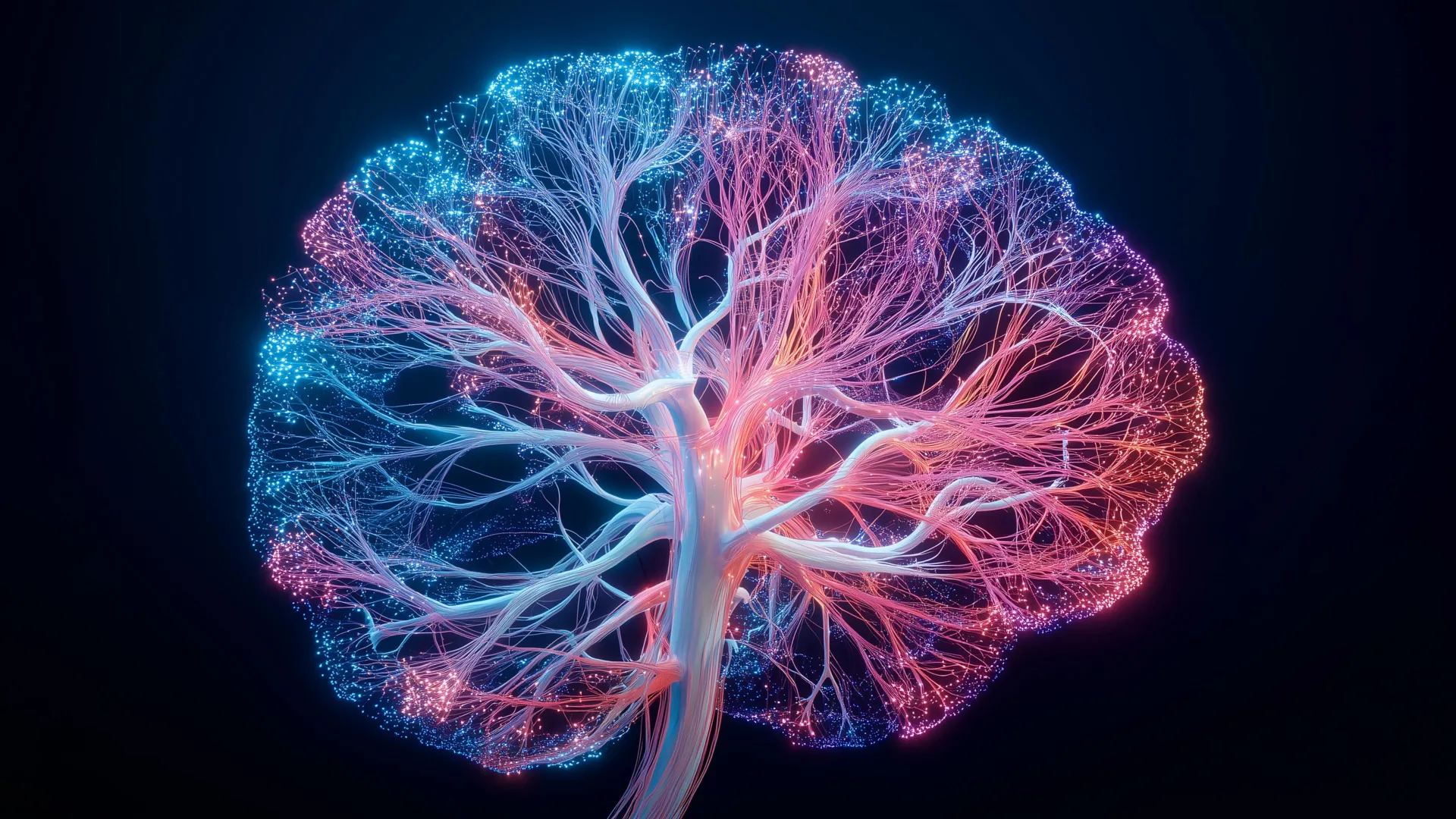
The brain may begin making decisions far earlier — and in far more places — than scientists have long assumed, according to new research that could reshape how neuroscientists understand cognition and how engineers design the next generation of artificial intelligence.
For decades, the standard picture of the brain has been something like an assembly line: sensory regions receive raw information and pass it forward to "higher" areas that do the thinking, weighing options and committing to a choice. The new study upends that tidy hierarchy, finding that decision-related activity emerges much closer to the front of the line than expected.
Researchers at the University of Illinois Urbana-Champaign, led by electrical and computer engineering professor Yurii Vlasov, recorded activity across the brain as animals performed a task requiring a choice. To their surprise, signals linked to the impending decision appeared in the primary somatosensory cortex, or S1 — a region traditionally regarded as a basic processor of touch, not a decision center. The presence of those signals in S1 suggests the brain starts shaping a decision almost as soon as sensory information arrives.
The team's findings, published in the Proceedings of the National Academy of Sciences, point to a brain that is far more interconnected and dynamic than the feed-forward model implies. Rather than simply relaying information upward, even primary sensory regions appear to be shaped by rapid feedback loops from higher areas, blurring the line between perceiving the world and deciding how to act on it. In this view, cognition is distributed throughout the network from the outset rather than concentrated in a few executive hubs.
Beyond rewriting a chapter of neuroscience, the discovery carries practical implications for artificial intelligence. Today's deep-learning systems are largely built on layered, feed-forward architectures that consume enormous amounts of power. A brain that interleaves sensing and deciding through fast feedback could offer a template for AI that reasons more like a biological system while using a tiny fraction of the energy. The researchers suggest that mimicking these loops could help engineers build machines that are both more capable and dramatically more efficient — a goal that has grown urgent as the computational and electricity costs of modern AI continue to climb.
The study adds to a growing body of work challenging the long-standing separation between perception and cognition, and it raises fresh questions about how the brain balances speed and accuracy when a decision must be made in a fraction of a second. Vlasov's team, which spans neuroscience and engineering, plans to probe how these early signals are refined or overridden as information continues to flow, and whether the same principles hold in more complex tasks. If they do, the boundary between "sensing" and "thinking" — long treated as distinct stages — may need to be redrawn entirely.