Rocket Exhaust Could Erase the Moon's Record of How Life Began on Earth, Study Warns
Methane from spacecraft engines can 'hop' across the lunar surface and pile up in the very frozen craters scientists hope will preserve pristine clues to life's origins, researchers say.
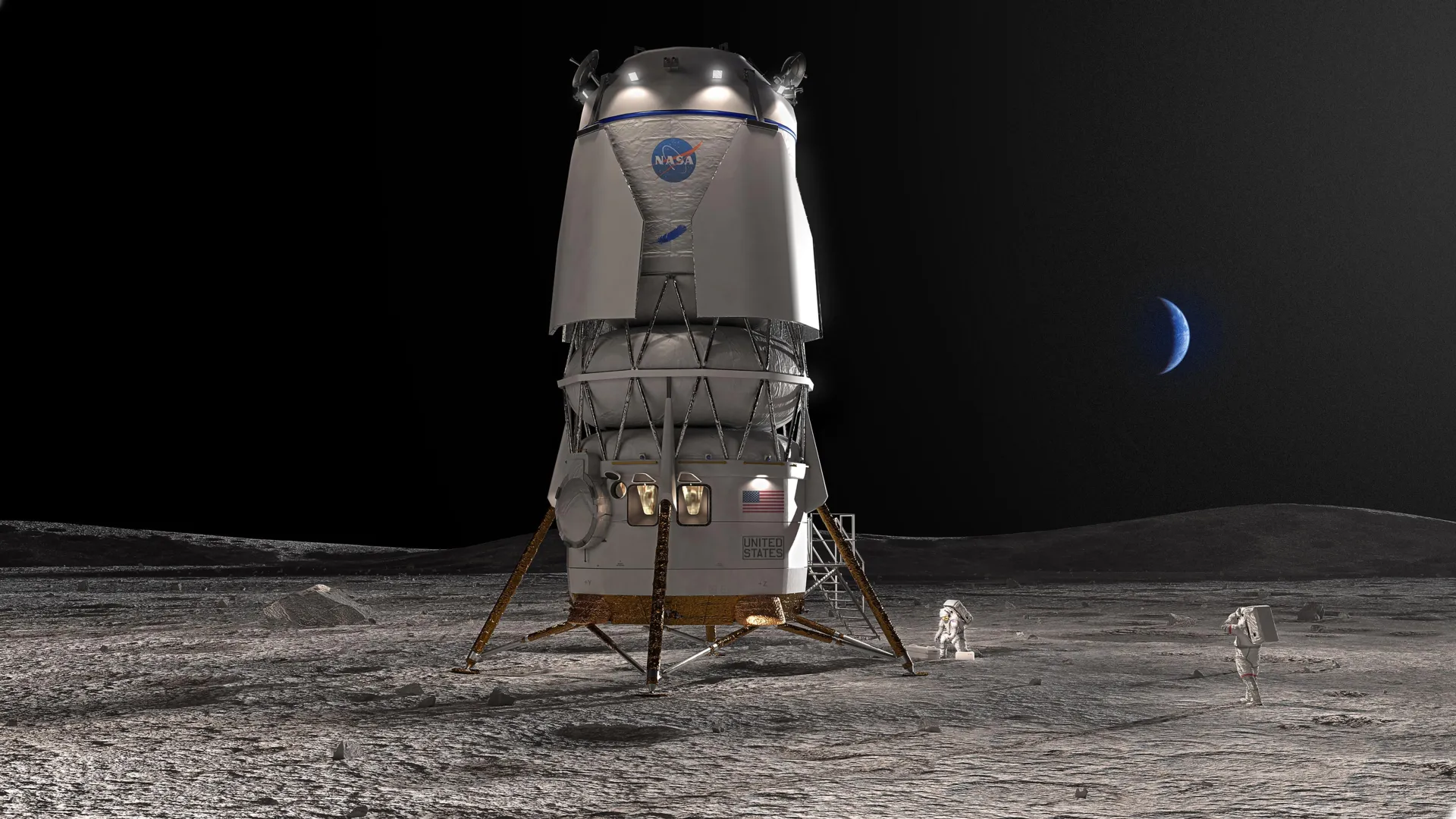
As the world's space agencies and private companies prepare for a new era of lunar landings, a study warns that the very missions meant to explore the moon could inadvertently destroy one of its most valuable scientific treasures: a preserved chemical record of how life may have begun on Earth.
The moon's surface has remained largely unchanged for billions of years, and its permanently shadowed regions — deep polar craters where sunlight never reaches — are so cold that molecules drifting across the surface become trapped and accumulate over eons. Scientists have long viewed these frozen reservoirs as time capsules that could hold pristine organic material, offering clues about the chemistry that gave rise to life on the early Earth.
The problem, the new research finds, is that spacecraft exhaust threatens to pollute exactly those regions. When a lander fires its engines, it releases methane and other gases, and the study concluded that more than half of that exhaust methane could end up contaminating the moon's scientifically prized cold traps. Because the contamination would masquerade as the kind of organic molecules researchers are searching for, it could obscure or falsify the ancient signal they hope to read.
Perhaps the most striking finding is how quickly and widely the pollution can spread. The researchers determined that exhaust molecules do not simply settle near the landing site; instead, methane can "hop" across the lunar surface in a series of ballistic jumps. Even a spacecraft touching down at the South Pole could send methane molecules skittering all the way to the North Pole in under two lunar days, meaning no landing location is truly isolated from the sensitive polar traps.
The authors, whose work was highlighted through the American Geophysical Union, stressed that they are not arguing against lunar exploration but urging caution before contamination becomes irreversible. They called for future missions to consider new engine designs, landing strategies and monitoring systems to limit and track the spread of exhaust gases. With multiple crewed and robotic missions targeting the lunar poles in the coming years, the researchers said the window to protect these ancient archives — and the story of our own origins they may contain — is closing fast.
The warning lands at a moment of intense competition to reach the lunar south pole, a region prized both for its suspected water ice and for its scientific value. National space agencies and commercial ventures alike are racing to land there, and the study's authors argue that coordination on contamination standards should keep pace with that ambition. Just as astronomers fought to protect dark skies and radio-quiet zones on Earth, they say, the scientific community may need international agreements to designate and safeguard the moon's most pristine craters before a wave of landings renders them scientifically silent.