Astronomers Detect a Sugar in Deep Space for the First Time, Hinting at Life's Cosmic Origins
Erythrulose, a four-carbon sugar found in raspberries, was spotted in a cloud near the galaxy's center — and may have rained down on the early Earth by the millions of tons.
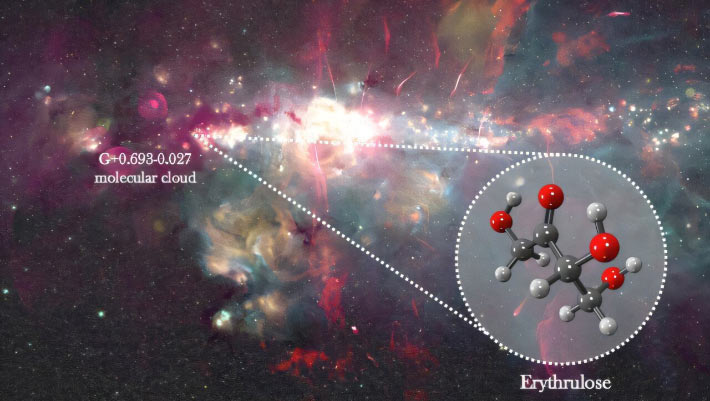
Astronomers have detected a true sugar floating in interstellar space for the first time, a discovery that strengthens the idea that some of the chemical building blocks of life were forged among the stars long before Earth existed.
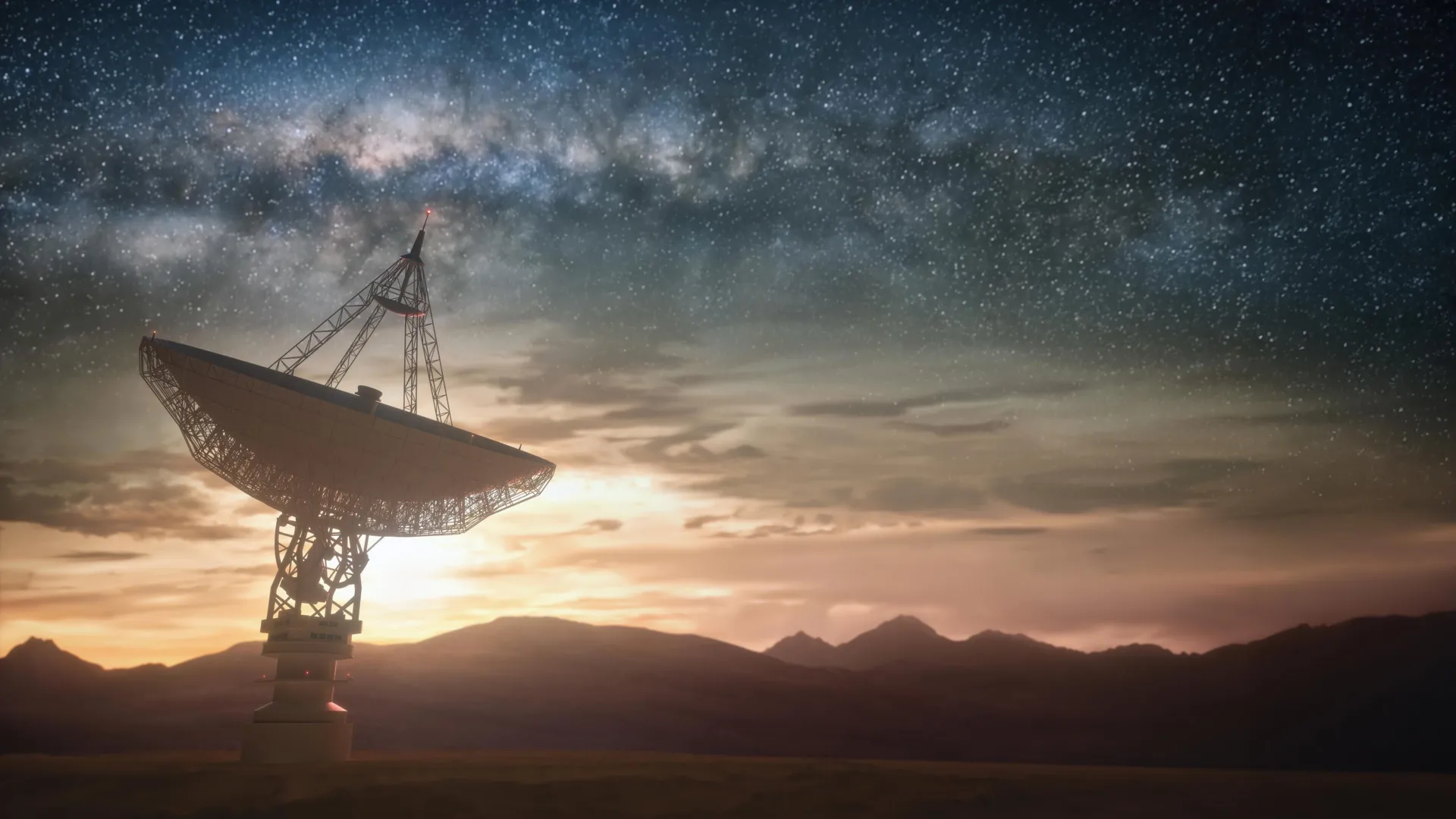
The molecule is erythrulose, a four-carbon ketose sugar — the same compound found in raspberries and used in sunless tanning cosmetics. Researchers spotted its faint radio fingerprint in a dense molecular cloud known as G+0.693−0.027, near the center of the Milky Way, using ultrasensitive spectroscopy from the Yebes 40-meter radio telescope in Spain and the IRAM 30-meter telescope in France. The result was published in the journal Nature Astronomy.
Sugars are among the most important molecules in living things. They form the backbone of DNA and RNA and drive the metabolic reactions that keep cells running. In leading theories about how life began, sugars are essential ingredients for assembling the first nucleic acids — the self-copying molecules that made evolution possible. Until now, though, astronomers had spotted only simpler sugar-related molecules in space, not a bona fide sugar.
Perhaps the most striking part of the study is what it implies about the young Earth. Based on how abundant erythrulose appears to be in the G+0.693−0.027 cloud, the researchers estimate that somewhere between 0.5 and 50 million metric tons of the sugar could have reached Earth's surface during the Late Heavy Bombardment, a violent era roughly 4.1 to 3.8 billion years ago when comets and asteroids pelted the young planet.
That would mean the raw materials for life may not have needed to be built from scratch on Earth at all. Instead, ready-made sugars delivered by space rocks could have supplemented whatever chemistry was already underway, giving the first metabolic and replicating systems a running start. It is a scenario that blurs the line between astronomy and biology, suggesting the ingredients for life are strewn across the galaxy.
The detection also showcases how far radio astronomy has come. Molecular clouds like G+0.693−0.027 act as cosmic chemistry labs, and each newly identified molecule sharpens scientists' picture of how complex chemistry assembles itself in the cold, dark spaces between stars. With ever more sensitive instruments coming online, researchers expect the list of sugars and other life-related molecules found in space to keep growing — and with it, the case that the universe is a far more fertile place than once believed. The team plans to keep scouring the same cloud for even larger and more complex sugars, hoping to trace how far cosmic chemistry can climb toward the molecules that make up life.