China Fossil Reveals a Clawed Dinosaur Built Like a Feathered Bear
Kayrasaurus changliensis stretched more than 11 feet and packed over 77 tiny teeth into its jaws, making it the largest therizinosaur yet found in the Early Cretaceous Jehol Biota.

Paleontologists have named a new dinosaur from northeastern China that walked on two legs, carried huge claws and may have looked something like a feathered bear. It is the largest of its kind ever found in one of the world's richest fossil beds.
The animal, Kayrasaurus changliensis, is known from an almost complete skeleton dug out of the Yixian Formation in western Liaoning province. It lived during the Early Cretaceous as part of the Jehol Biota, an ecosystem famous for fossils so well preserved that they often show feathers. Researchers Chun-Chi Liao, William J. Freimuth, Lindsay E. Zanno and Xing Xu described it in the Journal of Systematic Palaeontology.
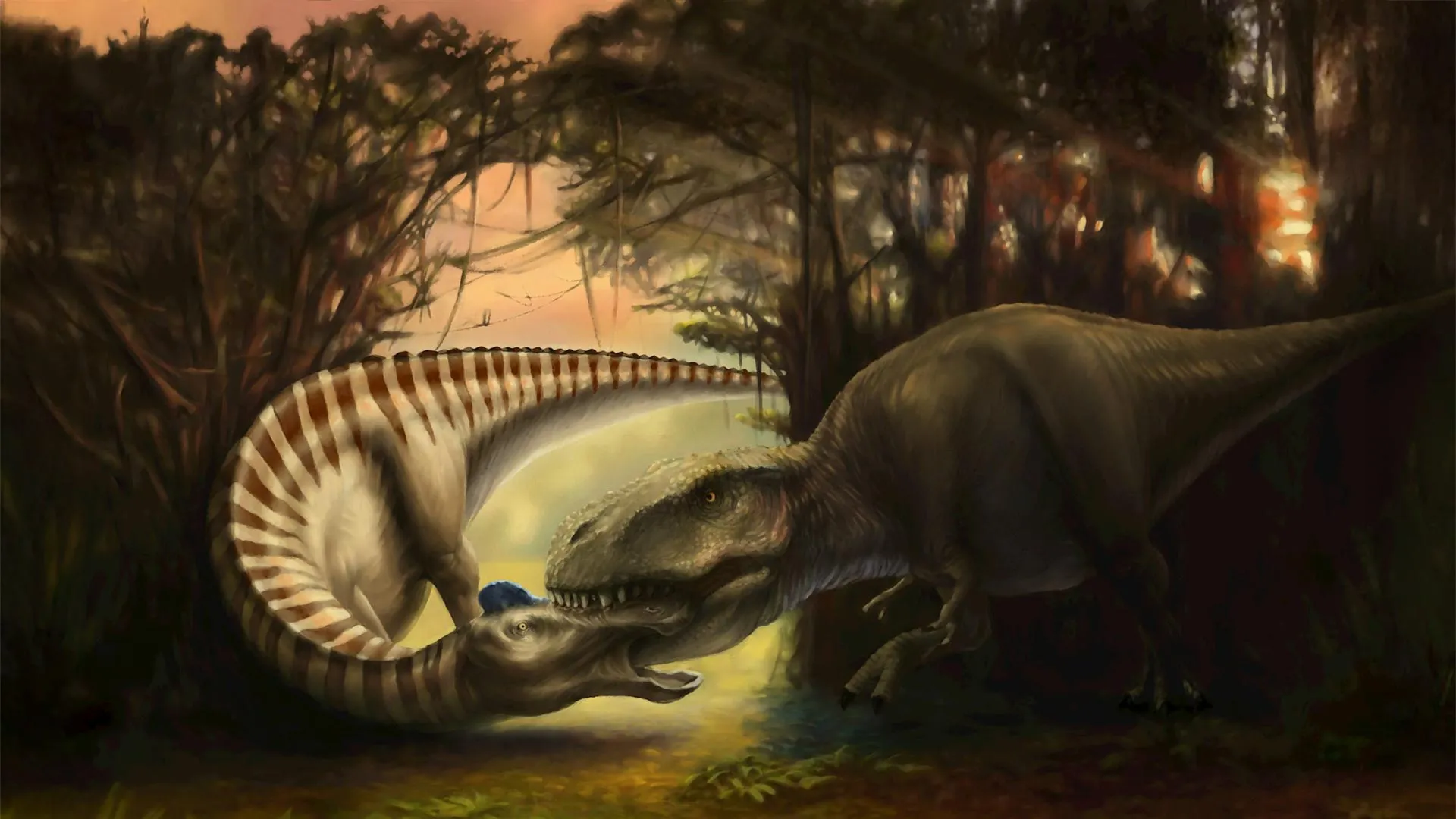
Kayrasaurus was a therizinosaur, one of the strangest groups of dinosaurs. Therizinosaurs belong to the theropods, the same branch as Tyrannosaurus and Velociraptor, but most of them gave up meat for plants. They had long necks, pot bellies and oversized claws that may have been used to pull down vegetation. The new animal was more than 3.6 meters (11.8 feet) long and is estimated to have weighed between 117 and 274 kilograms (258 to 604 pounds). That makes it at least 1.6 times larger than Beipiaosaurus inexpectus, the previous record holder among Jehol therizinosaurs.
Its skull sets it apart. The upper jaw held more than 32 teeth and the lower jaw more than 45, all unusually small and tightly packed. There was an unusually large opening near the snout, and the nasal bones reached back to the middle of the eye sockets before splitting into a two-pronged tip. The lower jaw had a tall, triangular opening on its side. The bones of its neck were much longer than those of its back, and one of its claws had a raised lip not seen in any other therizinosaur. "As the largest therizinosaurian yet known from the Jehol Biota, K. changliensis bridges morphological gaps between previously described taxa," the authors wrote.
The team also looked at how several Jehol therizinosaurs might have shared the same forests without competing head to head. They suggest the animals split into at least two ways of life. Beipiaosaurus, and possibly Kayrasaurus, were sturdier, less built for running and appear to have had a stronger bite. Relatives such as Jianchangosaurus and Lingyuanosaurus look better suited to running and seem to have relied more on their front limbs to feed.
The researchers are careful about how far the fossil can take them. "These interpretations remain provisional due to several limitations," they wrote. The skeleton is missing its hind legs, so its true weight and how it moved are uncertain, and the skull was badly flattened in the rock, hiding some features. Still, a nearly complete skeleton of an animal this size fills a gap in how the group grew from small early forms into the giants that came later, such as Therizinosaurus of Mongolia, whose claws reached nearly a meter long.