Engineers 3D-Printed One of the Hardest Metals on Earth by Refusing to Fully Melt It
A Hiroshima University team used a preheated wire and a laser to lay down tungsten carbide-cobalt harder than 1400 HV without the cracks that have blocked 3D printing of the material for years.
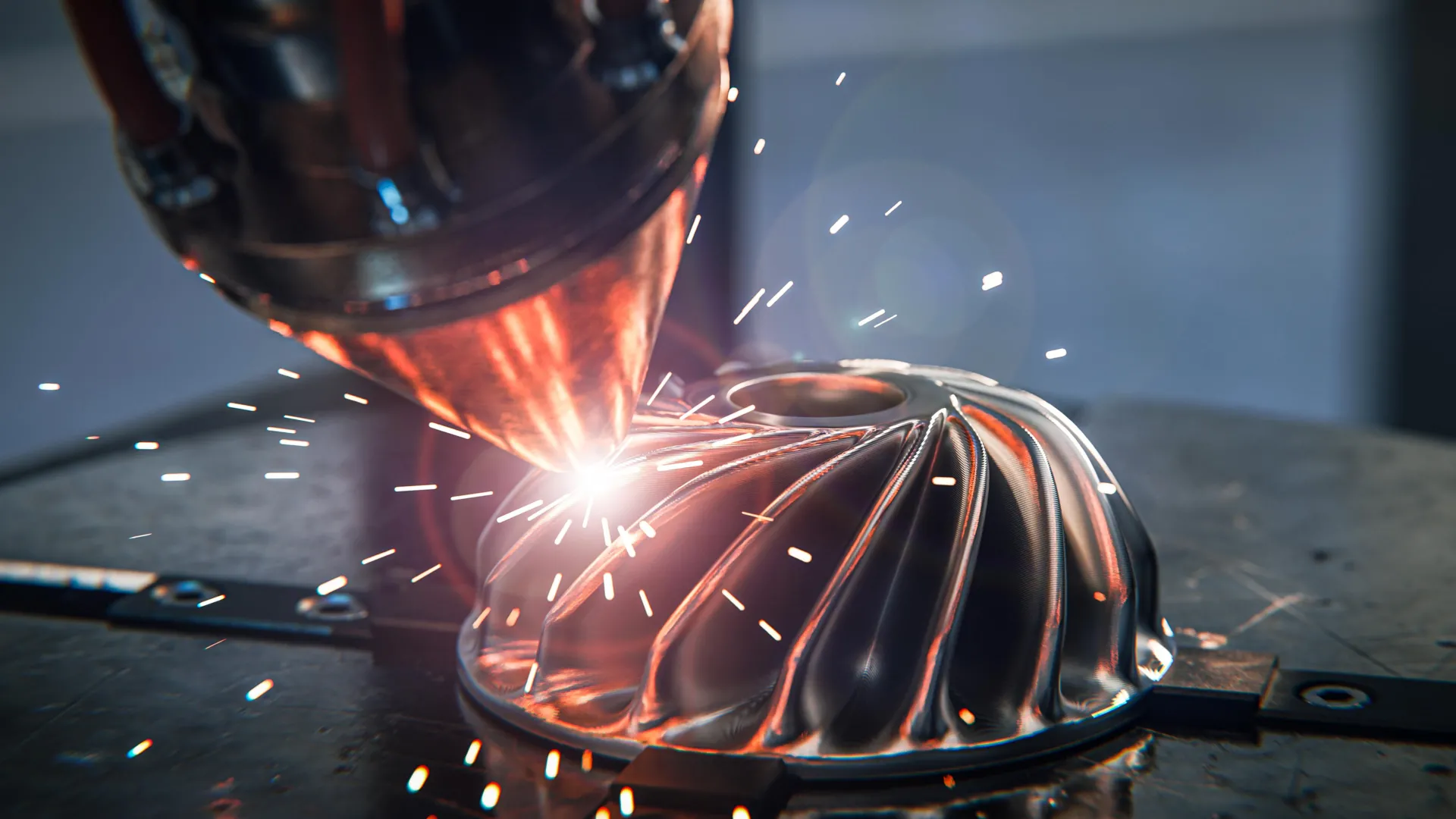
Tungsten carbide-cobalt is the material that cuts everything else. It is what the tip of an industrial drill bit is made of, what mining picks and metalworking inserts and the business end of machine tools are made of. It is also, by a wide margin, one of the most awkward materials to 3D-print, and engineers at Hiroshima University have now found a way around the problem by declining to do the one thing 3D printing normally requires.
Conventional metal 3D printing melts. A laser or electron beam melts powder into a pool, the pool solidifies, the machine moves on and does it again. For most alloys this works. For cemented carbide it goes badly: tungsten carbide and cobalt have very different melting behavior, the material shrinks unevenly as it cools, and the result is riddled with cracks and pores that destroy the hardness the material was chosen for in the first place.
The Hiroshima group, working with Mitsubishi Materials Hardmetal Corporation, used hot-wire laser irradiation instead. A filler wire is electrically preheated before it ever reaches the laser, and the laser then supplies just enough additional energy to soften the material and bond it to the layer below — rather than driving the whole volume through a full melt-and-freeze cycle. Less melting means less of the shrinkage and thermal shock that were producing the cracks.
The samples came out defect-free with a Vickers hardness above 1400 HV, in the range expected of industrially produced cemented carbide. The work, led by Keita Marumoto, an assistant professor at Hiroshima University's Graduate School of Advanced Science and Engineering, with Motomichi Yamamoto and colleagues at Mitsubishi Materials, was published in the International Journal of Refractory Metals and Hard Materials.
The reason anyone wants to print this material rather than make it the traditional way is economic as much as technical. Cemented carbide is conventionally produced by powder metallurgy: press the powder into a block, sinter it, then grind the block down to the shape you want. Most of the tungsten you started with ends up as swarf on the workshop floor, and tungsten is expensive and geopolitically concentrated. Additive manufacturing inverts that. "By using additive manufacturing, cemented carbide can be deposited only where it is needed, thereby reducing material consumption," the researchers wrote.
That points at a specific application the team has in mind: hardfacing. Rather than making an entire tool out of carbide, a manufacturer could print a carbide layer onto the working surfaces of a cheaper steel body — the cutting edge, the wear face — and leave the rest as steel. Worn tools could be rebuilt the same way instead of being scrapped.
Hot-wire laser deposition is a slower process than powder-bed printing and is better suited to depositing material onto an existing part than to building an intricate component from nothing. For carbide, that is not much of a limitation. The parts that need to be this hard are usually simple in shape and expensive in material, which is exactly the case the method fits.
Originally reported by ScienceDaily.