Hubble Finally Sees the 'Cat's Tail,' Wreckage of a Possible Pluto-Sized Collision Around Beta Pictoris
The 1,000-astronomical-unit dust structure, previously seen only by Webb in infrared, is so dark and carbon-rich that it hid from visible-light telescopes.
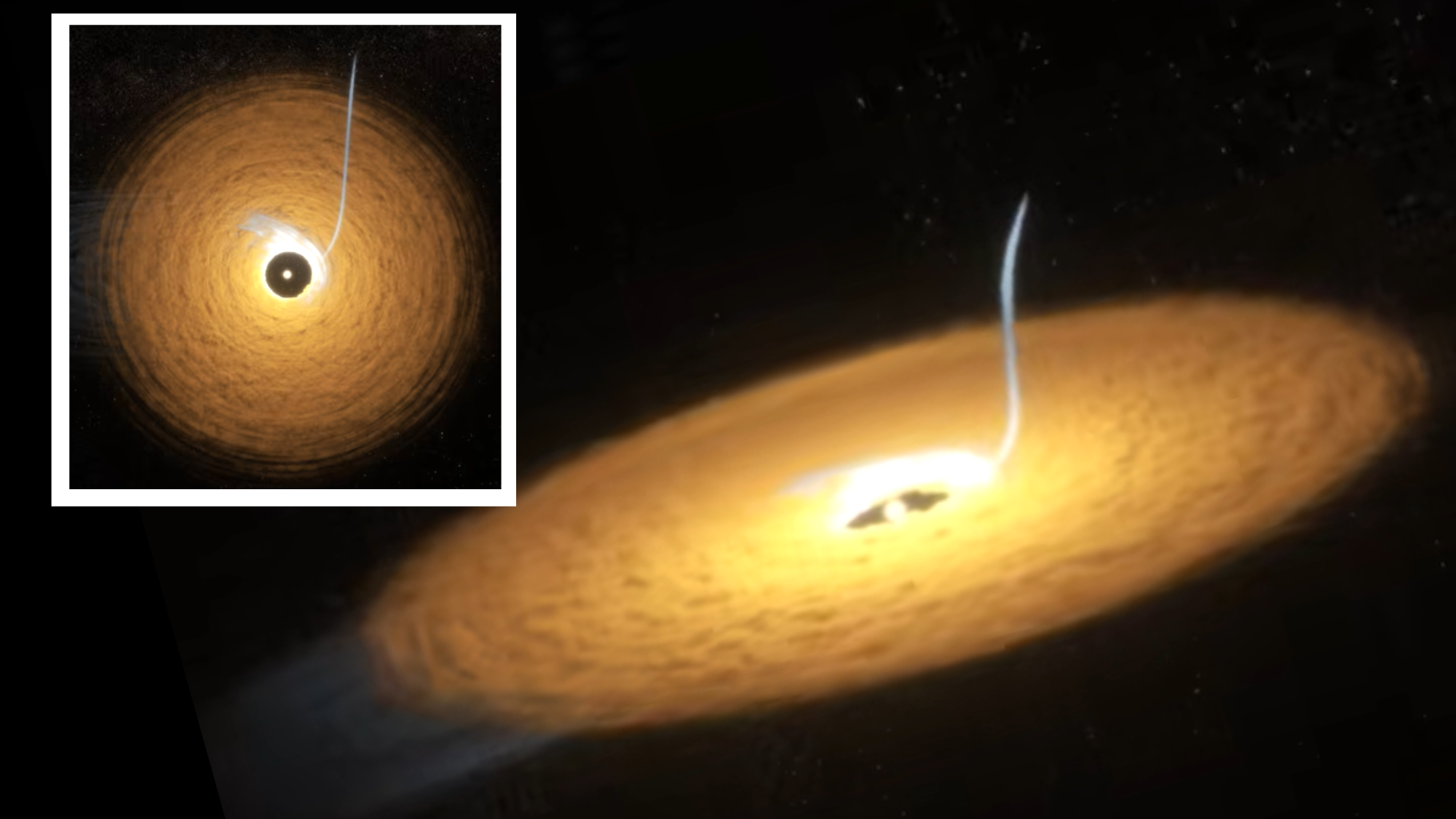
Astronomers have captured a mysterious tail of dust around a young star in visible light for the first time, and its dark, carbon-rich makeup points to a collision between worlds roughly the size of Pluto.
The structure, nicknamed the Cat's Tail, is part of the debris disk surrounding Beta Pictoris, a young star about 63 light-years away that resembles our own solar system in its early days. It stretches about 1,000 astronomical units, or roughly 150 billion kilometers. The James Webb Space Telescope first detected it in infrared in 2024.
Until now, the tail had not been seen at shorter wavelengths, which puzzled astronomers. "Oddly, this feature had previously only been seen with the James Webb Space Telescope, which detects infrared light, but remained invisible at shorter wavelengths, which has puzzled the community for a while," said Arin Avsar, a doctoral student at the University of Arizona's Lunar and Planetary Laboratory who led the new study.
The team used Hubble's Space Telescope Imaging Spectrograph, observing in six epochs between 2012 and 2025. The results appear in The Astrophysical Journal Letters in a paper titled "Deep HST/STIS Coronagraphic Imaging of the Beta Pictoris Debris Disk: On the Scattered Light Component of the Cat's Tail."
The reason the tail stayed hidden is its composition. "It consists almost entirely of what we call organic refractory material, which is heavily carbon-based," Avsar explained. "These long chains of carbon atoms absorb visible light, so they're quite black." Dark material reflects little starlight, so the tail was invisible to Hubble until the team stacked years of deep images.
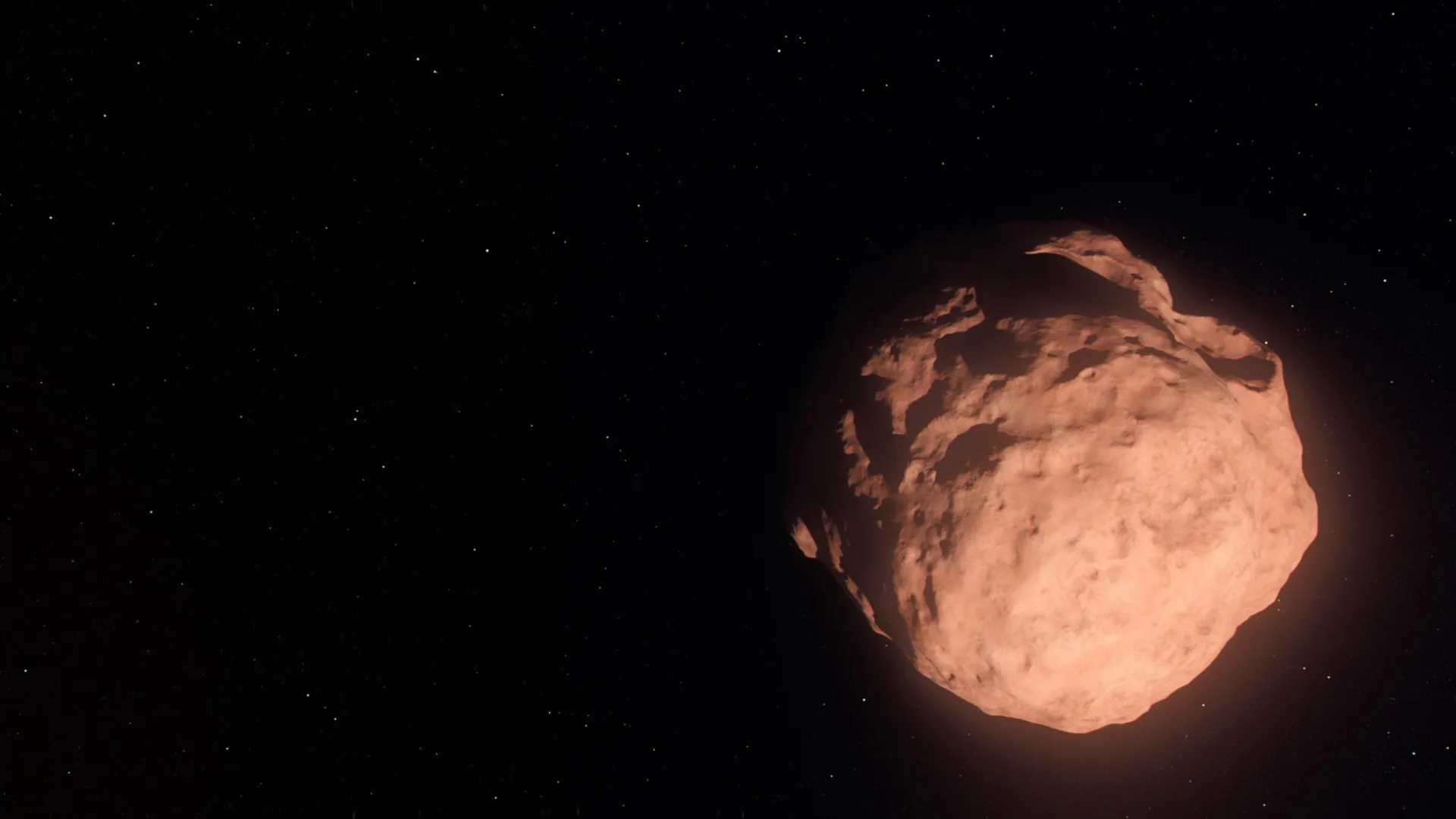
That composition is a clue to its origin. "The Cat's Tail is thought to be the aftermath of a collision between large bodies - think something like Pluto," Avsar said. In the solar system, organic refractory material best matches the red surfaces of Kuiper Belt objects, notably Pluto, where NASA's New Horizons found compounds called tholins. But tholins make up only a small share of Pluto's mass, so the authors argue the material came from the interiors of the shattered bodies.
The researchers then asked whether dwarf planets in a young star's distant belt could hold enough organics to make the tail. Using the organic content of the local interstellar medium and of comet 67P/Churyumov-Gerasimenko, they calculated that each colliding parent body needed a mass of about one to three times 10^21 kilograms to produce about 2 times 10^19 kilograms of debris. That is a few percent of the Moon's mass, or roughly one to three times the mass of the dwarf planet Ceres.
Combining the Hubble and Webb data also revised the structure's three-dimensional geometry. Much of its apparent length appears to lie across our line of sight rather than stretching deep into space. The same Hubble observations revealed a previously unseen warp in the dust halo around the star.
Beta Pictoris is a favorite target because it is young, close and seen edge-on, and it hosts directly imaged planets. The Cat's Tail adds a rare view of the violent aftermath of planet building, the kind of collision that shaped our own solar system billions of years ago.