Hubble and Webb Find Tiny Worlds Beyond Neptune That 'Remember' the Solar System's Birth
A first-ever joint survey of 27 faint icy objects found the smallest ones share colors with larger relatives, and Webb found fewer tiny bodies than planet-formation models predict.
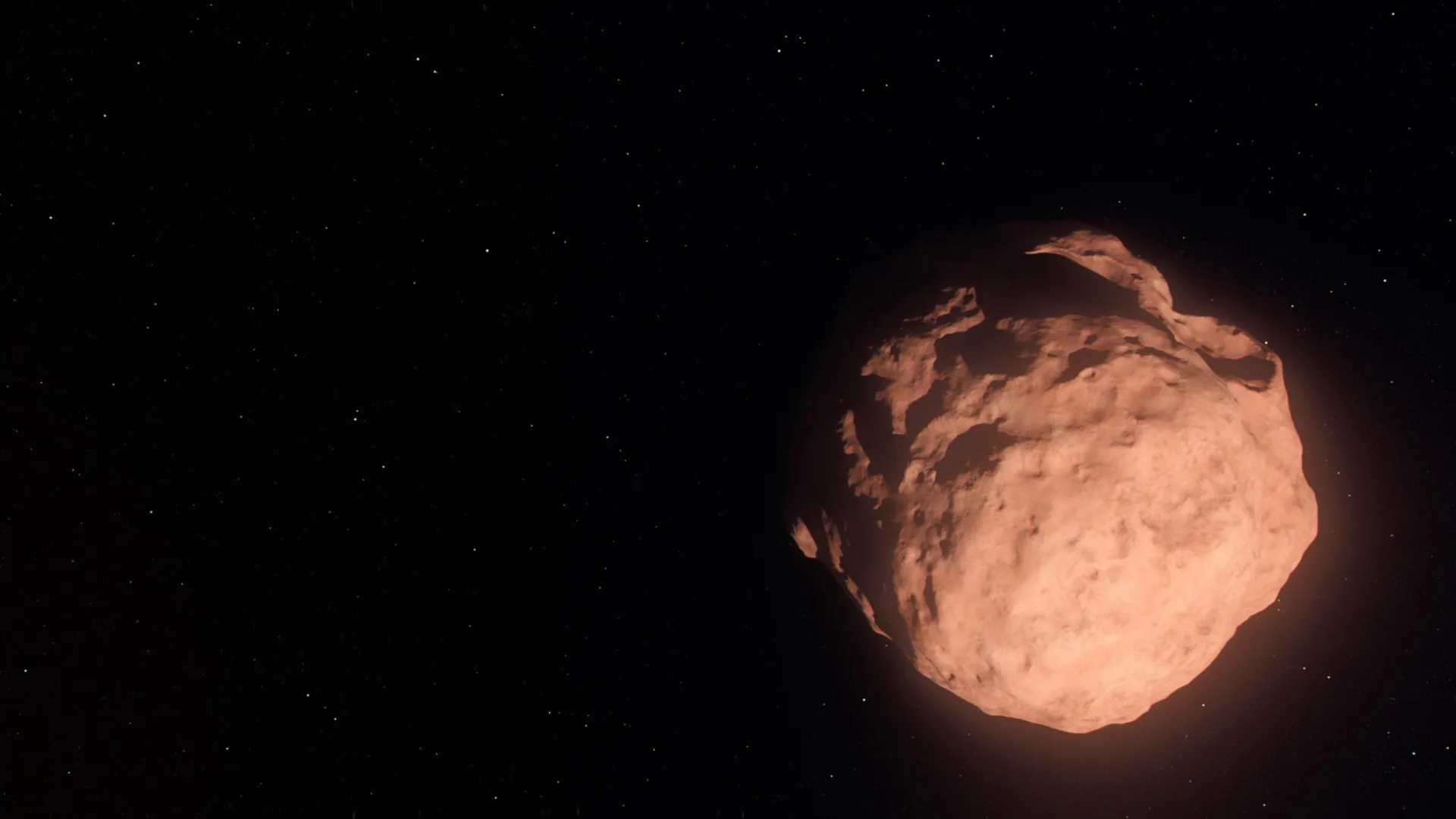
Astronomers using NASA's Hubble and James Webb space telescopes together for the first time have surveyed 27 tiny, newly identified objects beyond Neptune and found that these ancient building blocks of planets look surprisingly unchanged after billions of years, while their sizes and numbers challenge existing theories of how planets form.
The two telescopes watched the same patch of sky at once. Hubble captured visible light and Webb captured infrared, and combining them let the teams measure each object's color, estimate its size and determine its orbit. The researchers describe it as the deepest survey of trans-Neptunian objects, or TNOs, to date. Two papers describing the work appear in The Astronomical Journal, volume 172: one on the objects' size distribution led by Marielle Eduardo, a PhD candidate at the University of Victoria in Canada, and one on color and composition led by Anastasia Morgan, a PhD candidate at Northern Arizona University.
The objects fall into two populations that astronomers call "cold" and "hot," labels that describe orbits and not temperature. Cold TNOs stayed close to where they formed, on nearly circular orbits near the plane of the planets. Hot TNOs formed between Uranus and Neptune, were flung outward as the giant planets migrated and now travel on elongated, tilted paths.
The surprise came in the colors. The smallest objects share color patterns with larger TNOs in both populations. Researchers had expected repeated collisions to alter the surfaces of small bodies, so the match suggests either that impacts are rarer than assumed or that surfaces keep their original composition after being hit. "The smallest objects are somehow 'remembering' and preserving the history," Morgan said. David Trilling, a co-author at Northern Arizona, said the hot objects "retain a signature of where they were born."
The size results point the same way. Hot and cold populations have very similar size distributions, which suggests the building of small planetary bodies worked much the same in different regions of the early solar system's disk. "The process seems to be insensitive to disk conditions," Eduardo said.
Webb also detected fewer tiny TNOs than some planet-formation models predict, a gap that theorists will now have to explain. The smallest object found is about 5 kilometers, or 3 miles, across, roughly five times smaller than anything the most sensitive ground-based telescopes can detect out there.
Most of these objects are more than 100 million times fainter than the naked eye can see. One was so dim that spotting it would be comparable to seeing a small swarm of fireflies on the Moon from Earth, according to the NASA material. Both papers are peer reviewed, and the open questions about collisions and missing small bodies are likely targets for follow-up observations.