Planet Nine Mystery Deepens as New Discovery Challenges Hidden Planet Theory
Recent discoveries of more stable motion among distant Kuiper Belt objects are casting doubt on the existence of a massive undiscovered planet beyond Neptune.
The long-standing mystery of Planet Nine, a hypothetical massive planet lurking in the outer reaches of our solar system, has taken a new turn as recent astronomical discoveries challenge the very evidence that suggested its existence. For years, astronomers have searched for this elusive world based on unusual orbital patterns among distant Kuiper Belt objects, but new findings are revealing more stable motion than the hidden planet theory would predict.
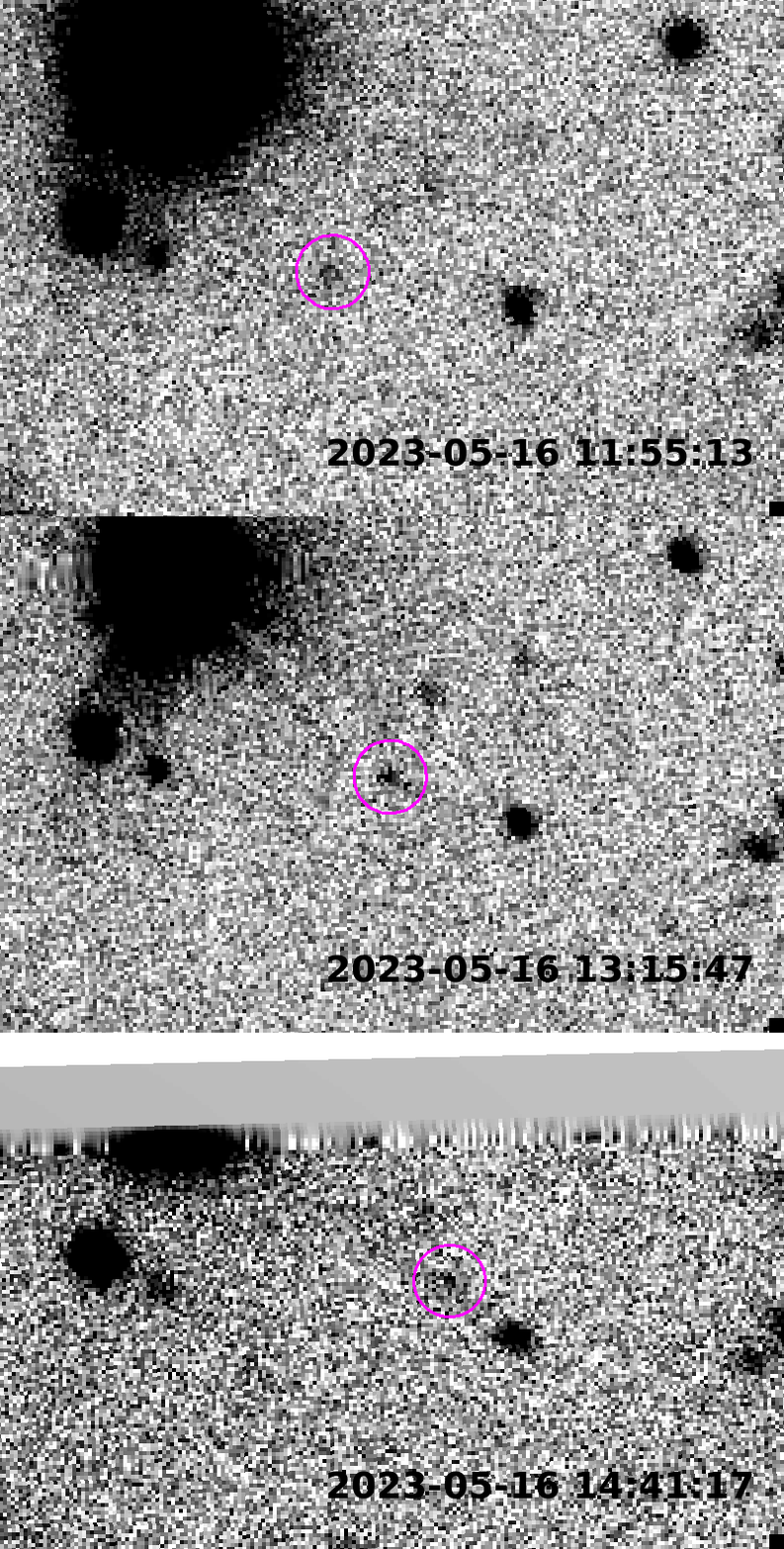
The Planet Nine hypothesis, proposed in 2016 by Caltech astronomers Konstantin Batygin and Mike Brown, arose from observations of trans-Neptunian objects whose orbits appeared to be influenced by gravitational forces beyond those of the known planets. These Kuiper Belt objects, including dwarf planets and asteroids beyond Neptune, exhibited orbital patterns that seemed to require explanation by a massive unseen planet several times larger than Earth. The theory gained credibility as more objects with erratic orbits were discovered, including 2017 OF201, a 700-kilometer-wide candidate dwarf planet with a highly elliptical orbit.
However, recent observations are complicating this narrative by revealing that many distant objects actually follow more predictable orbital patterns than previously thought. Some astronomers have begun questioning whether there's sufficient orbital data from Kuiper Belt objects to justify conclusions about Planet Nine's existence, while alternative explanations for the observed motion have gained traction. These alternatives include the gravitational influence of a ring of debris or, more speculatively, the presence of a small black hole rather than a conventional planet.
The challenge facing Planet Nine proponents is partly observational: if such a massive planet exists, why hasn't it been detected despite years of dedicated searches using increasingly powerful telescopes? The object would need to be extremely distant to have avoided detection, potentially much farther from the Sun than originally theorized. This increased distance would make gravitational effects on inner Kuiper Belt objects much weaker and harder to detect.
As Brown noted in 2024, "I think it is very unlikely that P9 does not exist. There are currently no other explanations for the effects that we see." However, the mounting evidence of more stable orbital patterns among trans-Neptunian objects suggests that the mystery may be more complex than a single hidden planet can explain. If Planet Nine does exist, astronomers now believe it may be located at distances that make detection extraordinarily challenging with current technology, requiring new observational strategies and more powerful instruments to resolve this decades-old cosmic puzzle.