A 5-Million-Year-Old Star Is Swallowing Comets. Astronomers Caught It by Watching Sodium Flicker
Sodium gas appeared and vanished over successive nights around PDS 70, a young sunlike star 370 light-years away. The likely explanation is icy bodies falling inward past two newborn gas giants.

Earth's water probably did not form here. The leading account is that it arrived, carried in by icy bodies flung inward from the cold outer reaches of the young solar system. That story has been hard to check because the event finished four and a half billion years ago. Astronomers at Lund University say they have now watched something very like it happening around another star.
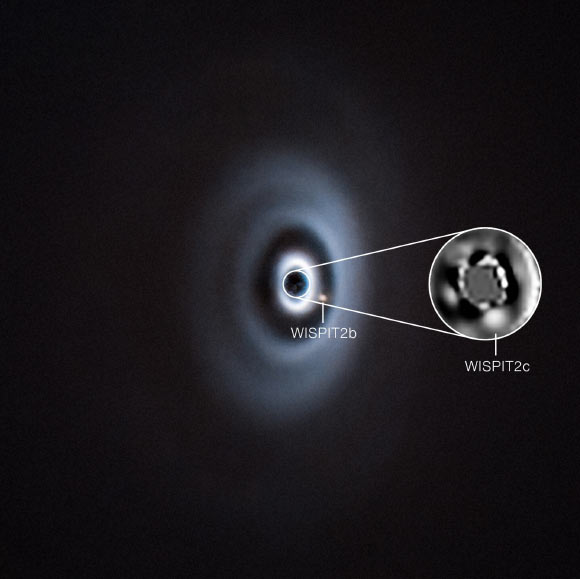
The star is PDS 70, about 370 light-years away, slightly cooler than the sun and roughly five million years old, which for a star is infancy. It is already one of the most-studied objects in planet formation because it hosts at least two gas giants still gathering material inside a visible disk of gas and dust. What the Lund group found in it was sodium.
Working with spectroscopic observations taken in 2018, lead researcher Aline Novais, with Alexandra Stockwell Murphy and Jens Hoeijmakers, found sodium gas that appeared and then disappeared over successive nights, moving at several kilometers per second relative to the star. A stable feature in a stellar spectrum can be many things. A feature that shows up, drifts and vanishes on a timescale of nights is a transient, and the signature matches what is expected when a comet passes close enough to the star for its ices to sublimate and release gas that the star's light then makes visible.
Exocomets have been detected before, but around hotter, brighter stars where the sublimation signal is easier to catch. "This is the first time we have seen evidence of exocomets orbiting a star that is relatively cool, much like our sun," the team reports, which is what makes the object a usable analogue for the early solar system rather than an exotic special case.
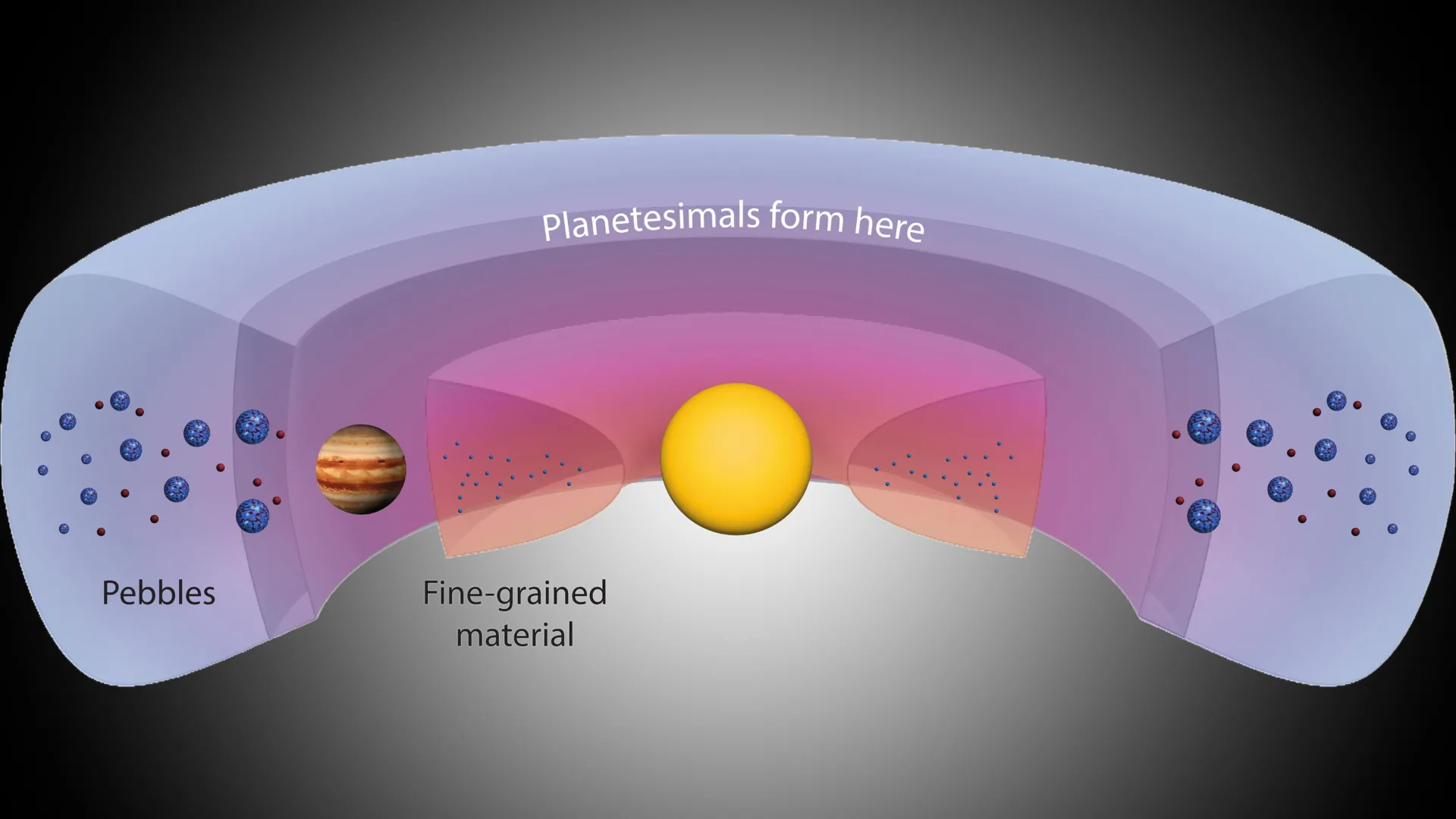
The mechanism has a candidate. The group ran orbital simulations showing that the two young gas giants in the system are capable of gravitationally scattering icy bodies from the outer disk inward, on paths that carry them through the region where terrestrial planets would be assembling. That is the same process invoked for the early solar system, with Jupiter and Saturn in the role of the scatterers. Water vapor had already been detected near PDS 70 in 2023; a steady supply of infalling comets would explain where it comes from.
The finding does not prove that comets delivered Earth's oceans. It establishes that the delivery mechanism is running, right now, in a system young enough that its rocky planets have not finished forming, around a star close enough to the sun in temperature that the comparison is fair. The next step is to look for the same sodium transients in other cool young systems and find out whether PDS 70 is typical or unusual.
The work appears in Nature Communications, DOI 10.1038/s41467-026-76880-y.