Astronomers Spot Two Baby Planets Forming Around Young Star WISPIT 2 in Rare Direct Imaging
Using the Very Large Telescope's upgraded GRAVITY+ instrument, scientists have directly confirmed a second protoplanet in what researchers call 'the best look into our own past.'
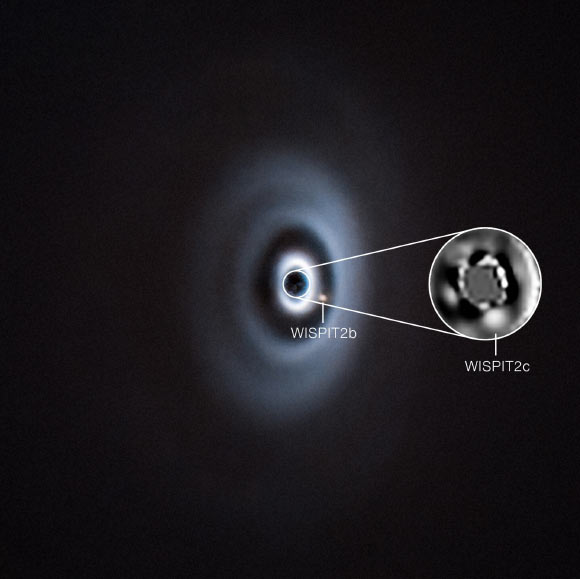
Astronomers have directly observed two protoplanets forming in the dusty disk surrounding WISPIT 2, a young star just five million years old, offering what researchers are calling "the best look into our own past" and one of the clearest windows yet into how planetary systems like our solar system are assembled. The discovery, published Friday in The Astrophysical Journal Letters, makes WISPIT 2 only the second known stellar system where multiple planets have been directly imaged in the act of formation, following the celebrated PDS 70 system first photographed in 2018.
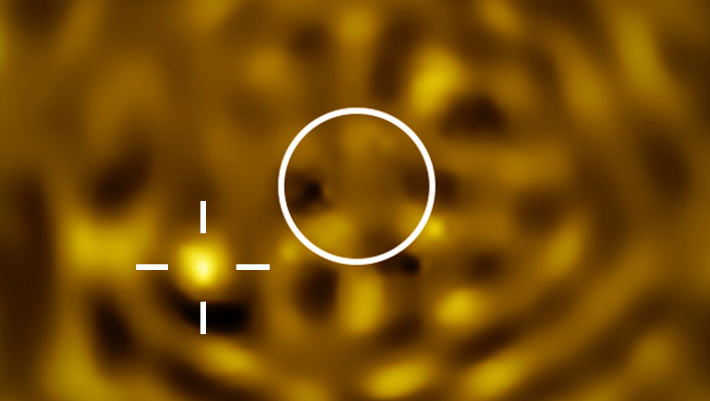
The two planets, designated WISPIT 2b and WISPIT 2c, were detected using the European Southern Observatory's Very Large Telescope in Chile, employing two complementary instruments: the SPHERE camera, which captured direct imaging of the objects, and the GRAVITY+ interferometer, which confirmed the planetary nature of the detections with high precision. Researcher Guillaume Bourdarot of the Max Planck Institute for Extraterrestrial Physics noted that the recent upgrade to GRAVITY+ was "critically" important for detecting WISPIT 2c so close to its host star. Without the upgrade, the inner planet would likely have remained invisible behind the star's glare.
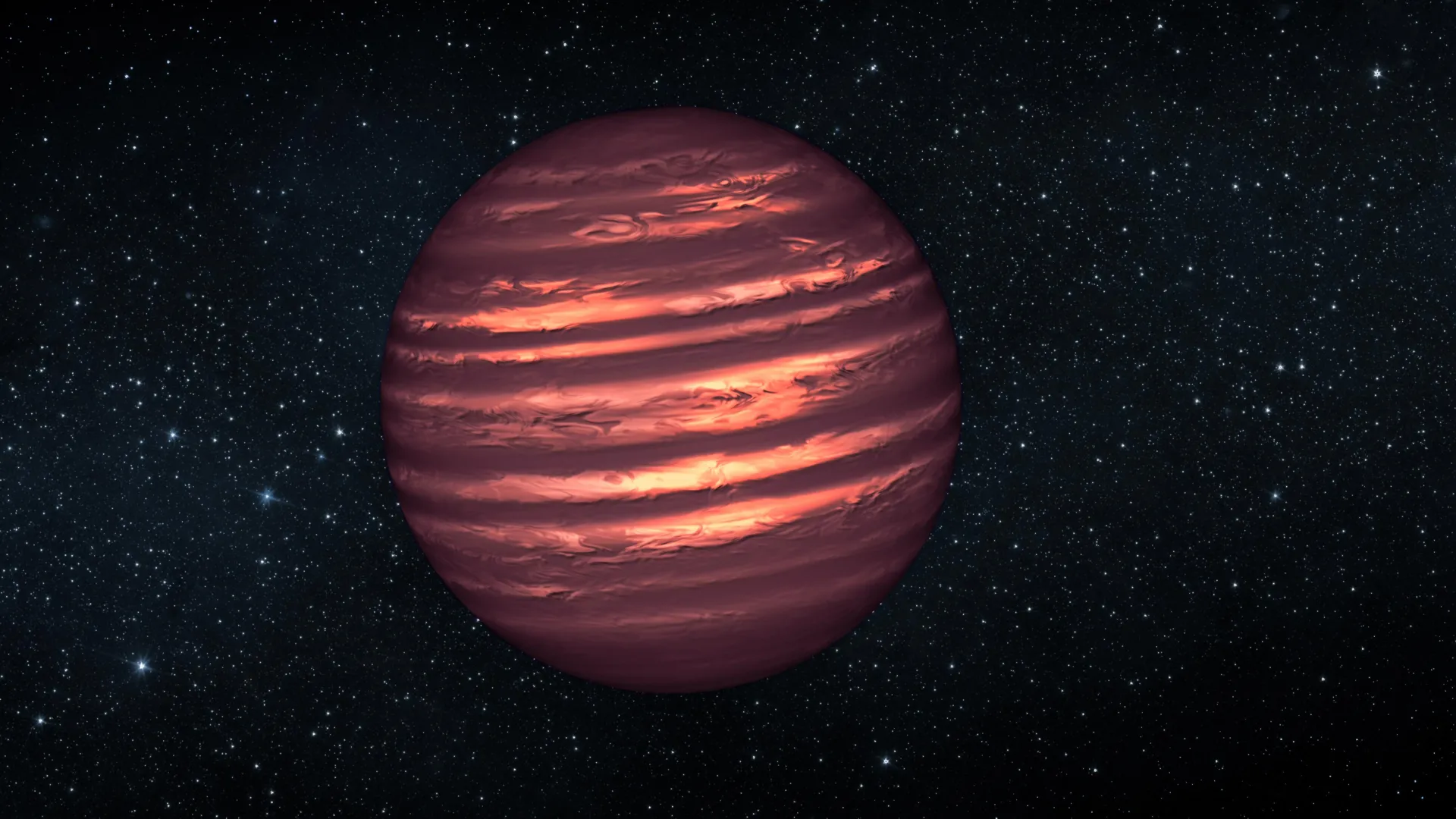
The two planets are remarkably different in scale. WISPIT 2b, first detected approximately one year earlier, is nearly five times as massive as Jupiter and orbits the star at a distance of roughly 60 astronomical units — 60 times the Earth-Sun separation, comparable to the outer reaches of our own solar system. WISPIT 2c, the newly confirmed planet and the subject of the current paper, is even larger, approximately twice the mass of WISPIT 2b at roughly 10 Jupiter masses, but orbits four times closer to the star at around 15 astronomical units — comparable to Saturn's orbital distance in our solar system. Both planets are gas giants still actively accreting material from the surrounding protoplanetary disk.
The discovery was led by Chloe Lawlor, a Ph.D. student at the University of Galway in Ireland, working alongside Dr. Christian Ginski of the same institution and Richelle van Capelleveen of Leiden Observatory. The paper, formally titled "Direct Spectroscopic Confirmation of the Young Embedded Protoplanet WISPIT 2c," marks the culmination of years of observation. Beyond the two confirmed planets, the WISPIT 2 disk shows structural features — gaps and rings — that suggest additional worlds may be forming within it. Lawlor described the structures as suggesting "that more planets are currently forming, which we will eventually detect." Researchers are particularly interested in an outer disk gap consistent with the presence of a Saturn-mass third planet.
For planetary scientists, the WISPIT 2 system provides rare empirical constraints on planet formation models that have long had to rely on theoretical frameworks and indirect evidence. Directly imaging forming planets — rather than inferring their presence from stellar wobbles or transits — allows researchers to measure mass, orbital dynamics, and atmospheric composition in ways not otherwise possible. The opportunity to watch a planetary system assembling in near-real-time, and to compare the observations with what our own solar system looks like 4.6 billion years later, gives the discovery significance well beyond its immediate findings. Lawlor described the system as "a solar system in the making," adding that each new observation narrows the gap between what astronomers theorize about planetary birth and what they can actually see with instruments pointed at the sky.