Astronomers Map Four Alien Worlds Around Barnard's Star — and None Look Anything Like Earth
Cambridge scientists find the planets circling our closest single-star neighbor are smaller than Earth, larger than Mars, laced with a rare deep-mantle mineral, and locked so close to their star that any atmosphere would be stripped away.
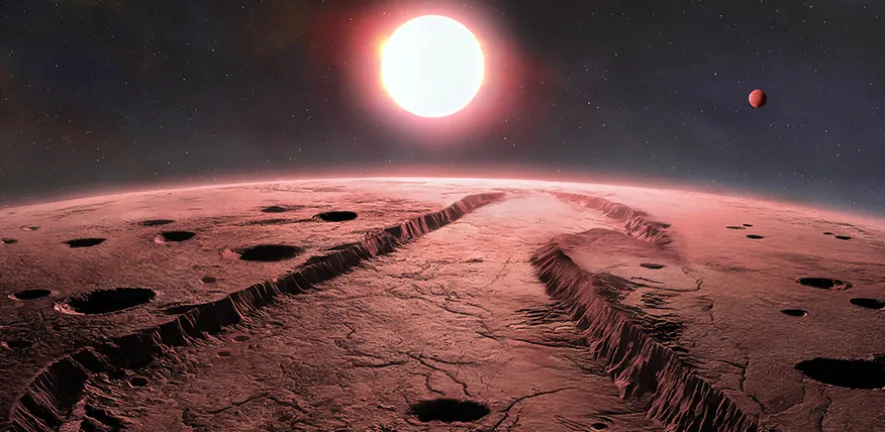
Astronomers have painted the most detailed portrait yet of the planets orbiting Barnard's Star, the Sun's closest single-star neighbor, and the picture is one of small, strange, utterly hostile worlds unlike anything in our own Solar System.
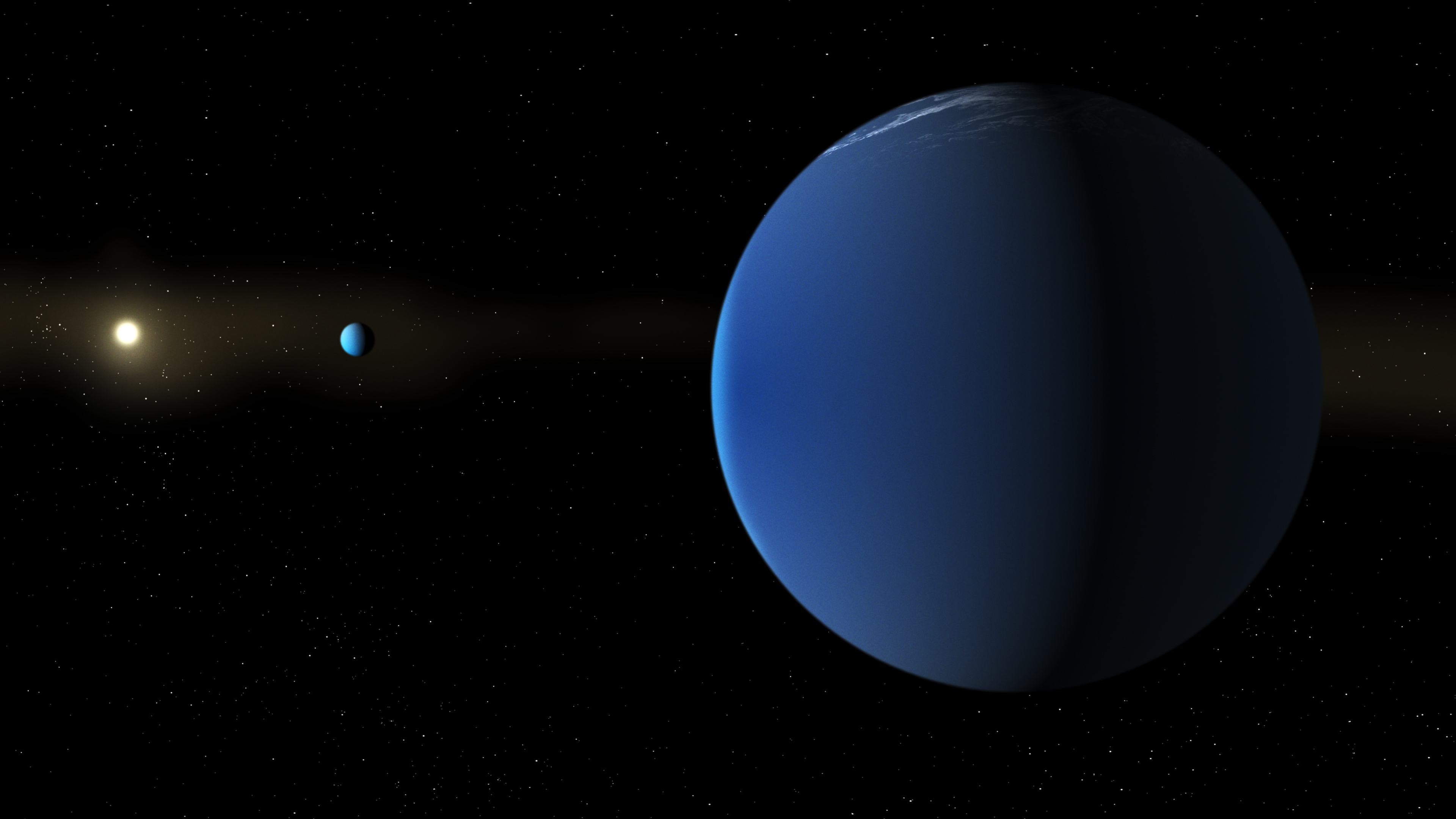
Just under six light-years away, Barnard's Star hosts four planets that are all smaller than Earth and Venus yet larger than Mars — a size class that is entirely missing from our planetary lineup. The research, led by Xander Byrne of the University of Cambridge's Institute of Astronomy, combined precise measurements of the star's chemistry with modeling of the planets it holds to work out what those distant worlds are likely made of.
The composition turned out to be exotic. By analyzing the star's chemical makeup, the team found the planets are probably rich in periclase, a magnesium mineral that on Earth exists only hundreds of kilometers below the surface. "Barnard's Star has an enormous amount of the element magnesium compared to other stars, so its planets are likely to be rich in magnesium too," Byrne said, describing worlds whose interiors may be dominated by material humans have never seen at the surface of any planet.
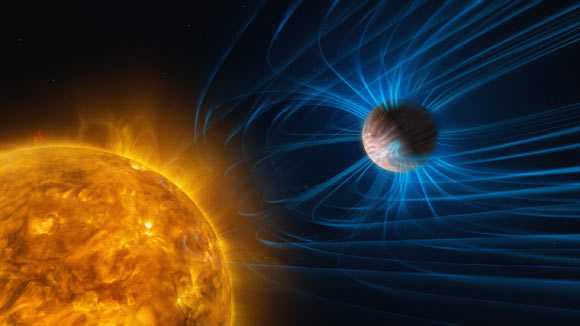
Any hope for habitability is dashed by their orbits. Even the outermost of the four planets circles its star ten times closer than Mercury orbits the Sun, bathing the worlds in intense radiation. With such small masses and such punishing proximity, the researchers concluded, "your atmosphere just gets blown off" — leaving bare, scorched rock rather than the kind of shielded, temperate surface life would need.
Despite the chaos, the system holds together with surprising elegance. The astronomers found evidence of orbital resonance, a gravitational lockstep in which the planets' orbital periods form neat whole-number ratios that help keep the system stable over long stretches of time. The "years" of the inner three planets fall into a 9:12:16 ratio, a rhythmic pattern that gently nudges the planets into a durable configuration rather than letting their gravity tear the arrangement apart.
Because Barnard's Star is so close, it has long been a prime target in the search for nearby habitable worlds, and generations of astronomers have chased hints of planets around it. The new findings deliver a sharper, if more sobering, answer: the star does host a compact family of rocky planets, but they are small, magnesium-rich and far too close to their sun to be anything but dead — a reminder that even our nearest neighbors can be profoundly alien.