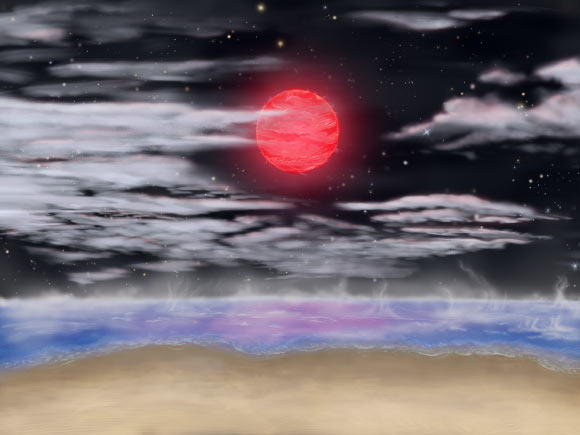
Astronomers Detect the First Atmosphere on a Rocky Planet in a Star's Habitable Zone
Using a ground-based telescope in Chile, scientists spotted helium streaming off the exoplanet LHS 1140 b, the first time an atmosphere has been confirmed around a rocky world in the life-friendly zone of another star.
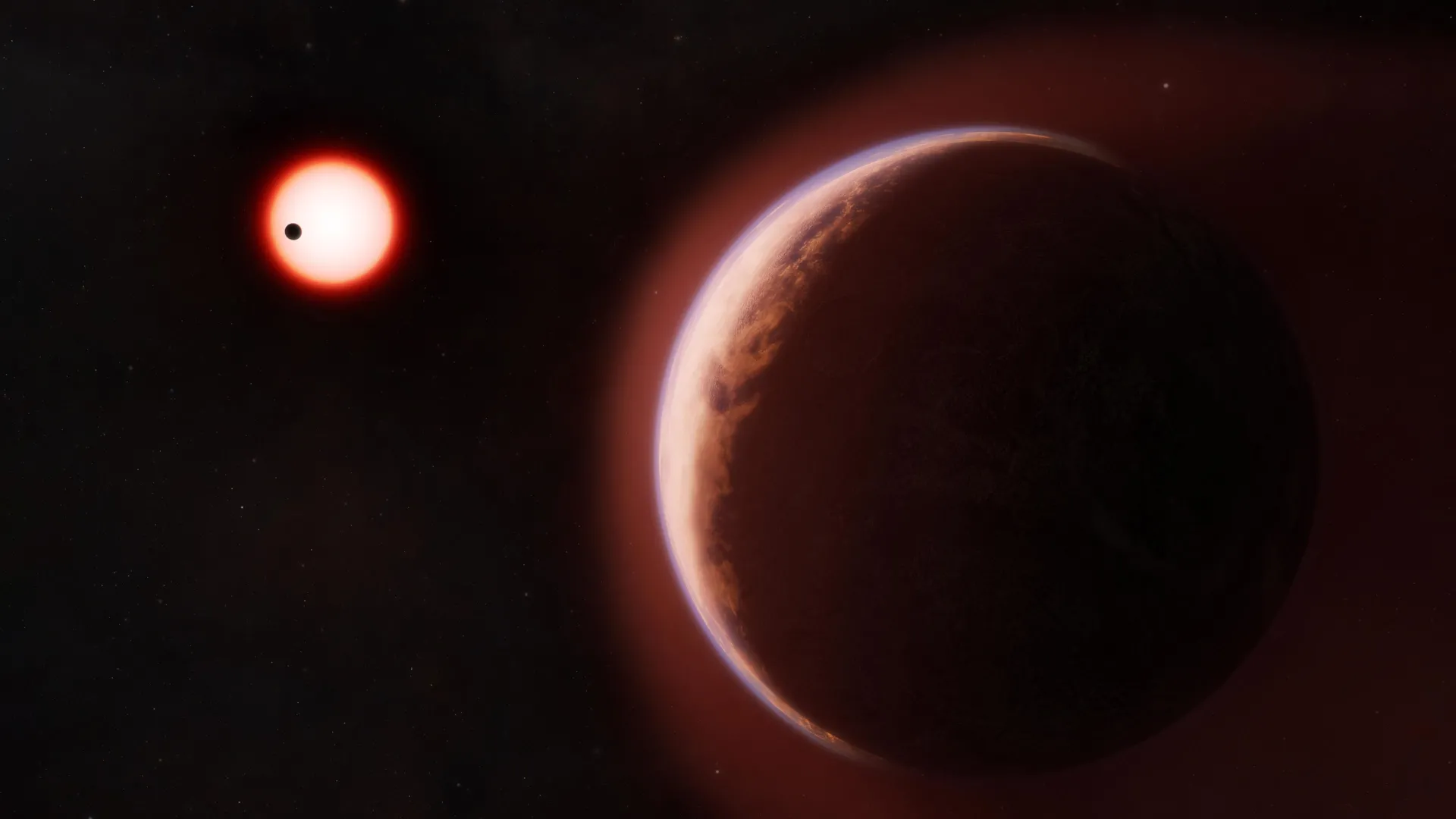
Astronomers have detected an atmosphere around a rocky planet orbiting in the habitable zone of another star for the first time, a milestone in the long hunt for worlds that might resemble Earth. The planet, LHS 1140 b, lies about 48 light-years away and circles a small, cool red dwarf at just the right distance for liquid water to be possible.
The breakthrough came not from a space telescope but from the ground, using the Warm Infrared Echelle, or WINERED, spectrograph mounted on the Magellan Observatory in Chile. Researchers watched for the telltale signature of helium slowly leaking off the planet into space — a stream of escaping gas that betrayed the presence of an atmosphere clinging to the rocky surface below.
"An atmosphere is essential for a planet to support life as we know it," said Collin Cherubim, who led the work as part of his doctoral research at the Center for Astrophysics | Harvard & Smithsonian. It marks the first time anyone has confirmed such an envelope of gas around a rocky planet sitting in a star's habitable zone, the band where temperatures could allow water to pool rather than freeze or boil away.
The finding matters because red dwarfs, the most common stars in the galaxy, bathe their close-in planets in intense radiation and stellar winds that can strip atmospheres away over time. That LHS 1140 b appears to have held onto its atmosphere for an estimated 3 billion years or more suggests that at least some rocky worlds around these tempestuous stars can retain the conditions thought necessary for life.
Just as important is how the discovery was made. By detecting gas escaping into space, astronomers showed that even modest ground-based telescopes can probe the atmospheres of distant rocky planets, a task long assumed to require flagship observatories in orbit. The technique opens a cheaper, more accessible path to surveying many more candidate worlds.
LHS 1140 b has long been a favorite target in the search for habitable worlds. Slightly larger and more massive than Earth, it may be a rocky "super-Earth" or a water world, and its host star is unusually calm for a red dwarf, flaring less violently than many of its cousins. Those traits made it a prime candidate for the kind of patient, repeated observation needed to tease out the faint whisper of an atmosphere against the glare of its star.
The results were published in the journal Science on July 16. Scientists cautioned that detecting an atmosphere is only a first step; determining its composition, thickness and whether it could actually shelter life will require follow-up observations, including with more powerful instruments. Still, researchers described the detection as a proof of concept that reframes what is possible, nudging the search for a true Earth twin from the realm of theory toward the reach of today's telescopes.