Astronomers Find a Temperate Super-Earth in the Habitable Zone of a Star Just 28 Light-Years Away
The newly characterized world, more than six times Earth's mass, orbits the red dwarf Ross 318 where liquid water could exist — making it one of the most promising nearby targets in the search for habitable planets.

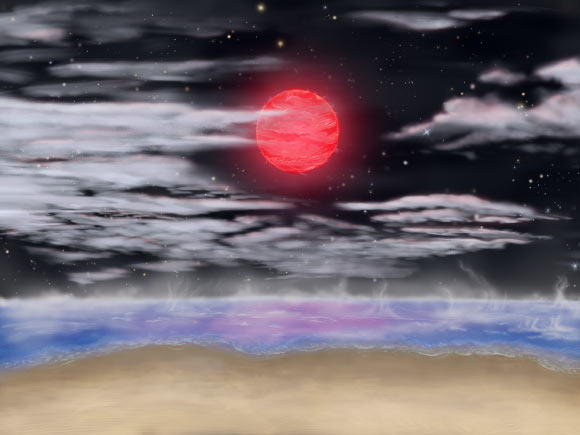
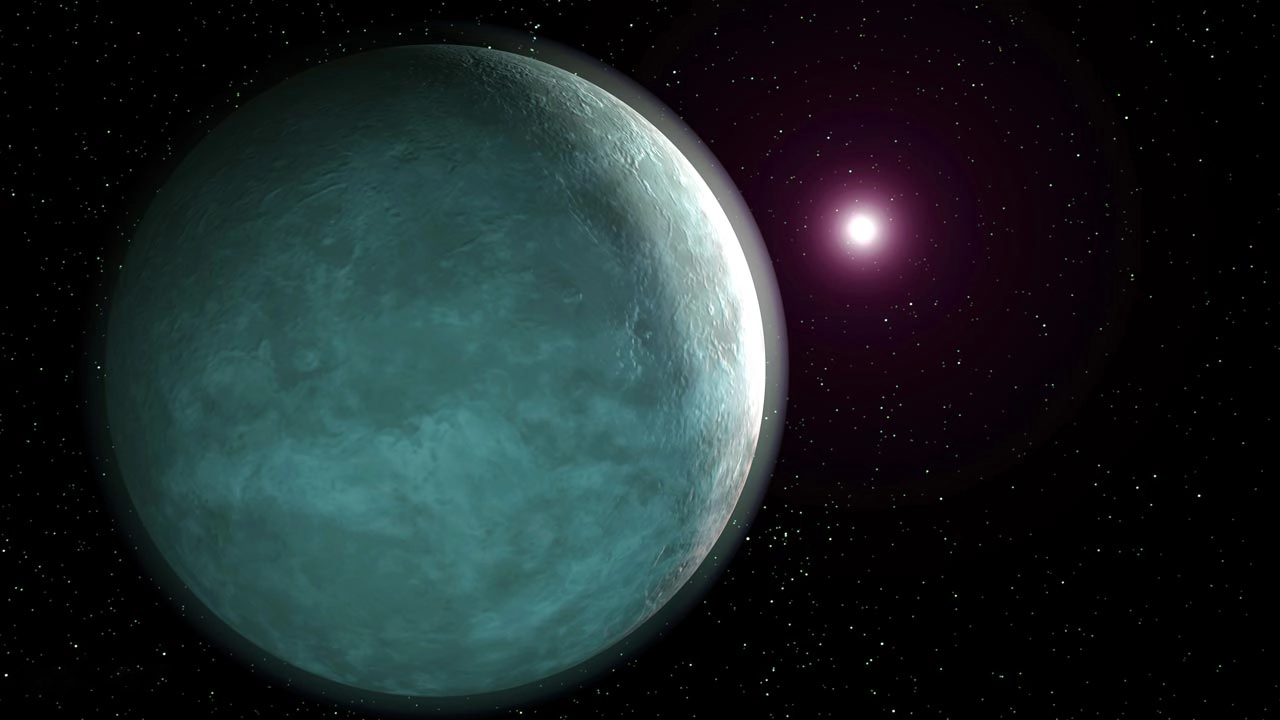
Astronomers have discovered a temperate super-Earth orbiting a small star in our cosmic backyard, adding a promising new world to the short list of nearby planets where conditions might allow liquid water to exist. The planet, designated Ross 318 b, circles a red dwarf just 28 light-years from Earth.
A team of researchers from Italy and Brazil reported the find in a paper posted to the arXiv preprint server. Ross 318 b has a minimum mass of about 6.21 times that of Earth and an estimated radius roughly 1.74 times larger, placing it firmly in the 'super-Earth' category — bigger than our planet but smaller than ice giants like Neptune. It completes an orbit every 39.63 days at a distance of about 0.16 astronomical units from its star.
Despite hugging its star far more tightly than Earth orbits the Sun, the planet stays temperate because its host is so cool and dim. The astronomers estimate a surface temperature of around 237 Kelvin (about minus 36 degrees Celsius), which places Ross 318 b within what scientists call the conservative habitable zone — the region around a star where a rocky planet with the right atmosphere could potentially sustain liquid water.
The discovery emerged not from a single new telescope campaign but from a careful reanalysis of years of accumulated data. The team combined 15 years of observations from the CARMENES and HIRES spectrographs with measurements from NASA's TESS mission, using the radial velocity method to tease out the planet's presence. That technique does not image a planet directly; instead, it detects the tiny gravitational wobble the planet induces in its star, revealing its mass and orbit.
Ross 318, also cataloged as Gliese 48, is a red dwarf of spectral type M3.5V — the most common kind of star in the Milky Way. Because such stars are abundant and long-lived, planets in their habitable zones are prime targets for future studies aimed at characterizing distant atmospheres. The authors describe Ross 318 b as one of the most interesting temperate super-Earths yet found around an M dwarf, and its proximity makes it an appealing candidate for follow-up with next-generation instruments hunting for the chemical fingerprints of habitability.
Habitability around red dwarfs comes with important caveats. These stars are prone to violent flares that can bombard close-in planets with radiation, and worlds orbiting so tightly are often tidally locked, with one hemisphere in permanent day and the other in eternal night. Whether Ross 318 b could actually support life would depend heavily on its atmosphere and magnetic field, factors that radial-velocity measurements cannot reveal. Still, its nearness and temperate setting make it an enticing target. Future observatories capable of probing exoplanet atmospheres could one day search its skies for water vapor and other molecules that might hint at conditions friendly to life.