Super-Earth Confirmed in Habitable Zone Just 10.7 Light-Years Away — Second-Nearest Known Candidate
GJ 887 d orbits one of the quietest red dwarf stars in the solar neighborhood, making it a compelling target for atmospheric analysis by next-generation telescopes.
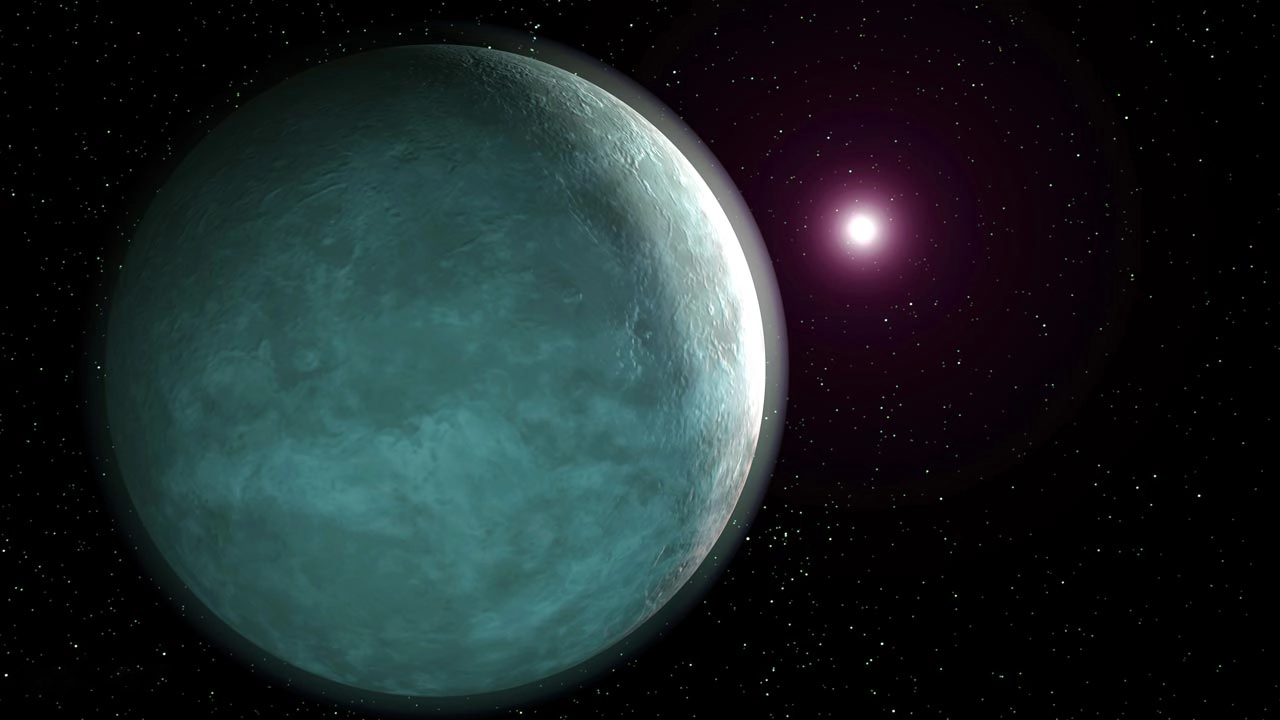
Astronomers have confirmed the existence of a potentially habitable super-Earth orbiting a red dwarf star just 10.7 light-years from our solar system — making it only the second known planet in a habitable zone within 10 light-years of Earth. The planet, designated GJ 887 d, was confirmed in a study accepted by the journal Astronomy and Astrophysics in March 2026, using high-precision spectrographic measurements from instruments at the Very Large Telescope in Chile and the La Silla Observatory.
GJ 887 d has a mass approximately 6.1 times that of Earth and completes an orbit every 50.8 days at a distance of 0.212 astronomical units from its star — well within the classical habitable zone where liquid water could theoretically exist on the surface. The host star, GJ 887, is a red dwarf notable among nearby stars for its exceptional magnetic quietness. Most red dwarfs are highly active, bombarding orbiting planets with X-ray flares and charged particles that can strip away atmospheres over billions of years. GJ 887's low activity level makes its planets far more credible candidates for long-term atmospheric stability.
The confirmation adds GJ 887 d to a system that now includes at least four confirmed planets, with orbital periods of 4.4, 9.2, 21.8, and 50.8 days — and possibly a fifth. The innermost planets orbit too close to the star to be in the habitable zone, but their presence makes the system one of the most densely confirmed planetary systems within the solar neighborhood. Previous radial velocity surveys had hinted at the 50.8-day signal, but the new multi-instrument campaign provided the statistical confidence required for formal confirmation.
The practical significance of GJ 887's proximity and quiet stellar behavior extends to the next generation of space observatories. Upcoming missions designed to directly image nearby exoplanets and analyze their atmospheric composition are heavily dependent on host star behavior — active stars generate noise that drowns out the faint signals astronomers need to detect biosignature gases like oxygen, methane, or water vapor. GJ 887's quietness makes it a compelling primary target for these instruments, meaning GJ 887 d could become one of the first planets for which scientists attempt a detailed atmospheric characterization.
At 10.7 light-years, GJ 887 is close enough that it appears as a faint naked-eye star in dark skies from the southern hemisphere. Its planetary system has been a subject of scientific interest for years, with an initial planet announcement in 2020 that was later called into question as researchers debated whether observed radial velocity signals reflected true planetary companions or patterns in the star's own activity. The 2026 confirmation resolves that debate, placing GJ 887 d firmly on the short list of nearby worlds that future astronomers will scrutinize most closely in the search for life beyond Earth.