James Webb Reveals Two Different Twilights on Scorching Exoplanet WASP-121 b
Astronomers detected sharply different conditions at the dawn and dusk edges of an ultra-hot gas giant, a feat made possible only by the space telescope’s sensitivity.

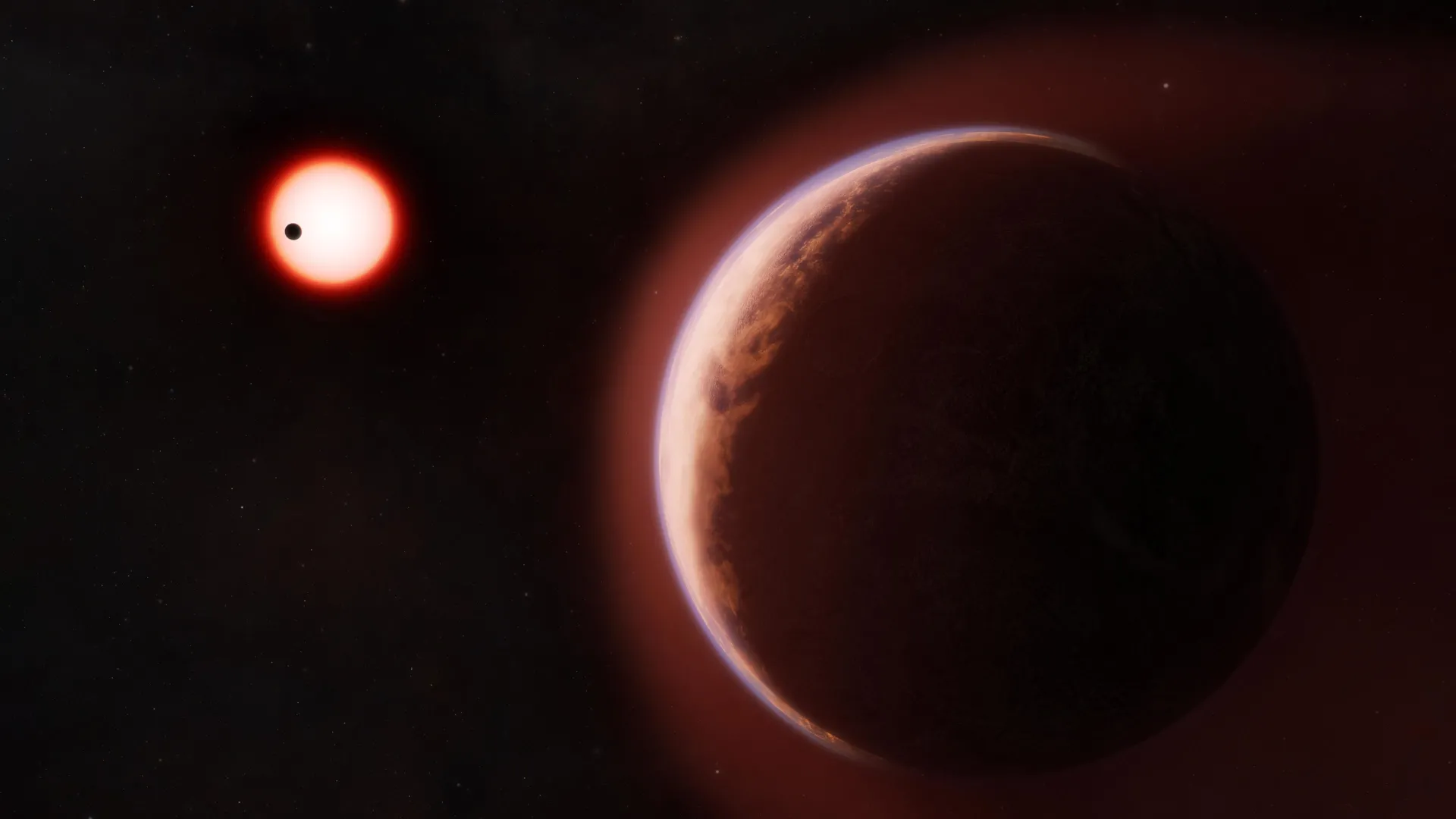
Astronomers using the James Webb Space Telescope have revealed that the morning and evening edges of a distant, scorching planet experience strikingly different conditions — the clearest evidence yet that even a single alien world can host two distinct twilights. The findings, published in Nature Astronomy, focus on WASP-121 b, an ultra-hot gas giant roughly 900 light-years away that orbits its star so closely that one year lasts only about 30 hours.
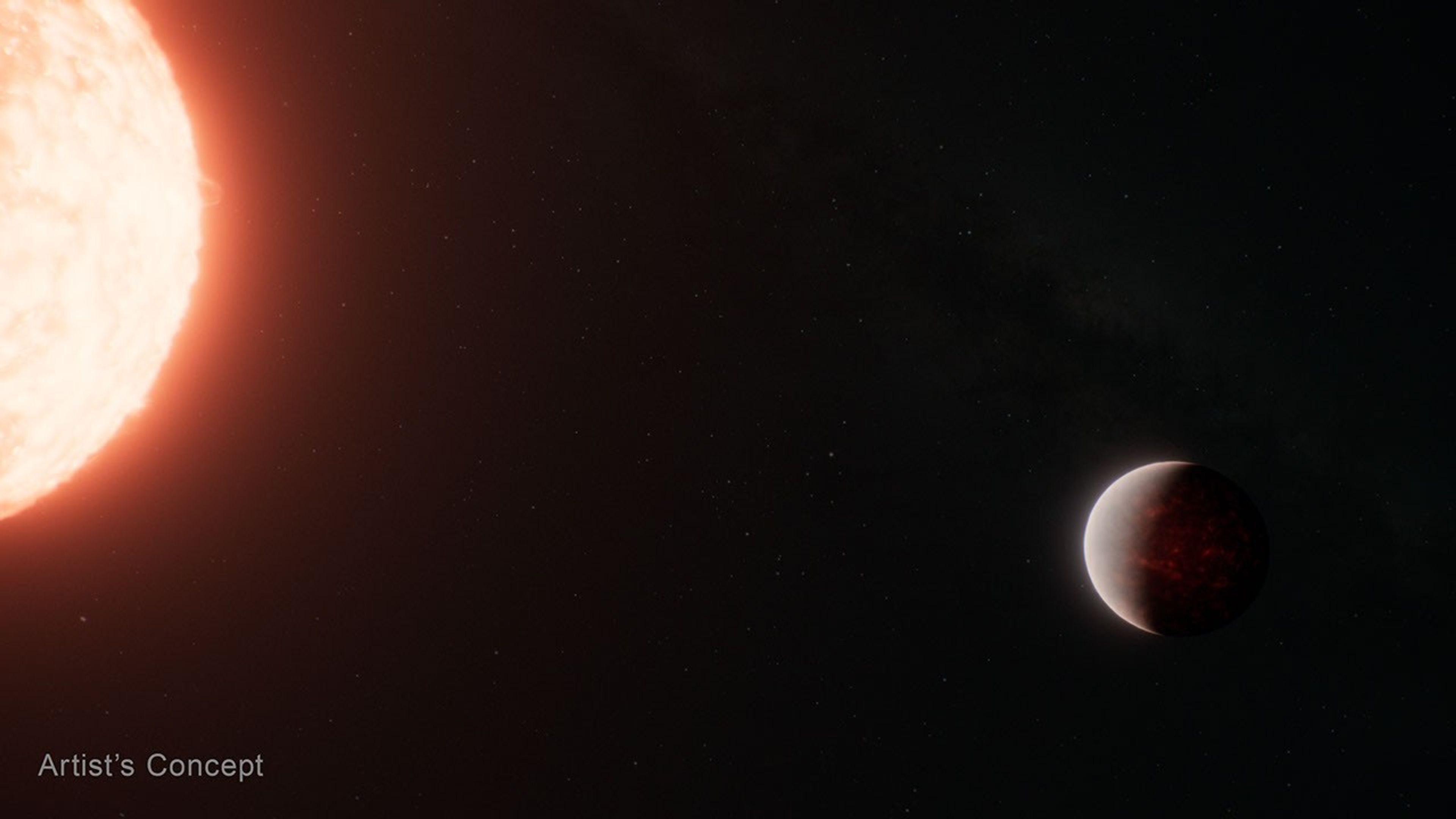
The planet is tidally locked, meaning one hemisphere permanently faces its star while the other is plunged into endless night. That arrangement produces extreme temperature contrasts: the dayside reaches roughly 2,500 degrees Celsius, hot enough to glow, while the nightside is some 1,775 degrees cooler. Between those extremes lie the terminators — the narrow boundary regions where day meets night at dawn and dusk.
Led by Cyril Gapp, a doctoral researcher at the Max Planck Institute for Astronomy in Heidelberg, Germany, the team measured how starlight filtered through the planet’s atmosphere as it passed in front of its host star. They found that the evening terminator absorbed significantly more light than the morning side, a signature consistent with powerful eastward winds that carry heat from the blistering dayside, puffing up and expanding the evening atmosphere.
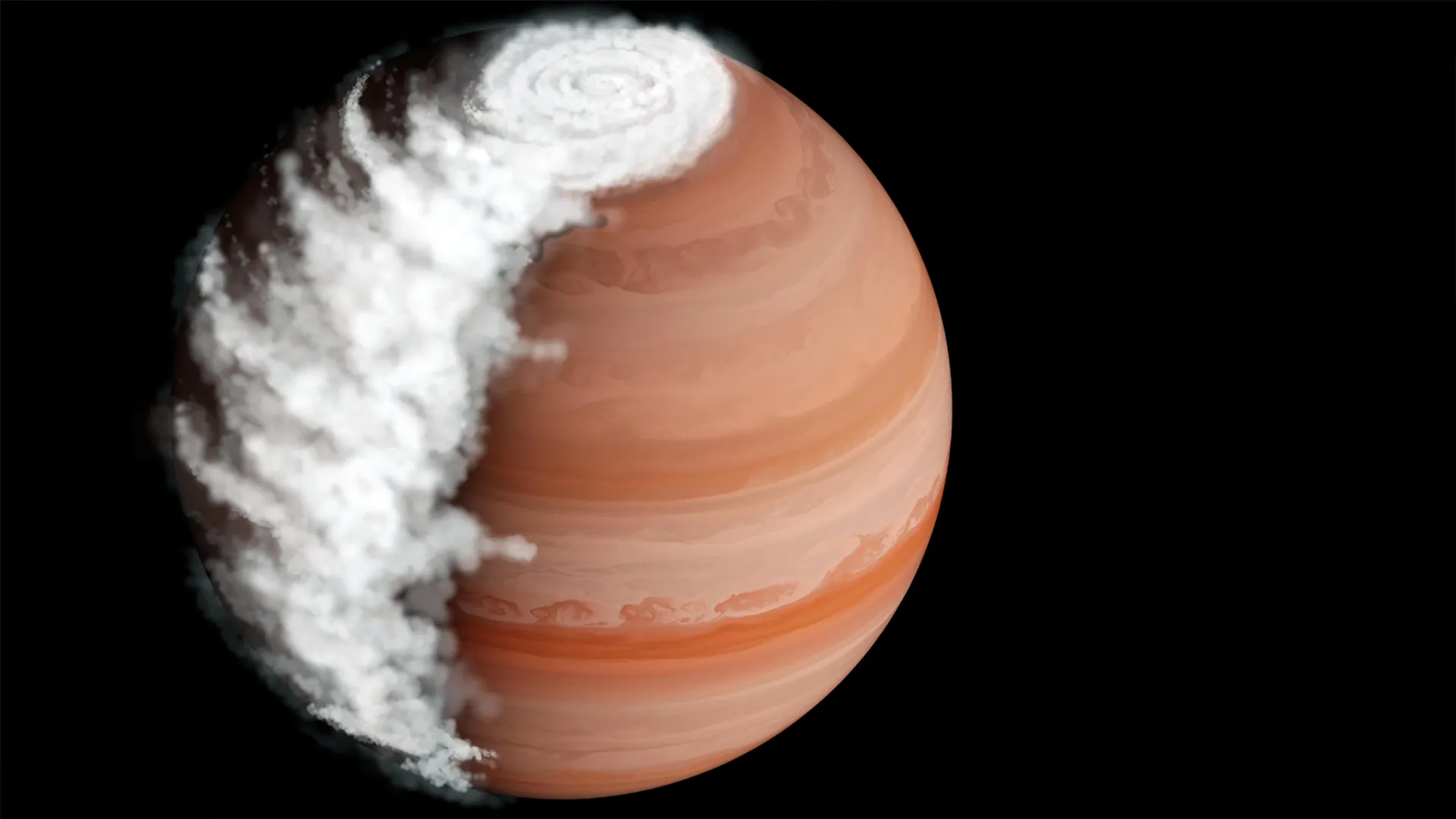
The data also revealed intriguing chemistry. Signals of carbon monoxide rose with temperature, while water vapor showed a genuine decline in the hottest regions — likely because the upper atmosphere is hot enough to tear water molecules apart into their constituent atoms. On the cooler morning side, researchers found hints of mineral clouds, possibly made of silicate particles, that may block infrared radiation and drive additional cooling not captured in current models.
“JWST gives us the most detailed glimpses into distant planets to date,” Gapp said, noting that the asymmetry between the two terminators had long been predicted by theory but never measured with such clarity. The ability to distinguish dawn from dusk on a planet hundreds of light-years away marks a leap in what astronomers can probe about worlds far beyond our solar system.
The study adds to a growing body of work on “hot Jupiters,” a class of giant planets that orbit perilously close to their stars and serve as natural laboratories for extreme atmospheric physics. By resolving the differences between a planet’s morning and evening skies, scientists can refine three-dimensional models of how winds, clouds and chemistry circulate — insights that will sharpen the search for conditions on smaller, potentially habitable worlds in the years ahead.