China's Tianwen-1 Orbiter Photographed Interstellar Comet 3I/ATLAS From 30 Million Kilometers Away
A camera built to shoot the bright surface of Mars was pushed far beyond its design limits to capture a visitor from another star system, tail and all.

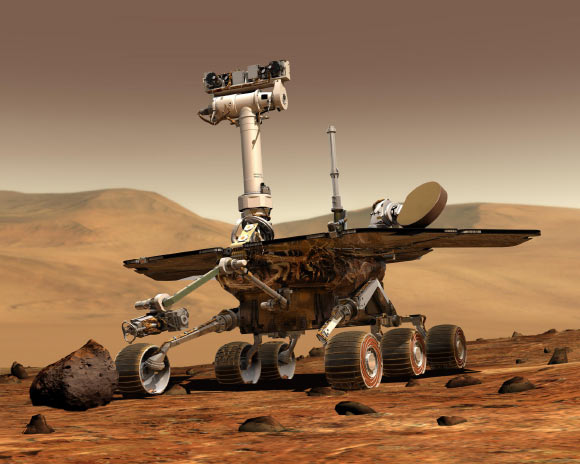
China's Tianwen-1 orbiter, circling Mars for four years and eight months, has delivered some of the closest images yet taken of 3I/ATLAS, the third confirmed interstellar object to pass through our solar system.
The China National Space Agency released images captured on Oct. 3, 2025, when the comet swept within roughly 30 million kilometers of the spacecraft. That distance put Tianwen-1 among the closest observers of the object since its discovery — far nearer than any telescope on Earth could manage at the time.
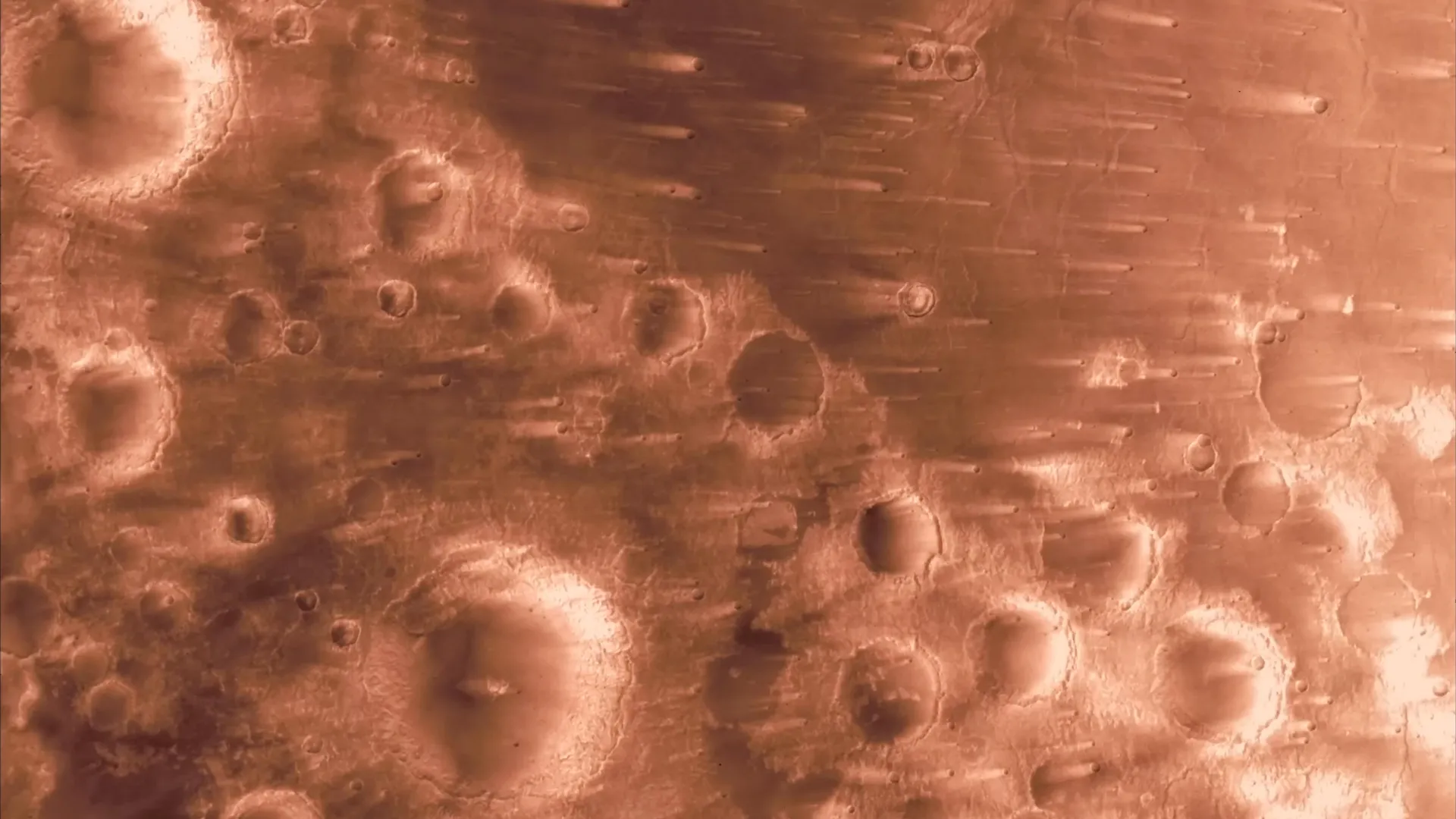
Getting the shot required using the spacecraft's High-Resolution Imaging Camera, or HiRIC, in a way its designers never intended. The instrument was built to photograph the bright, sunlit surface of Mars from orbit. The comet was between 10,000 and 100,000 times fainter than those Martian features. Engineers compensated with precise timing and rapid operation of the camera, effectively squeezing a deep-sky observation out of a planetary imaging system.
The resulting frames show both the comet's nucleus wrapped in a glowing coma — the cloud of gas and dust released as sunlight heats the body — and a visible tail streaming behind it. Researchers stitched multiple exposures into animations tracking the object's motion as it moved toward its closest approach to the sun. The presence of a coma and tail is direct evidence that 3I/ATLAS carries water and other volatile materials that boil off under solar heating, the same basic chemistry that drives comets born in our own solar system.
Tianwen-1 was not alone. On the same date, two European spacecraft at Mars turned their cameras toward the visitor: Mars Express used its High Resolution Stereo Camera, and the ExoMars Trace Gas Orbiter used its CaSSIS imager. The overlapping datasets give scientists multiple viewing geometries of the same object on the same day, which helps constrain how much dust the comet is shedding and how the coma is structured.
The scientific payoff is unusual. Every comet native to our solar system formed from the same disk of gas and dust that built the sun and planets, so their chemistry reflects one star's history. An interstellar comet is a physical sample of another planetary system, delivered free of charge. Short of launching a mission to another star — which remains generations away, if it is possible at all — objects like 3I/ATLAS are the only way to directly compare the raw ingredients of planet formation elsewhere against our own.
Mission teams are still analyzing the data, and the campaign has become an unplanned demonstration that planetary orbiters can be repurposed as opportunistic deep-space observatories when a target of opportunity crosses their field of view.