NASA's Psyche Nailed Its Mars Slingshot, and Every Instrument Aboard Worked
The spacecraft skimmed 2,864 miles above Mars on May 15 to steal speed for its trip to a metal asteroid. The flyby doubled as a full dress rehearsal — and produced a timelapse of the Red Planet.
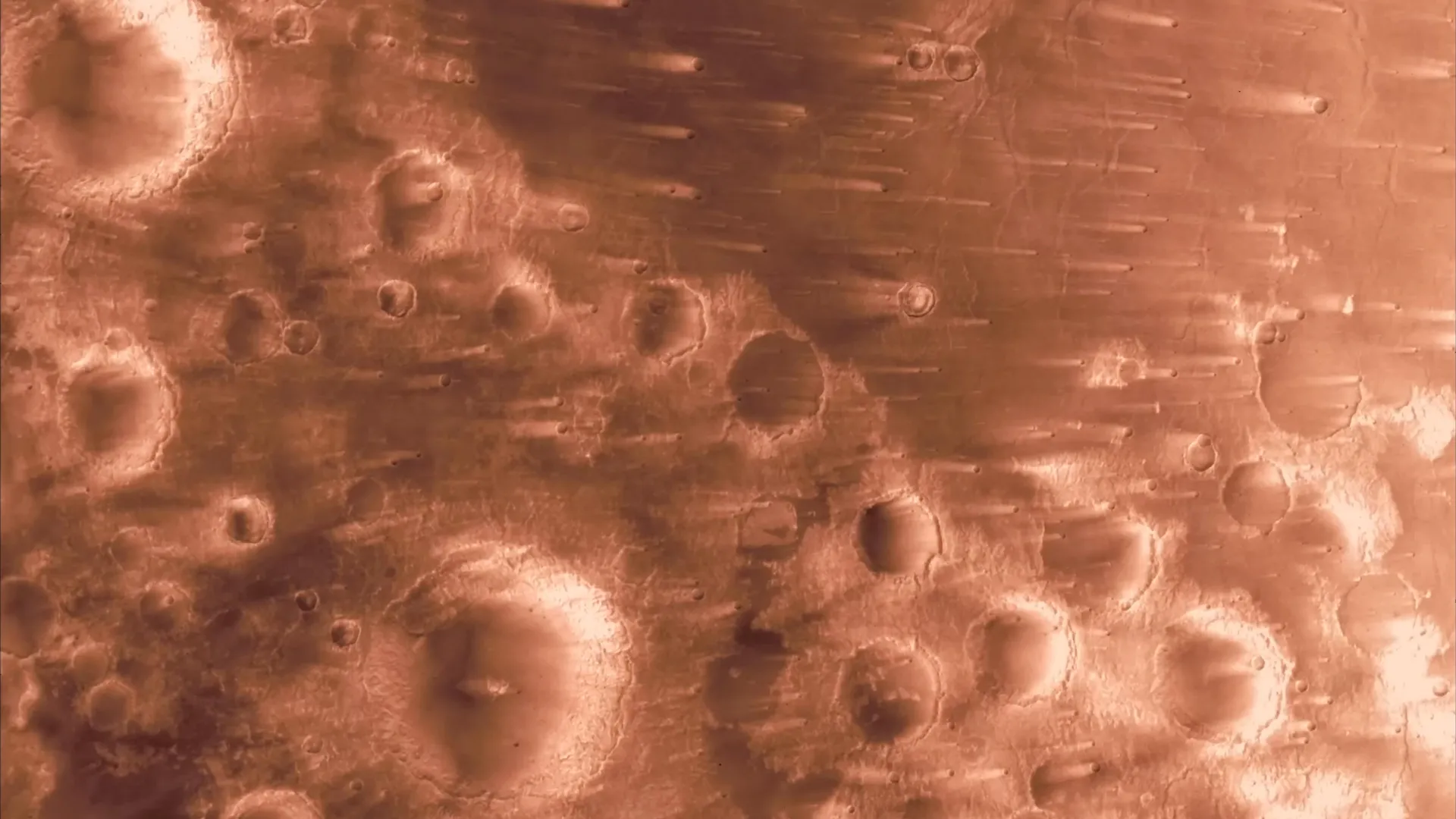
NASA's Psyche spacecraft passed 2,864 miles above the surface of Mars on May 15, borrowing energy from the planet's gravity to fling itself toward a metal world in the asteroid belt. Mission scientists have now finished going through the data, and the verdict from NASA's Jet Propulsion Laboratory is that everything aboard worked.
Gravity assists are cheap speed. Rather than burning propellant to accelerate, a spacecraft dives past a planet and steals a fraction of that planet's orbital momentum, coming away faster and on a new heading. Psyche needed exactly that to reach its target — the asteroid 16 Psyche, a body believed to be largely metal and possibly the exposed core of a shattered protoplanet — on schedule in the summer of 2029.
The flyby was also a rehearsal. Psyche launched in 2023 carrying an imager, a magnetometer and a gamma-ray and neutron spectrometer, none of which had yet been used on a real planetary body. Mars provided a target with well-known properties, so the team could check each instrument's output against decades of existing measurements rather than trusting it blind at an asteroid four years from home.
"All instruments delivered great results," said Lindy Elkins-Tanton, the mission's principal investigator, who added that the data "complemented Mars science with data collected through Psyche's unique perspective." David Lawrence of the Johns Hopkins Applied Physics Laboratory, who leads the spectrometer science, said seeing the neutron detection come through "was very gratifying" and that the instrument "performed excellently."
Ben Weiss of MIT, the mission's deputy principal investigator, said the pass "validated the instrument's performance under dynamic conditions" for the magnetometer — an important test, because the magnetometer is the instrument expected to answer the central question at the asteroid: whether 16 Psyche carries a frozen record of an ancient magnetic field, which would be strong evidence it really is a planetary core.
Jim Bell of Arizona State University, who leads the imager, said the camera "delivered some rarely seen views of the Red Planet," including a timelapse assembled from the approach and departure sequence. Project manager Bob Mase of JPL summed up the navigation: "The navigation team nailed it," he said, adding that the spacecraft is "in great shape."
Psyche now has roughly three years of cruise ahead, running on solar electric propulsion — ion thrusters that produce a gentle but relentless push. When it arrives in 2029 it will spend more than two years in a series of progressively lower orbits, mapping the asteroid's shape, gravity field, composition and magnetism.
If 16 Psyche turns out to be a core, it would be the first time anyone has looked directly at the kind of object that sits, unreachable, at the center of Earth. That is the entire premise of the mission: planetary interiors are permanently out of reach except by accident, and this asteroid may be the accident.
Originally reported by ScienceDaily.