Mars Rover Curiosity Spends Six Days Shaking a 28-Pound Rock Loose After Drilling Pulls Boulder Out of Ground
A routine drill into a sandstone slab nicknamed 'Atacama' lifted the entire chunk out of Gale Crater and stuck it to the rover's drill sleeve — an annoying first that handed scientists their first ever look at pristine, unweathered Martian bedrock from below.
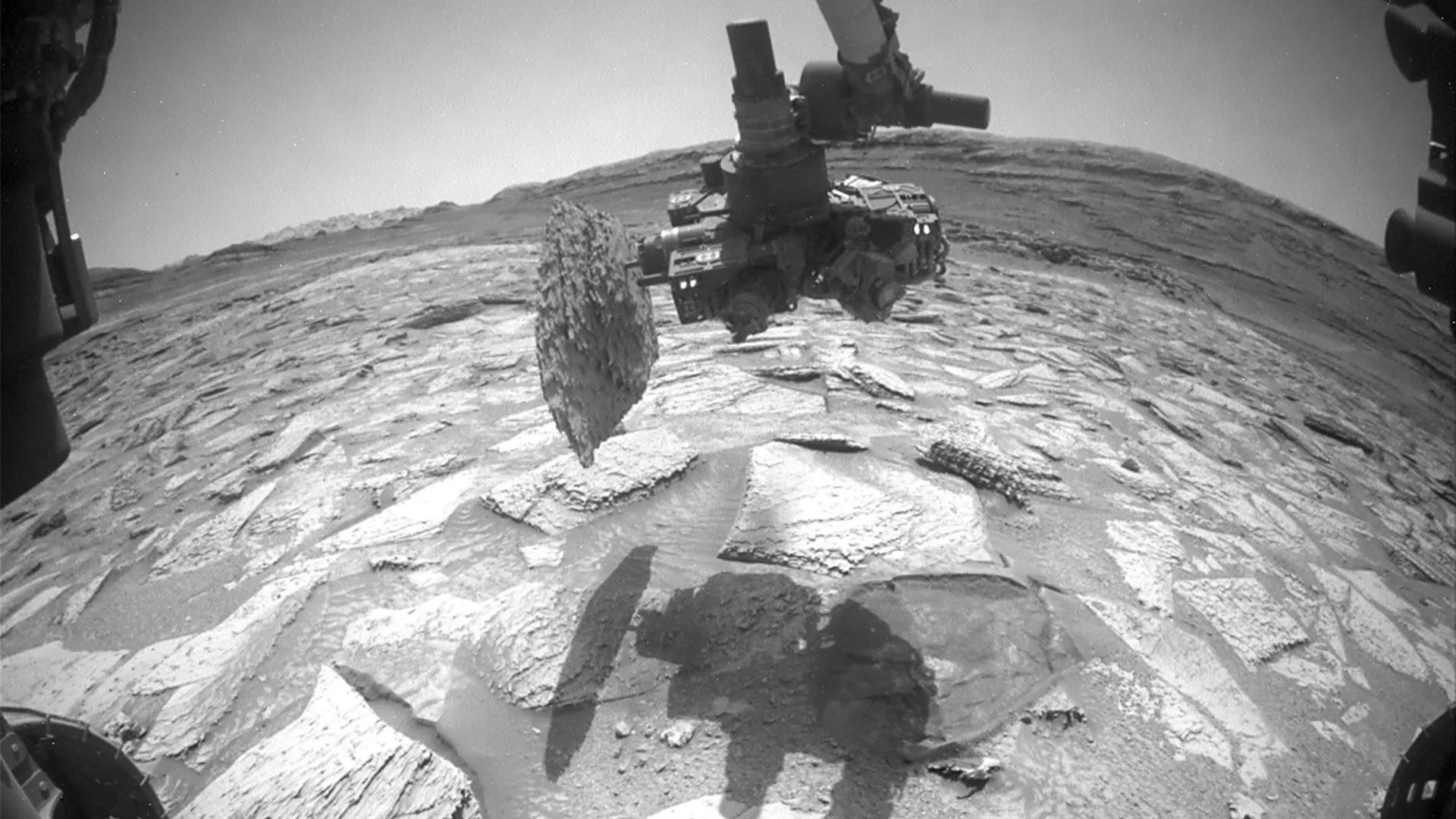
PASADENA, Calif. — NASA's Curiosity rover spent six unscheduled days trying to wrestle a 28-pound chunk of Martian sandstone off the end of its drill last month after a routine sample-collection attempt yanked the entire rock loose from the surface — the first time in nearly 13 years of operations that the one-ton robot has had a foreign object physically welded to its arm.
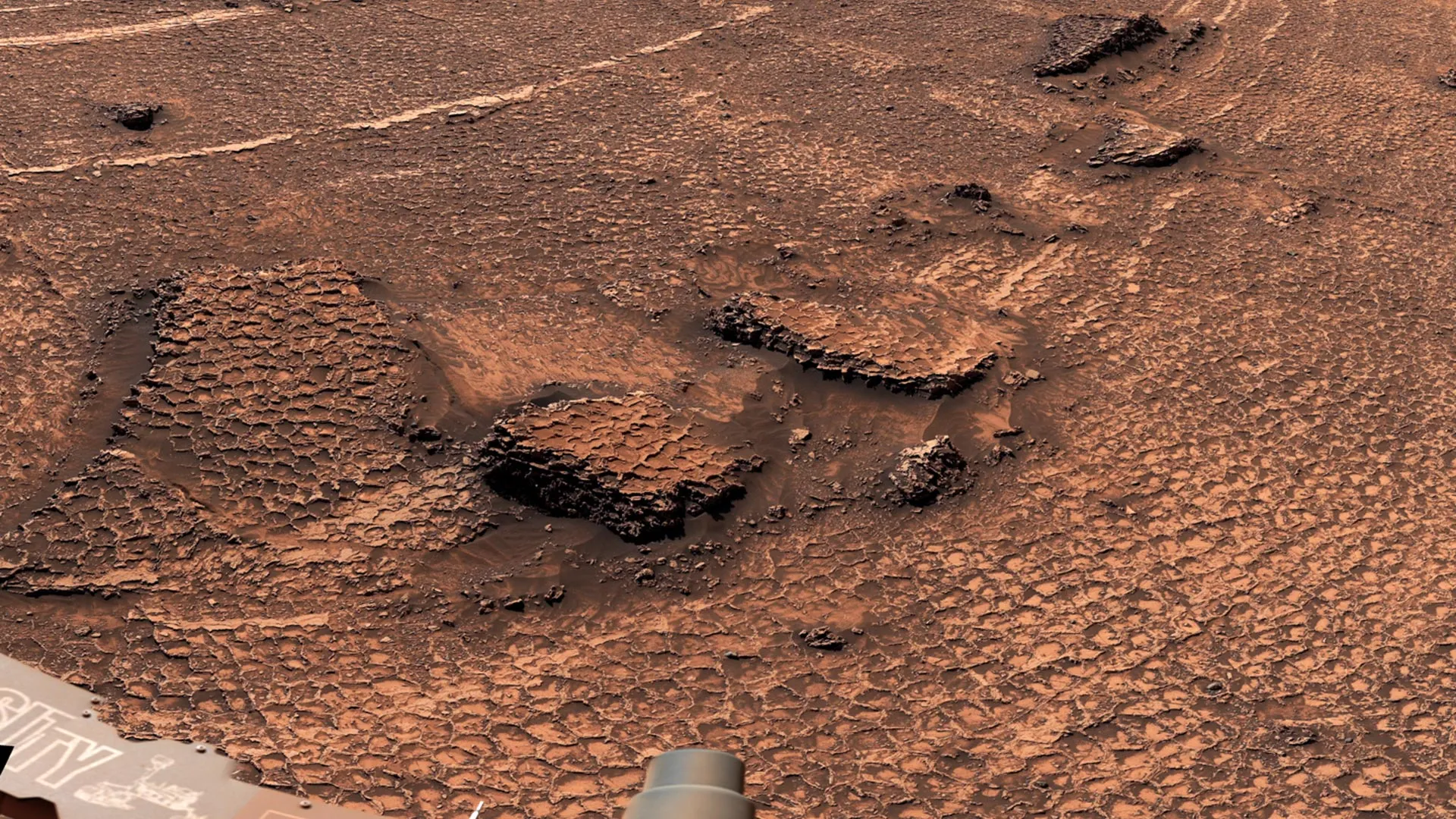
The trouble began on April 25, when Curiosity drilled into a slab nicknamed "Atacama" in the Gale Crater foothills of Mount Sharp. The rock, roughly 1.5 feet wide at the base and six inches thick, was supposed to give up a sample of finely powdered material to be ingested by the rover's onboard chemistry labs. Instead, when the rover retracted its drill, the rock came up with it, stuck firmly to the sleeve that surrounds the drill bit. "In all the previous drilling Curiosity has done, we have occasionally cracked or peeled off layers, but this is the first time a rock stayed attached to the drill sleeve itself," Ashwin Vasavada, the mission's project scientist at NASA's Jet Propulsion Laboratory, told a press briefing on Friday.
With its arm temporarily inoperable, the rover's $2.5 billion mission ground to an effective halt. The Mars Hand Lens Imager (MAHLI) took close-up photographs of the underside of the suspended rock — never previously visible to any spacecraft — revealing pristine, unweathered bedrock with sand grains glued together by what appeared to be calcium sulfate veining. "It was an inconvenience that turned into a science windfall," Vasavada said. Engineers first tried shaking the rock loose with the drill's vibration motor on April 29; that effort spilled sand but did not dislodge the slab. A second attempt on April 30 also failed.
On May 1, the team adjusted the position of the robotic arm, tilted the drill to a steeper angle, spun the bit, and triggered the vibration motor in a single coordinated maneuver. The rock fractured into pieces as it slammed against the Martian surface. Curiosity's hazcams photographed the debris field, and the rover's chemistry team is now planning to re-drill into the broken interior, where the sample can be collected without picking up the surface alteration that has bedeviled previous attempts. "Frankly, getting the inside of a 6-inch-thick boulder is something we have wanted for a decade," mission deputy Ken Williford said.
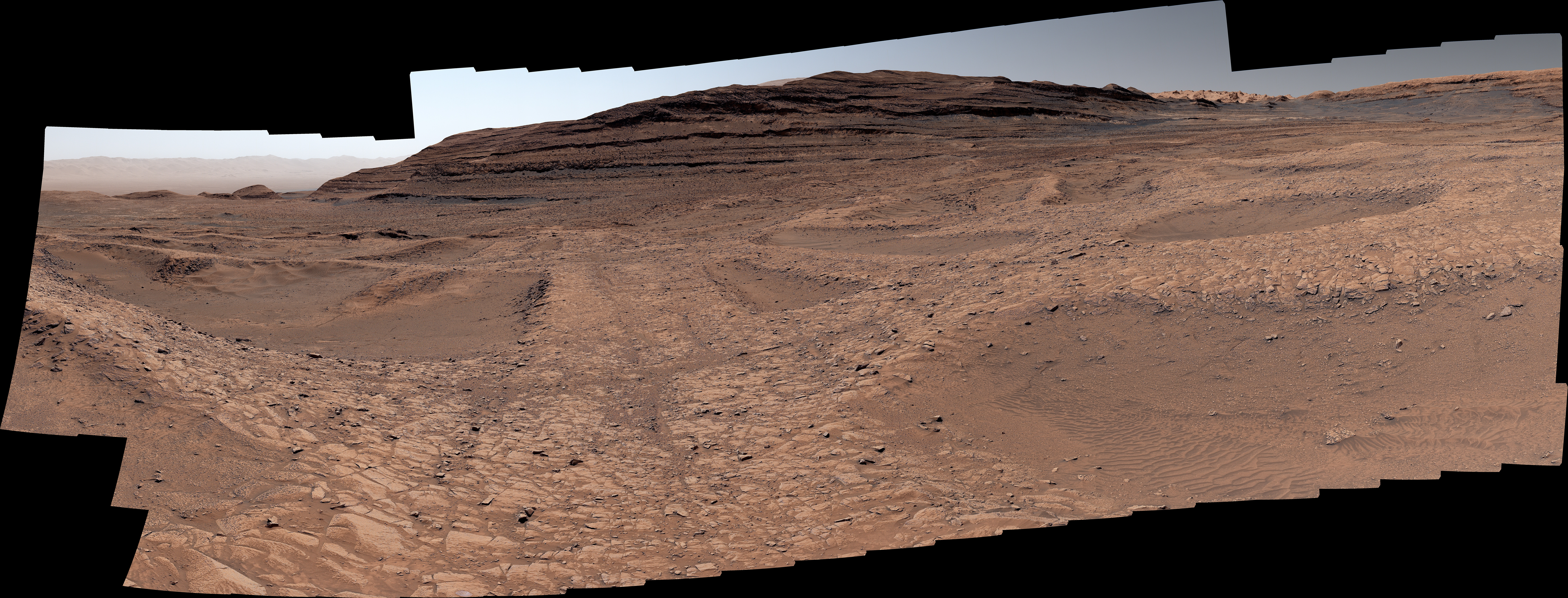
The incident is the latest test of Curiosity's aging hardware. The rover, designed for a two-year mission, has now operated for 13 Earth years and racked up more than 35 kilometers across Gale Crater. Its wheels are pocked with stress fractures, its drill feed mechanism failed in 2016 and required a software workaround, and its plutonium power source produces roughly 15% less electricity than at launch. Even so, JPL flight controllers told Reuters the team plans to push Curiosity deeper into the layered terrain of upper Mount Sharp, where the rover will continue to hunt for organic chemistry that could indicate ancient habitability — preferably without picking up any more hitchhikers.