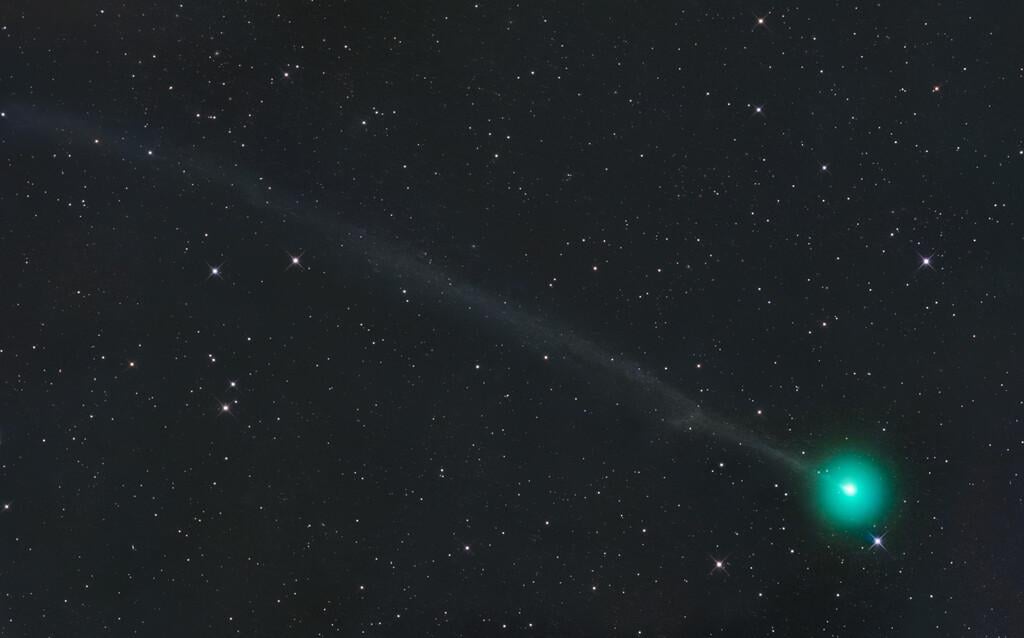
Scientists Aim Telescopes at Interstellar Comet 3I/ATLAS, Hunting for Alien Technology
A SETI Institute team scanned the rare visitor from another star for seven hours across radio frequencies — and traced every suspicious signal back to humanity.
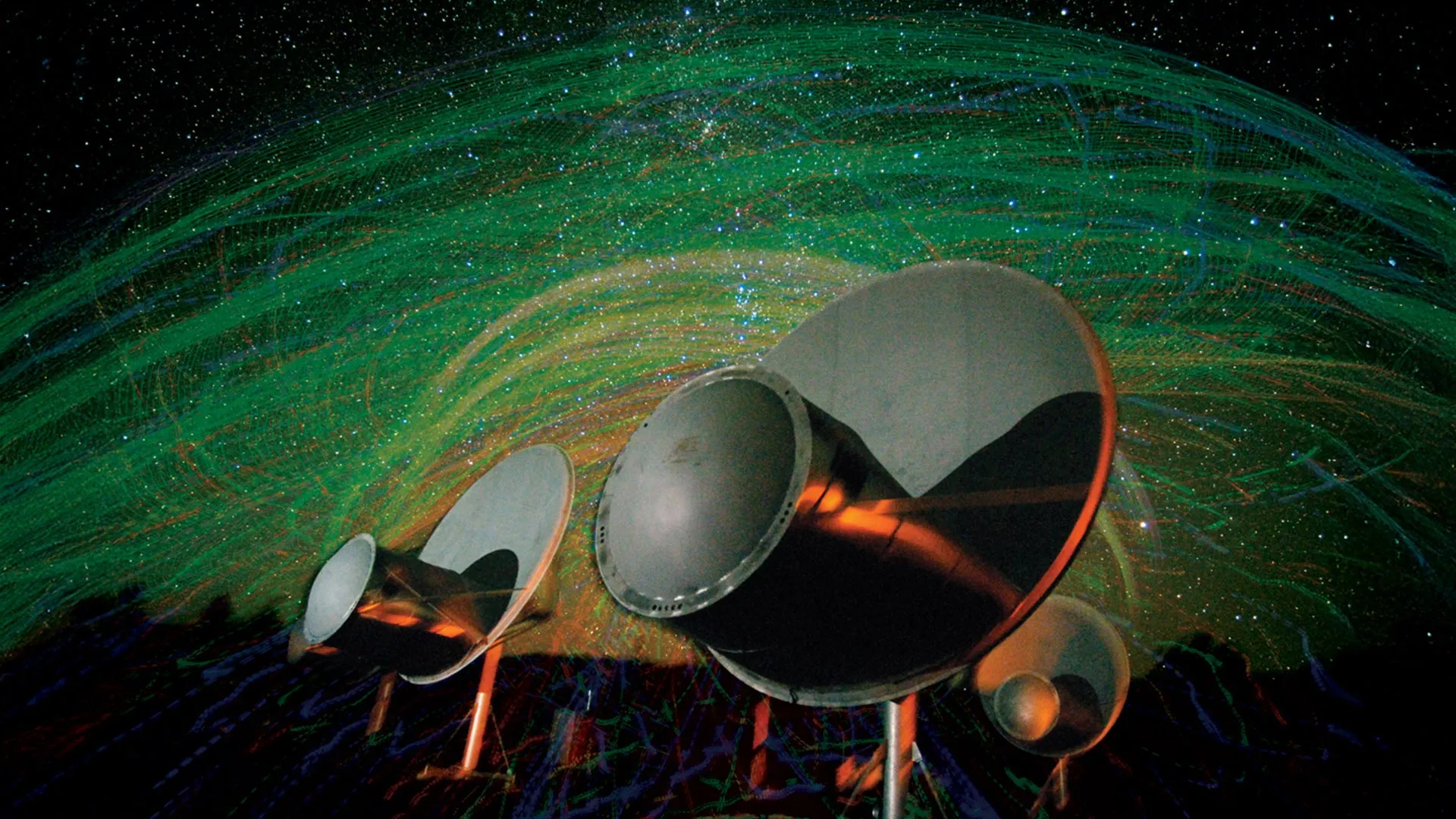
When a visitor from another star system swept through our cosmic neighborhood, scientists seized a once-in-a-generation chance to ask an audacious question: could it be carrying signs of alien technology? The answer, after seven hours of careful listening, was no — but the search itself marked a milestone in humanity's hunt for intelligence beyond Earth.
A team at the SETI Institute trained the Allen Telescope Array at the Hat Creek Radio Observatory in Northern California on 3I/ATLAS, the third confirmed interstellar object ever detected in our solar system. For more than seven hours the array swept across radio frequencies from 1 to 9 gigahertz, scanning for narrowband signals — the kind of precise, single-frequency transmissions that nature does not produce but technology does.
The instruments recorded close to 74 million candidate signals, a torrent of data that had to be sifted for anything genuinely anomalous. After filtering out interference from Earth-based transmitters and the growing constellations of satellites in low orbit, only about 200 signals remained worth a closer look. Investigators ran each one to ground, and every single one traced back to human-made technology rather than to the comet streaking through space. No technosignature survived the scrutiny.
The null result was very much expected. Other observations have shown 3I/ATLAS behaving like an ordinary, if exotic, comet, with a natural composition and a coma of gas and dust — including detections of methane and methanol that mark it as a genuine relic of another planetary system. The point of the SETI scan was not to prove the object was a spacecraft, but to practice the techniques and rule out the extraordinary, a discipline that defines modern technosignature science.
3I/ATLAS, discovered in July 2025, joins a very short list of known interstellar interlopers, following 1I/'Oumuamua in 2017 and 2I/Borisov in 2019. Each such object is a free sample from another star system, delivered to our doorstep, and astronomers race to study them in the brief window before they vanish back into the dark. The findings, published in The Astronomical Journal, demonstrate that researchers now have the tools and the readiness to interrogate these rare visitors the moment they appear — so that if one ever does carry an unnatural signal, we will be listening.
The exercise also reflects a shift in how the search for extraterrestrial intelligence is conducted. Rather than staring at distant stars and waiting for a beacon, astronomers increasingly target specific, time-sensitive opportunities — a passing interstellar object, an anomalous flare, a newly discovered exoplanet — and apply rigorous statistical filtering to separate the natural and the artificial from the overwhelming hum of human-generated radio noise. That noise is growing as satellite mega-constellations proliferate, making the painstaking work of vetting candidate signals harder with each passing year. By rehearsing on 3I/ATLAS, the SETI team sharpened a playbook that can be deployed within hours of the next interstellar discovery. With new observatories expected to detect such visitors far more frequently in the years ahead, scientists say humanity is moving from a posture of passive hope to one of active, disciplined readiness.