Soil Bacteria's 'Megacluster' of Genes Brews Antibiotic Cocktail That Kills Superbugs
Researchers report in Nature that Streptomyces bacteria deploy a large cluster of genes to make synergistic molecules that together cripple drug-resistant pathogens.
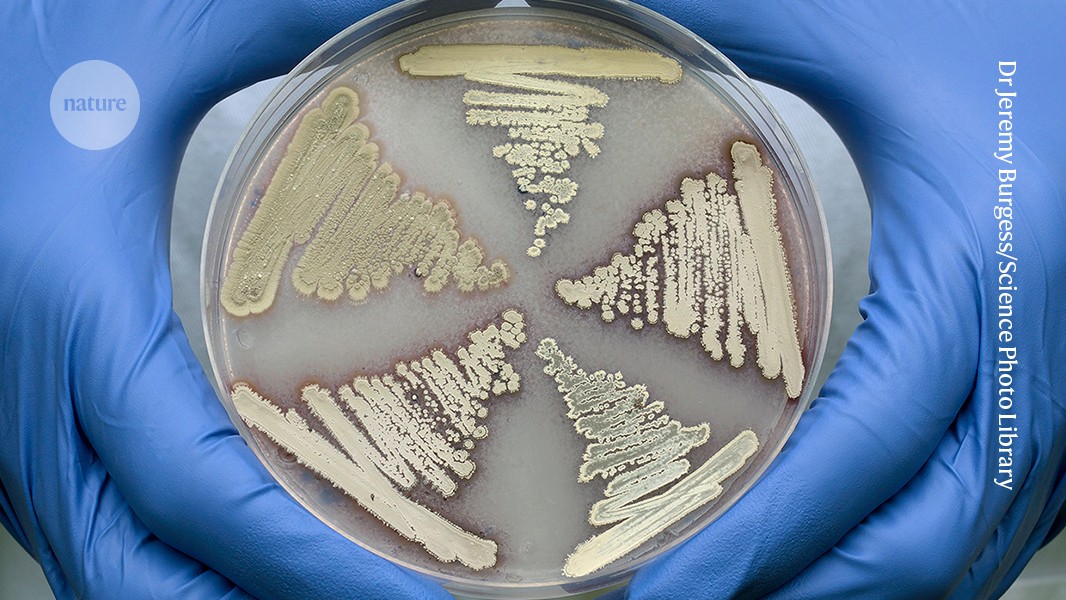
Common soil bacteria assemble cocktails of molecules that work together to choke off the growth of dangerous pathogens, according to new research that points to a fresh strategy for fighting antibiotic-resistant infections. In a study published in Nature, scientists describe a "megacluster" of genes in Streptomyces bacteria that orchestrates the production of a potent mixture of antibacterial compounds.
Rather than relying on a single drug-like molecule, the bacteria produce several compounds that act in concert, attacking a key metabolic process that pathogens need to survive. The combination proved capable of killing so-called superbugs — strains that have evolved resistance to many conventional antibiotics — by hitting them in a way that is far harder to evade than a lone chemical assault.
Streptomyces is among the most studied of all bacterial genera, and for good reason: it has been the source of many of medicine's most important antibiotics, including streptomycin, the first drug to prove effective against tuberculosis. The new findings suggest these familiar microbes still have powerful, untapped chemistry to offer, encoded in large gene clusters that researchers are only beginning to decode.
The synergy at the heart of the discovery may be its most important feature. When pathogens face a single antibiotic, a single mutation can sometimes be enough to render the drug useless. A cocktail of molecules that strike together raises the bar dramatically, because a microbe would need to develop multiple defenses at once — a far less likely event. That principle, long used in combination therapies for diseases like HIV and tuberculosis, appears here to have been refined by evolution itself.
The stakes for finding new approaches are enormous. Antibiotic-resistant infections are rising worldwide as bacteria outmaneuver existing drugs, and researchers have estimated that such infections could kill roughly 39 million people between 2025 and 2050 if the trend is not reversed. The pipeline of genuinely novel antibiotics, meanwhile, has run dangerously thin, with few new classes reaching patients in decades.
By revealing how soil bacteria naturally manufacture synergistic antibacterial mixtures, the study offers both a blueprint and a source. Scientists hope that mining these megaclusters — and learning to reproduce or re-engineer the molecules they encode — could yield a new generation of combination treatments designed from the outset to be hard for pathogens to defeat. The work is a reminder that some of the most promising weapons against drug-resistant disease may still be hiding in the ground beneath our feet.