The Dead Sea Scrolls Sect Swore by a 364-Day Year That Put Every Holiday on the Same Weekday Forever. It Also Lost 1.25 Days Every Year, So Passover Would Drift Into Winter Within Decades. A Tel Aviv Scholar Says They Really Used It, Then Quietly Gave It Up and Kept It as a Symbol.
Nearly 20 of the Qumran scrolls deal with calendars and astronomy. Prof. Eshbal Ratzon argues the calendar was live in the sect's second-century BCE founding fight with Jerusalem, became unworkable as the seasons slid, and was set aside as relations warmed under Alexander Jannaeus, without ever losing its place in the community's identity.
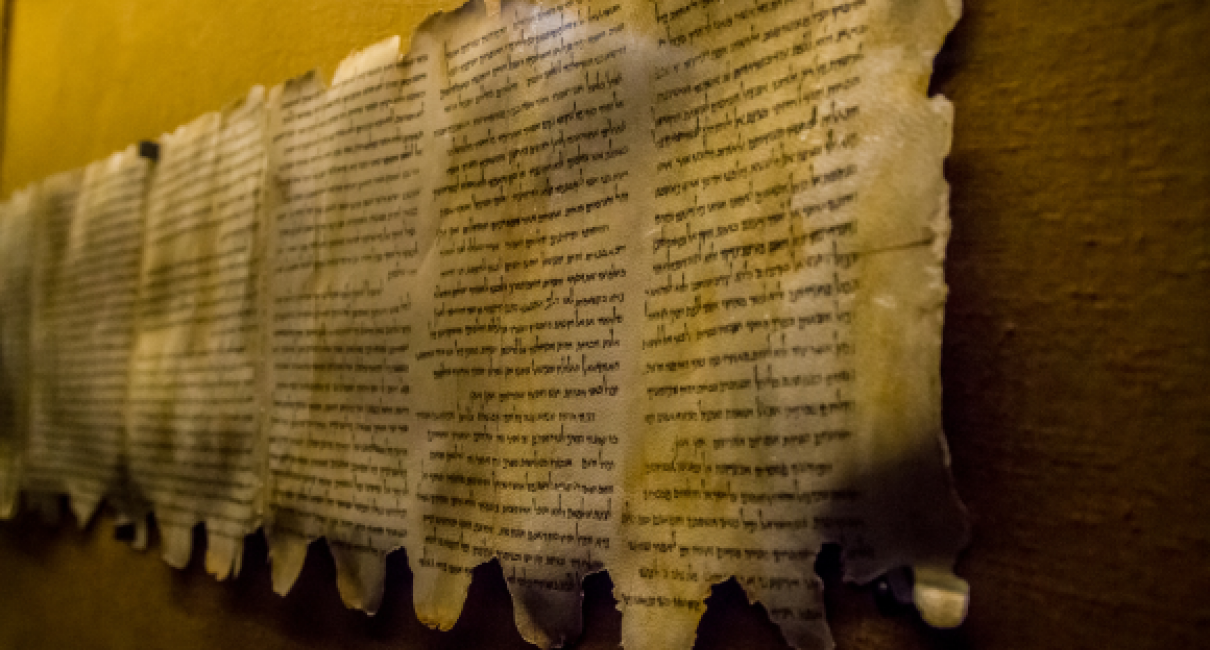
Among the roughly 900 manuscripts recovered from the caves at Qumran, nearly 20 deal with calendars and astronomy, an extraordinary share for a religious library and a sign of how much the question of what day it was mattered to the community that hid them. The sect's calendar had 364 days, a number chosen because it divides evenly by seven, so that every festival fell on the same day of the week every year, forever. It also fell short of the real solar year of about 365.25 days by a day and a quarter annually. For decades scholars have argued over whether the Qumran community actually lived by that calendar or merely theorized about it. A new study by Prof. Eshbal Ratzon of Tel Aviv University's Department of Jewish Philosophy and Cohn Institute for the History and Philosophy of Science and Ideas, published in the Tarbiz Quarterly for Jewish Studies, proposes an answer: both, in sequence.
The problem with the calendar is arithmetic. Without a correction, the 364-day year loses about a week every six years against the seasons. "After several decades, a spring festival would end up being celebrated in winter, or even in the fall," Ratzon said. Over 20 years the drift approaches four weeks. Any community using it in practice would have watched Passover slide out of spring within a generation, and the scrolls contain no accepted mechanism for putting it back.
Ratzon's reconstruction starts with why the sect adopted it at all. In the second century BCE, the priestly establishment in Jerusalem controlled the religious calendar and with it the dates of every festival. The Qumran group held that God had fixed those dates at Creation and that the Temple's lunar-based reckoning was a corruption. The Book of Jubilees, a foundational text in the Qumran library, attacks the lunar calendar fiercely and presents the 364-day system as the original calendar received by Moses on Mount Sinai. On Ratzon's reading, the calendar was not an abstraction in those years; it was the crux of the dispute that drove the community out of Jerusalem and into the desert, and they kept it.
Then two things changed. The seasonal drift accumulated until the calendar became impractical to follow, and the political climate shifted. Under the Hasmonean king Alexander Jannaeus, who ruled from 103 to 76 BCE and clashed bitterly with the Pharisees, the sect found a ruler whose legal interpretations resembled its own and whose enemies were its enemies. With relations warming and the seasons out of joint, Ratzon argues, the community stopped using the 364-day year in practice while continuing to copy, study and revere it as a theological and eschatological ideal, the calendar that would govern the world to come.
That sequence, she says, is what reconciles the contradictions that have kept the debate alive: texts that treat the calendar as functional and texts that treat it as purely symbolic can both be right, written at different points in the community's history. The Qumran calendar, long regarded as one of the sect's defining features and one of its most baffling mysteries, becomes on this account something more familiar, a founding principle that outlived its practical use and was kept, as such things often are, as a marker of who the community was.
Originally reported by Tel Aviv University.