First Intact Graves at Göbeklitepe Help Explain the Site's 928 Scattered Human Bones
Two burials at the 11,000-year-old Turkish site show the same damage as loose bone fragments found in its monumental buildings, suggesting erosion carried them downhill rather than ritual alone.

For three decades, the human bones at Göbeklitepe have been one of archaeology's stranger puzzles. Excavators at the hilltop site in southeastern Türkiye, famous for its massive carved stone pillars, have recovered 928 bone fragments from men, women and children of all ages, representing nearly every part of the body. But until recently no one had found an actual grave. The bones were simply scattered, many of them inside the monumental buildings.
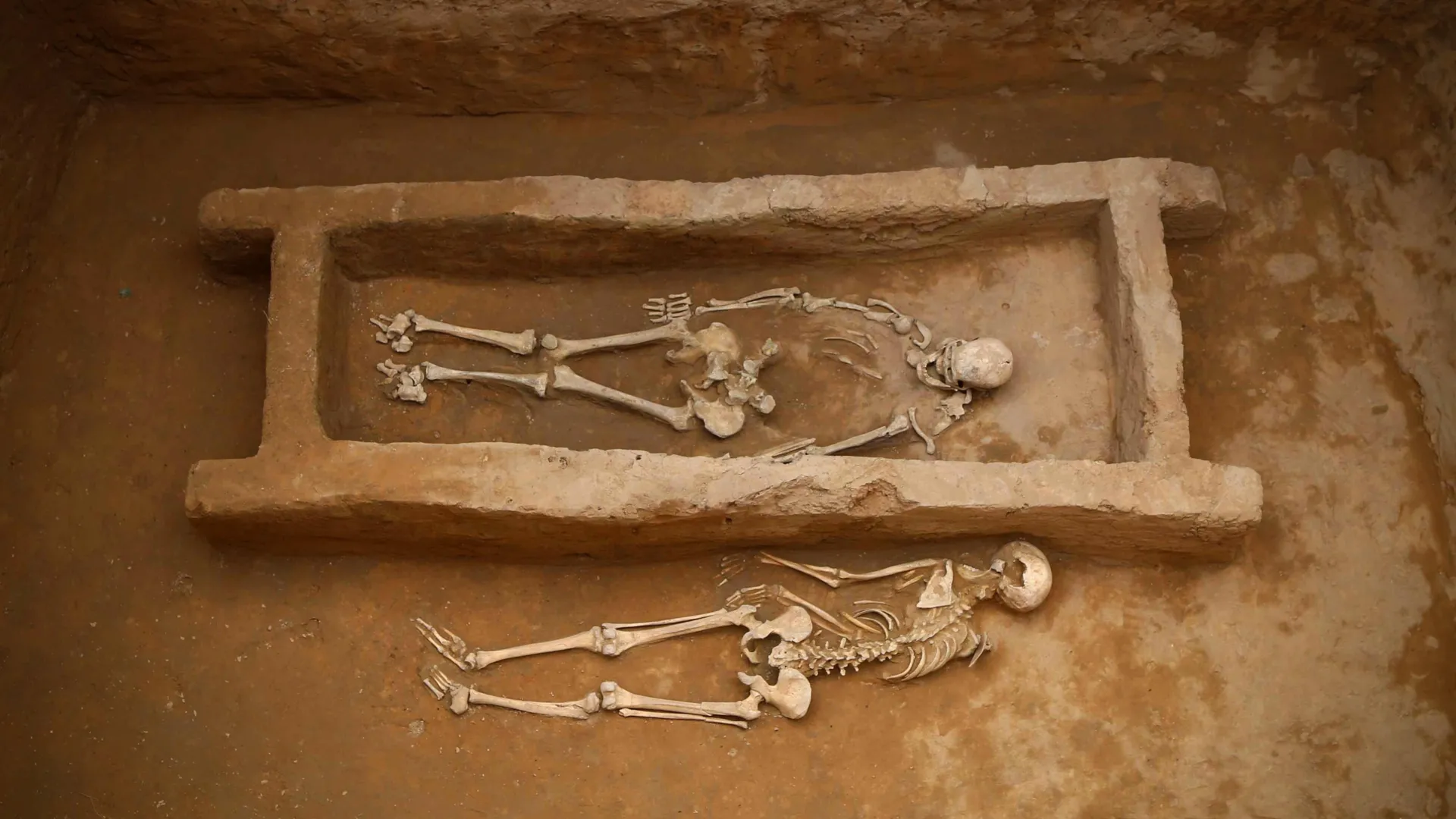
Now the site's first intact burials are offering an answer. In a paper published in PLOS One, anthropologist Julia Gresky of Georg-August University in Germany and archaeologist Lee Clare of the German Archaeological Institute describe two graves uncovered at Göbeklitepe. One held a young woman laid out on a bed of stones. The other was a shared grave containing at least three people whose bones had been rearranged after death.
Göbeklitepe dates to the start of the Neolithic, roughly 11,000 years ago, when people in the region were just beginning to settle into permanent farming communities. Its circular and rectangular enclosures, ringed by T-shaped limestone pillars carved with foxes, snakes, boars and vultures, were first recognized as prehistoric in the 1990s by German archaeologist Klaus Schmidt. The site was added to UNESCO's World Heritage List in 2018. Because the bones turned up inside those buildings, and because some fragments carry marks interpreted as possible cutting or ritual treatment, many researchers suspected deliberate practices such as skull cults or the display of human remains.
Gresky and Clare examined the remains from the two graves for signs of natural wear, including fractures, rodent gnaw marks and thick mineral crusts. They found the buried bones showed many of the same kinds of damage as the loose fragments scattered across the site. "This primary burial demonstrates that many of the observed alterations occurred within the burial context itself," they wrote.
That points to a simpler story for much of the scattered material. The authors suggest many fragments originally lay in graves higher up the hill. Over centuries, erosion and landslides moved soil and debris downslope, carrying damaged bones out of their original resting places and depositing them in the buildings below. Damage that looked like it might be the result of human handling could have happened in the ground.
The researchers are careful not to close the door on ritual. "While this offers a strong and plausible scenario, it does not exclude the possibility that additional mortuary practices — whether simultaneous or diachronic — were also taking place," they wrote. Some fragments may still reflect deliberate treatment of the dead.
The finding matters beyond one site. Göbeklitepe has become a touchstone for arguments that monumental building and shared ritual came before, and may have helped drive, the shift to farming. Knowing how its dead were actually buried, and which clues reflect human intent rather than geology, gives researchers firmer ground for reconstructing how some of the world's earliest settled communities treated the people they lost.