Neolithic Britons, Not Glaciers, Hauled Stonehenge's Six-Tonne Altar Stone 700 Kilometers From Scotland
A new analysis of zircon crystals rules out ice-age transport, pointing to a deliberate, staged journey across ancient Britain some 5,000 years ago.
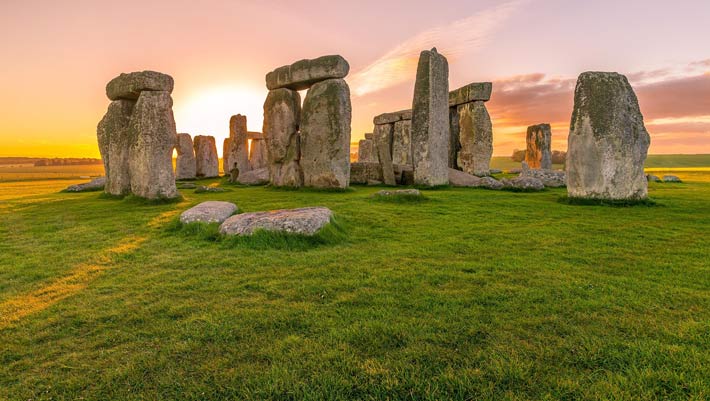
One of Stonehenge's deepest mysteries has come into sharper focus: how its central Altar Stone, a six-tonne sandstone slab, ended up on Salisbury Plain when its birthplace lies some 700 kilometers (435 miles) away in northeastern Scotland. A new study concludes that Neolithic people — not glaciers — were responsible for the epic haul, deliberately moving the massive megalith across the length of ancient Britain.
Researchers at Curtin University in Australia and Sheffield Hallam University in England reached the conclusion after analyzing more than 500 zircon crystals locked inside fragments of the stone and comparing their chemical "fingerprints" to rock formations across the British Isles. The match pointed firmly to the Orcadian Basin of northeast Scotland, far from the chalk downlands where Stonehenge rises.
Crucially, the team found no geological evidence that glaciers had carried the stone southward during past ice ages — a competing theory that would have removed the need for human muscle. The absence of glacial debris near Salisbury Plain, combined with the precise sourcing, led the researchers to conclude that Neolithic communities organized the stone's relocation themselves, likely in multiple stages using a combination of overland and water routes.
The study, titled "From the Highlands to the Henge: Elucidating the Source and Transport Routes of Stonehenge's Altar Stones," was published online June 4 in a peer-reviewed geoscience journal. It builds on earlier work that first traced the Altar Stone to Scotland, but it goes further by directly weighing — and rejecting — the glacial alternative.
The implications stretch well beyond a single rock. Moving six tonnes of sandstone hundreds of kilometers roughly 5,000 years ago would have demanded extraordinary planning, labor and coordination, hinting at long-distance connections and shared purpose among prehistoric communities scattered across Britain. It suggests the people who built Stonehenge were embedded in networks far more expansive than once assumed.
Exactly how they accomplished the feat remains an open question. The researchers suggest a staged journey, perhaps floating the stone along coasts and rivers before dragging it overland on sledges or rollers. Whatever the method, the finding reframes the Altar Stone not as a glacial accident but as a monument to human determination — a deliberate offering hauled from the Scottish Highlands to the heart of a sacred landscape on Salisbury Plain.