Polly Wants a Name: Study Finds Pet Parrots May Use Names the Way Humans Do
Drawing on recordings of hundreds of companion parrots, researchers found striking evidence that some birds attach specific names to specific individuals — not just mimicry, but labels.
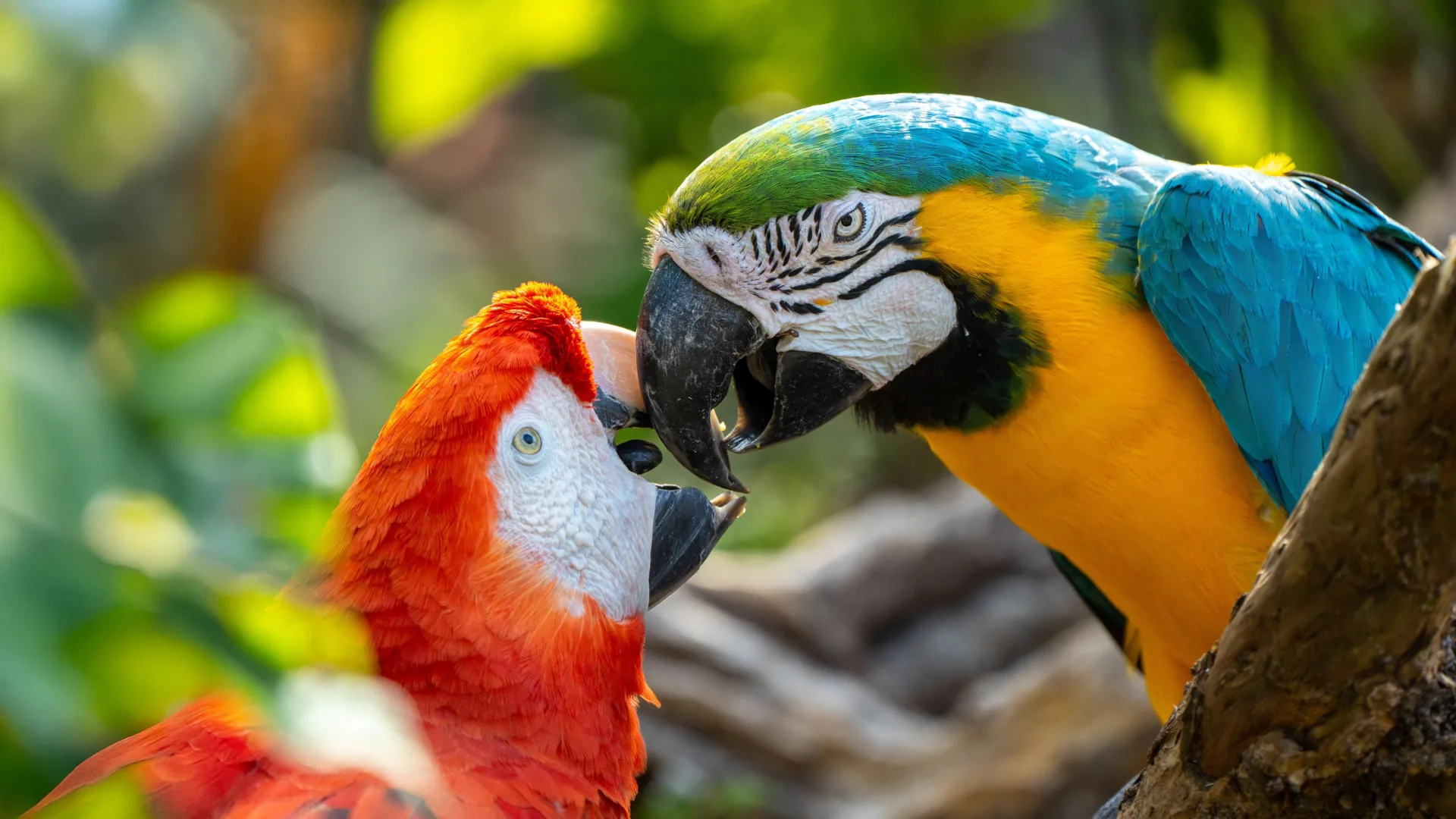
Anyone who has lived with a parrot knows the birds can talk. A new study suggests some of them may also know exactly who they are talking about. Researchers report growing evidence that companion parrots can learn names and use them as labels for particular people and animals — a cognitive feat once thought to be largely the province of humans.
The work, published in the journal PLOS One, drew on data gathered through the ManyParrots project, a collaborative research network that studies how parrots learn, think and vocalize. Scientists examined survey information and audio submissions covering more than 889 parrots living in human households, looking for cases in which the birds appeared to deploy names in meaningful ways rather than simply parroting back sounds.
Nearly half of the participants reported examples of their birds saying names, and among 413 recordings that captured name use, 88 appeared to show the parrots using a name as a label for a specific individual. Crucially, the researchers found that some birds were not merely applying names to broad categories such as "people" or "the family." Instead, they seemed to link a particular name to a particular person or animal — the hallmark of a true referential label.
The findings suggest parrots possess both the cognitive machinery and the vocal flexibility to use names in a variety of ways, from greeting a familiar human to, potentially, referring to someone who is not even in the room. That kind of "displaced" reference — talking about an absent individual — is a sophisticated communicative ability and a tantalizing hint at the depth of parrot social intelligence.
Parrots are unusual in the animal kingdom for being open-ended vocal learners, able to acquire new sounds throughout their lives, much as humans do. Researchers have noted that the song notes of budgerigars contain consonant- and vowel-like subcomponents, a level of acoustic complexity that may help explain how the birds reproduce and recombine the names they hear.
The behavior may have roots in how parrots live in the wild. Many species are highly social and form lifelong pair bonds, and some are known to develop distinctive "contact calls" that function almost like individual signatures, helping flock members keep track of one another across distance. Seen in that light, a pet parrot learning to attach a human's name to a specific person may be repurposing a natural talent for individual recognition rather than performing a wholly novel trick.
The authors caution that survey-based data has limits and that carefully controlled experiments will be needed to confirm just how deliberately parrots wield names. Still, the study adds to a growing body of evidence that the line between human and animal communication is blurrier than once assumed — and that the chatty bird on the perch may be doing far more than imitation.
Originally reported by ScienceDaily.