
Physics
Scientists Store Massive Data Using Light in Three Dimensions
New holographic technique combines amplitude, phase, and polarization to dramatically increase storage capacity while AI reconstructs information.
The physics desk
Physics from the quantum to the cosmos: particle physics, quantum computing, astrophysics, cosmology and the discoveries that change what is possible.
New holographic technique combines amplitude, phase, and polarization to dramatically increase storage capacity while AI reconstructs information.

Dresden team finds gentle magnetic wave stimulation can trigger previously unseen oscillation patterns in tiny magnetic structures, challenging fundamental physics assumptions.

University of Waterloo researchers propose that Big Bang inflation arises naturally from deeper quantum gravity framework, offering testable predictions for future experiments.

New holographic storage technique combines amplitude, phase, and polarization to dramatically increase data capacity and speed.

Researchers use singlet fission and spin-flip metal complexes to capture more energy carriers than photons absorbed, surpassing traditional limits.

Photons drifting sideways in quantized steps through engineered optical resonator arrays have reproduced one of physics' most celebrated phenomena, opening new pathways in topological photonics and quantum computing.

A University of Houston team used a 'pressure quenching' technique on mercury-based copper oxide to exceed the previous record set in 1993, pushing toward the holy grail of room-temperature superconductivity.
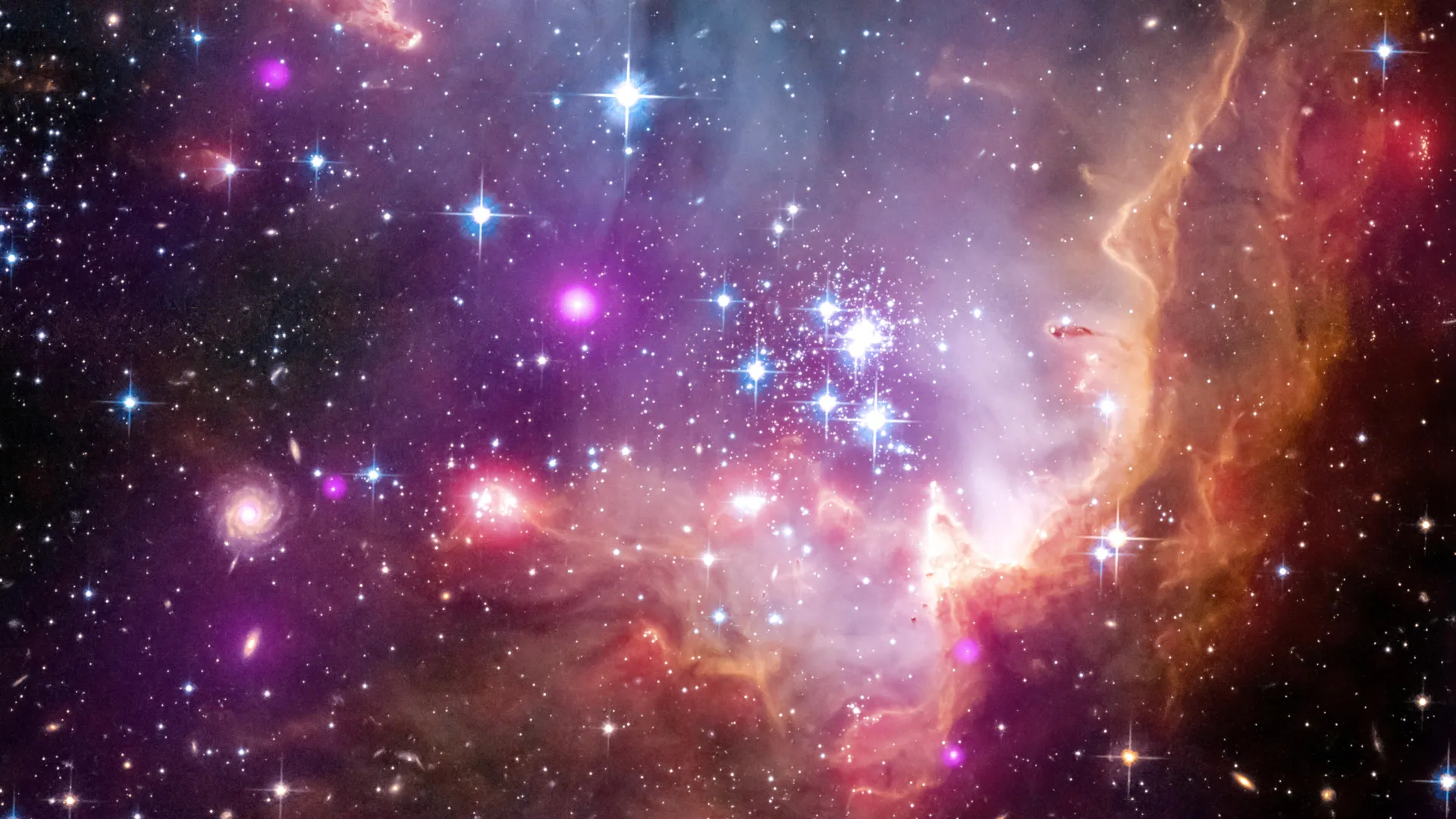
The Small Magellanic Cloud — long used as a stand-in for early-universe galaxies — passed directly through the disk of the Large Magellanic Cloud hundreds of millions of years ago, permanently disrupting its structure in ways that invalidate decades of cosmological assumptions.

Researchers developed a holographic storage technique that encodes information throughout a material using amplitude, phase, and polarization, with AI models reconstructing the data from light patterns.

Researchers found alternative explanations for signals once hailed as major advances in topological quantum computing, highlighting issues with scientific publishing of replication work.
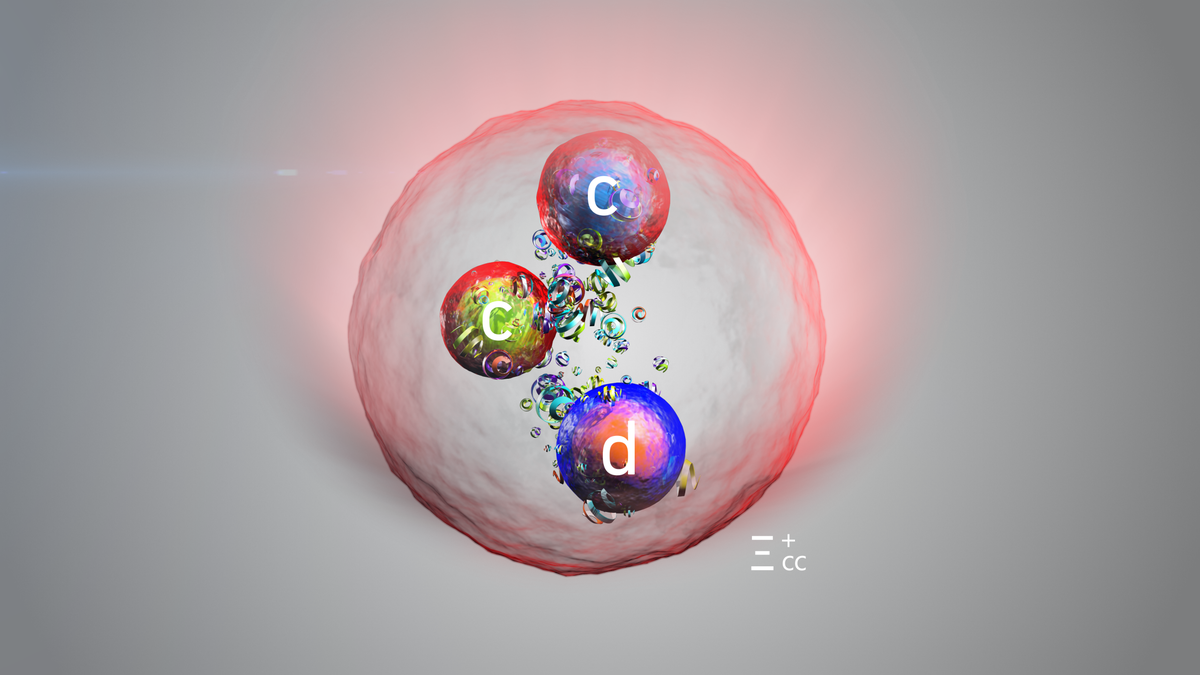
The LHCb collaboration at CERN's Large Hadron Collider has confirmed the existence of the Ξcc⁺ baryon — a particle made of two charm quarks and one down quark — in the 80th hadron discovery in LHC history.

A CERN team trapped 92 antiprotons in a magnetic trap and drove them around the CERN campus in a truck for 30 minutes — a feat once thought impossible — marking a turning point in the quest to understand why matter dominates our universe.

Researchers at CSIC Madrid and Delft University used quantum capacitance measurements to read information stored in topological Majorana states with millisecond coherence times — independently validating the approach Microsoft has bet its quantum program on.
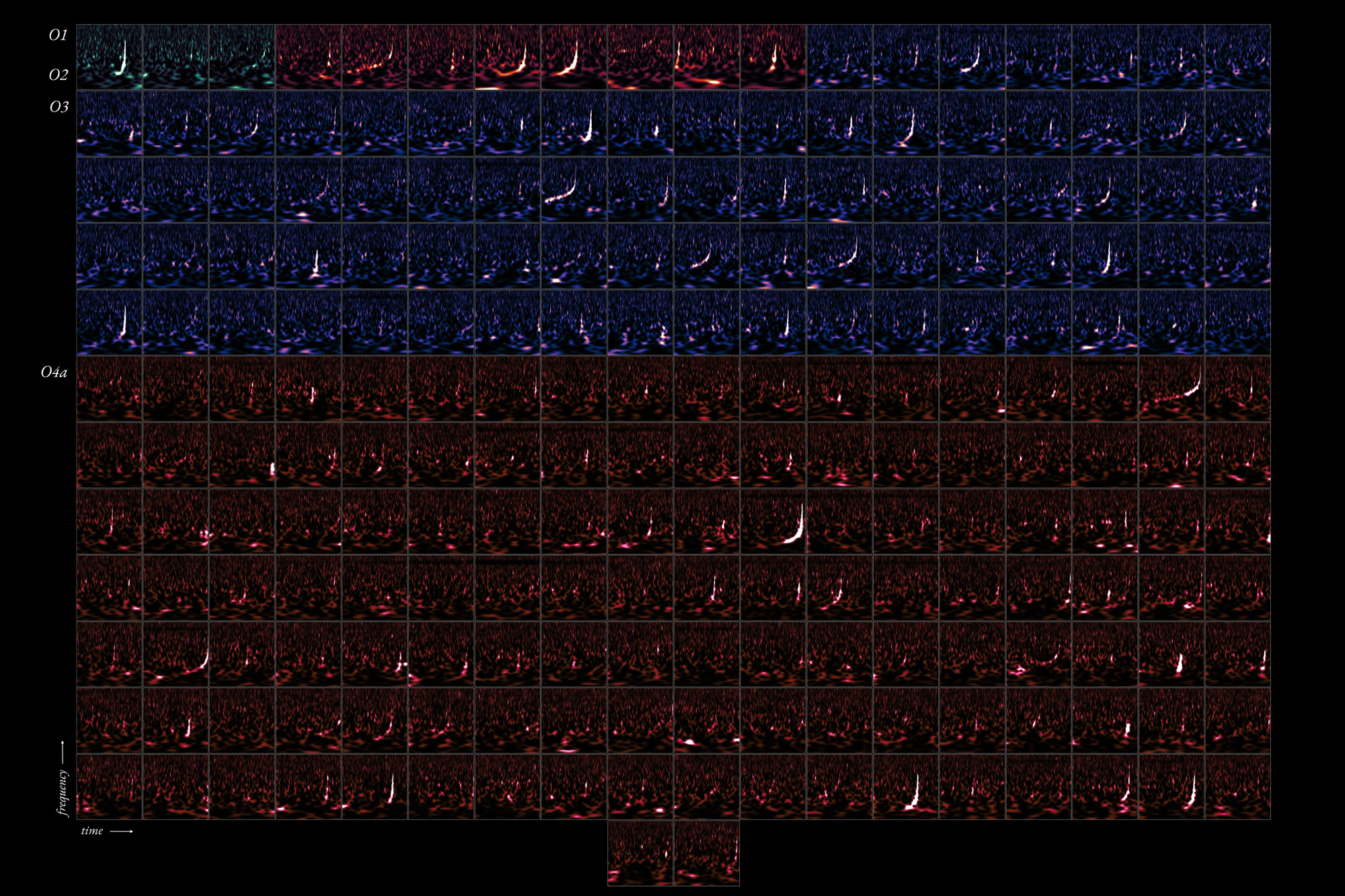
The GWTC-4 catalog, led by MIT, adds 128 new events from LIGO's fourth observing run — including a 260-solar-mass merger, the fastest-spinning binary on record, and a new measurement of the universe's expansion rate.

Stockholm University researchers used ultra-fast X-ray pulses to experimentally confirm the liquid-liquid critical point in supercooled water at –63°C, settling a debate dating to 1892 and illuminating why water's strange properties make life on Earth possible.

Holographic data storage technique uses light's amplitude, phase, and polarization to dramatically increase storage density while an AI model reconstructs the information.
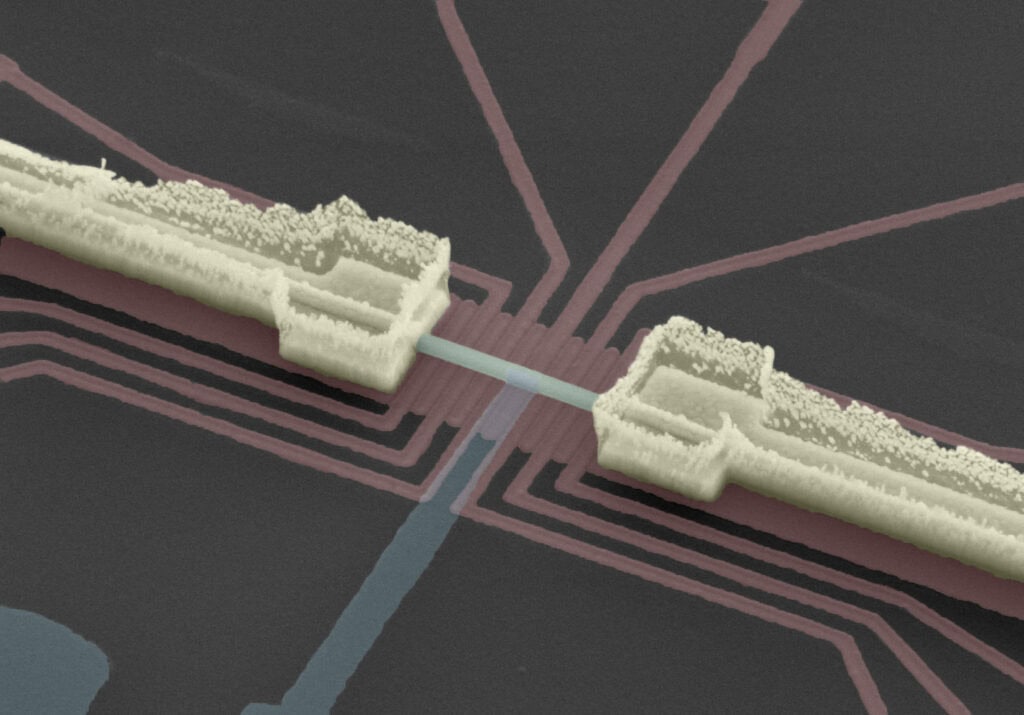
A QuTech team at Delft University published the measurement technique topological quantum computing has been missing — quantum capacitance spectroscopy that reads Majorana zero modes without destroying them, with coherence stable for over one millisecond.

Japan's XRISM telescope reveals hidden white dwarf companion pulling material and generating temperatures above 100 million degrees.
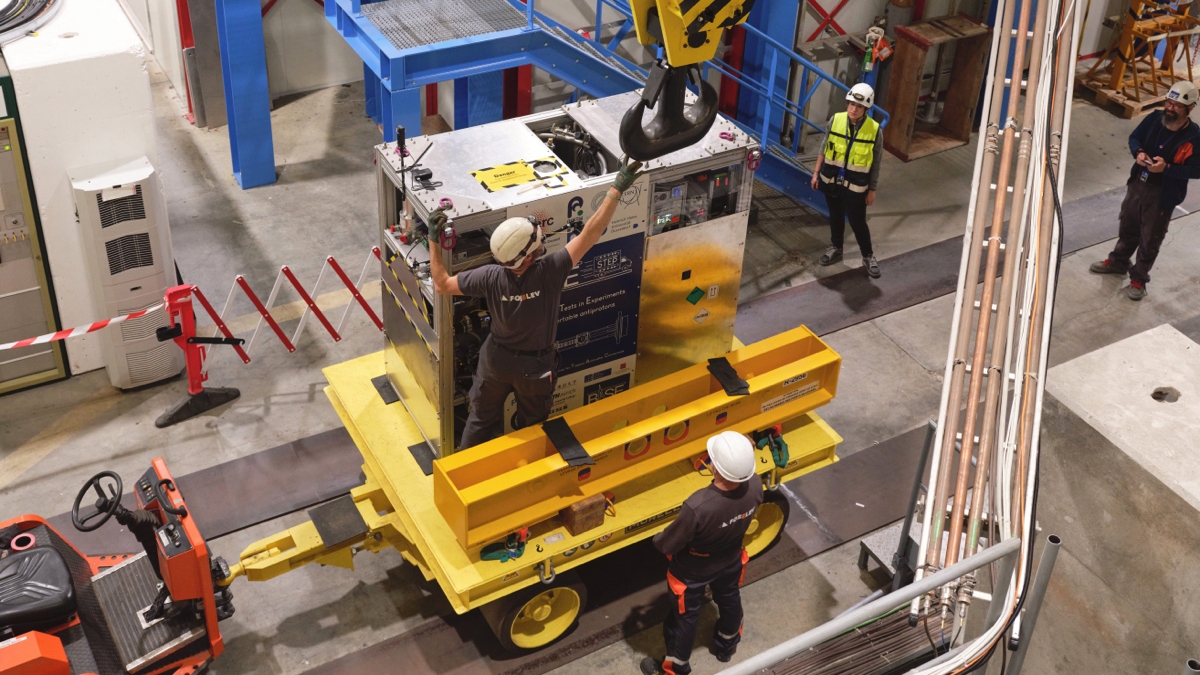
Scientists at the BASE experiment loaded antiprotons into a portable cryogenic trap and drove them across the CERN campus on March 24, completing a milestone that opens the door to conducting antimatter experiments far from any particle accelerator.

A Chinese research team bombarded 800,000 candidate events with neutrons and identified six unmistakable two-track signals of the quantum process predicted by Soviet physicist Arkady Migdal in 1939 — a five-sigma confirmation.

Experiments using terahertz spectroscopy on skyrmions — nanoscale magnetic whirlpools viewed as candidates for next-generation data storage — revealed multiple internal oscillation modes that existing theoretical models had not predicted.
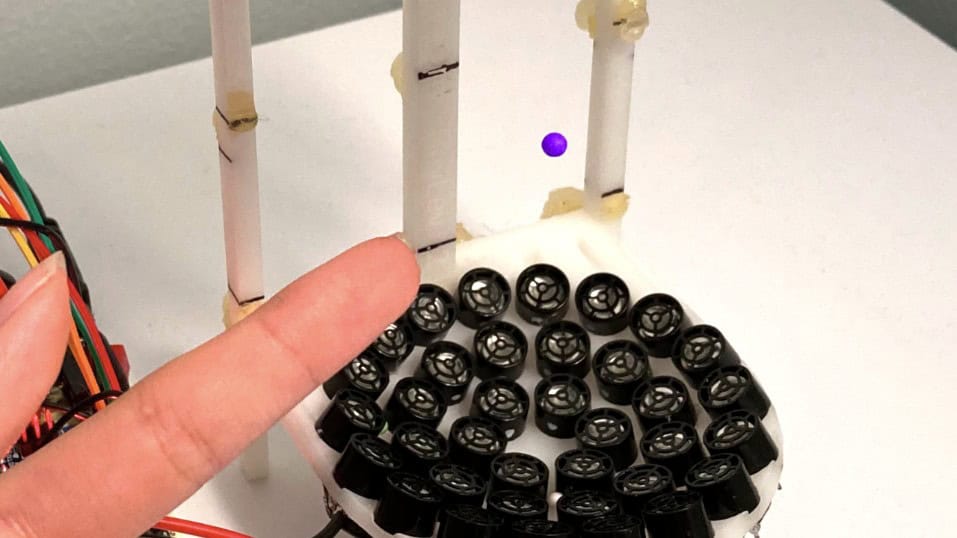
Professor David Grier's team levitated tiny styrofoam beads in standing acoustic waves, producing a macroscopic time crystal through nonreciprocal particle interactions that carry momentum away via sound, defying the equal-and-opposite-reaction principle.
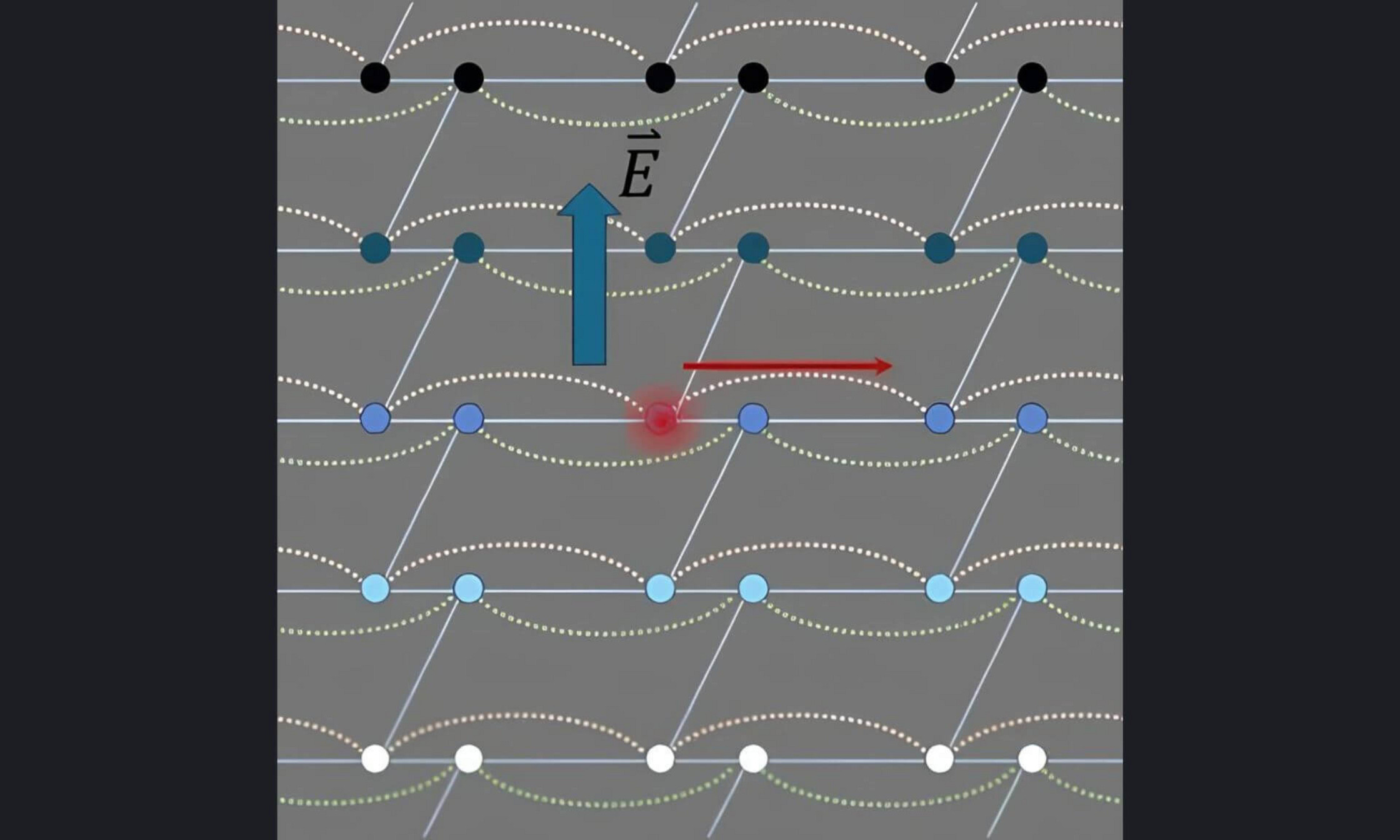
An international team achieved what once seemed impossible: photons drifting sideways in perfectly defined, quantized steps just like electrons in the quantum Hall effect — a potential new gold standard for precision measurement.
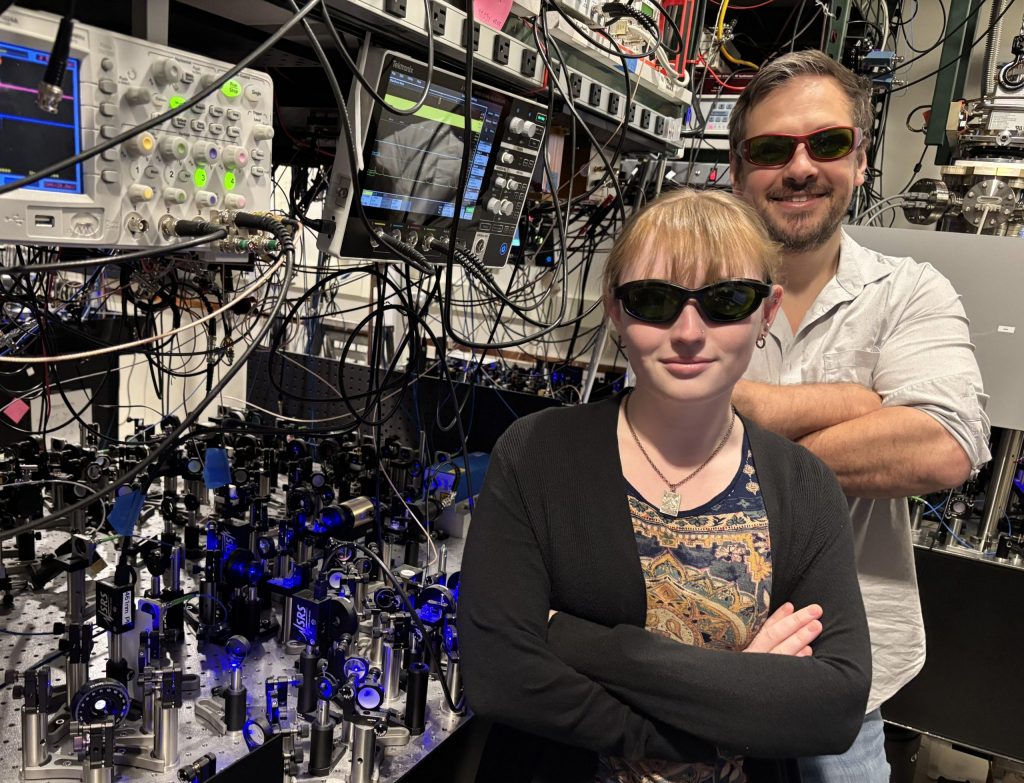
A DOE-funded collaboration successfully integrated cryogenic control electronics directly into an ion-trap quantum system, offering the first viable path to building quantum computers with tens of thousands of qubits.

Researchers found that gentle magnetic wave stimulation can generate exotic Floquet states in tiny magnetic structures, challenging existing physics assumptions.
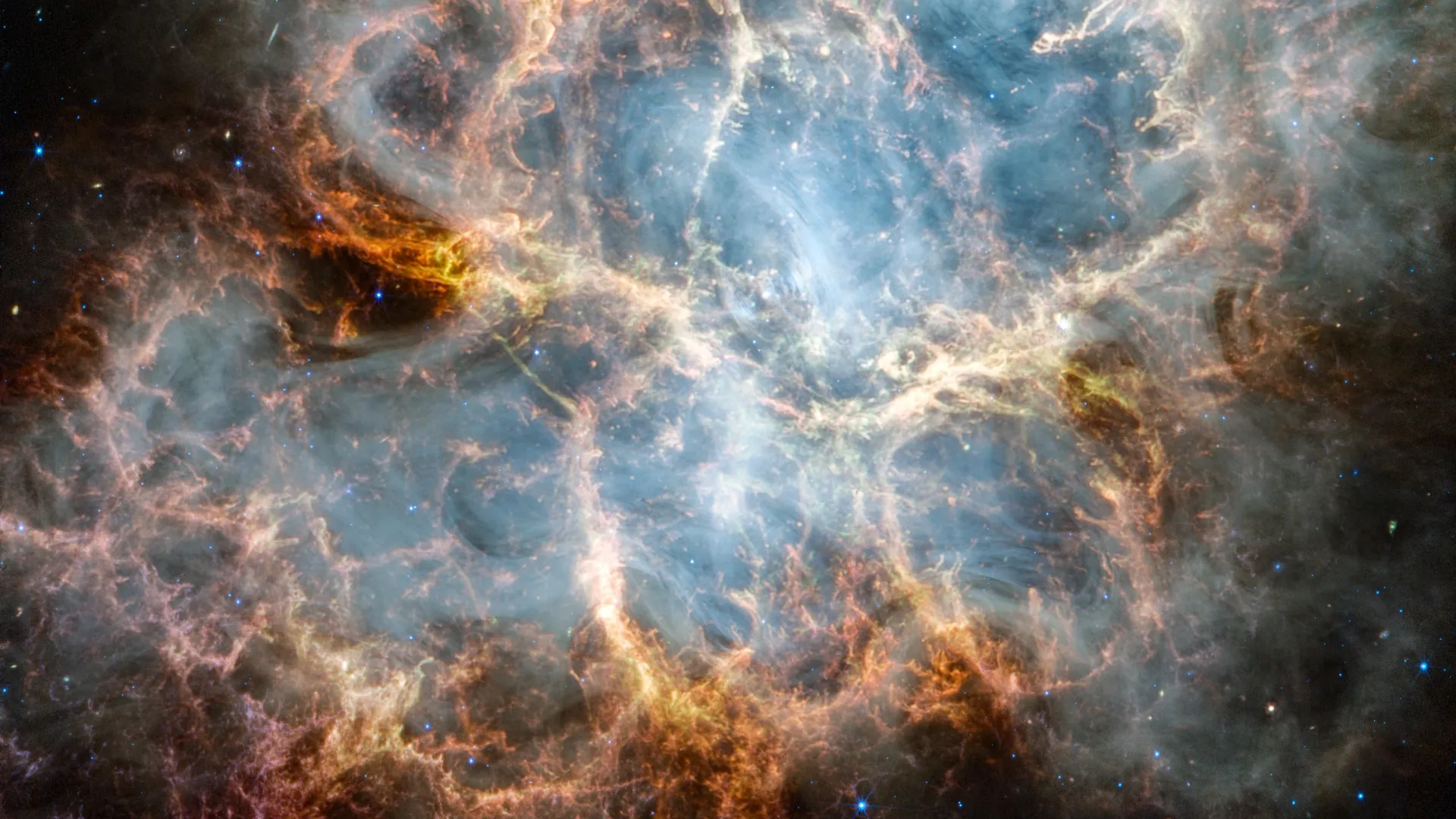
New research reveals that a cosmic tug-of-war between gravity and plasma creates interference patterns that form the striking radio wave stripes.

Cross-referencing a decade of Antarctic neutrino data with X-ray telescope observations, scientists have found the strongest statistical evidence yet that X-ray luminous active galactic nuclei are a primary source of cosmic neutrinos.

XRISM space observatory reveals hidden white dwarf companion pulling material from Gamma Cassiopeiae, finally explaining the star's puzzling high-energy emissions that have baffled scientists since 1976.
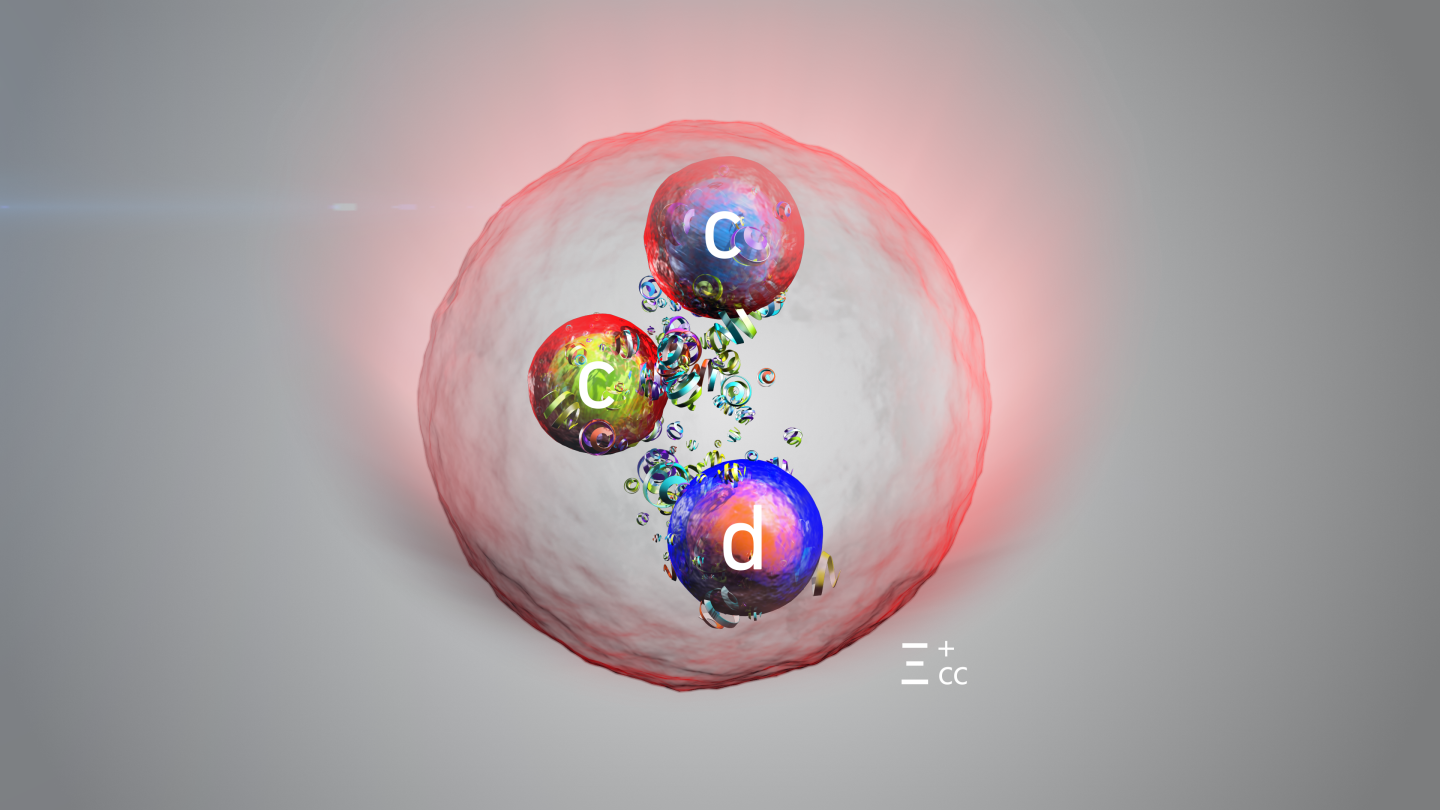
The LHCb experiment confirmed the Xi-cc-plus particle — made of two charm quarks and one down quark — at 7-sigma confidence, closing a mystery that began with ambiguous Fermilab hints in 2002.
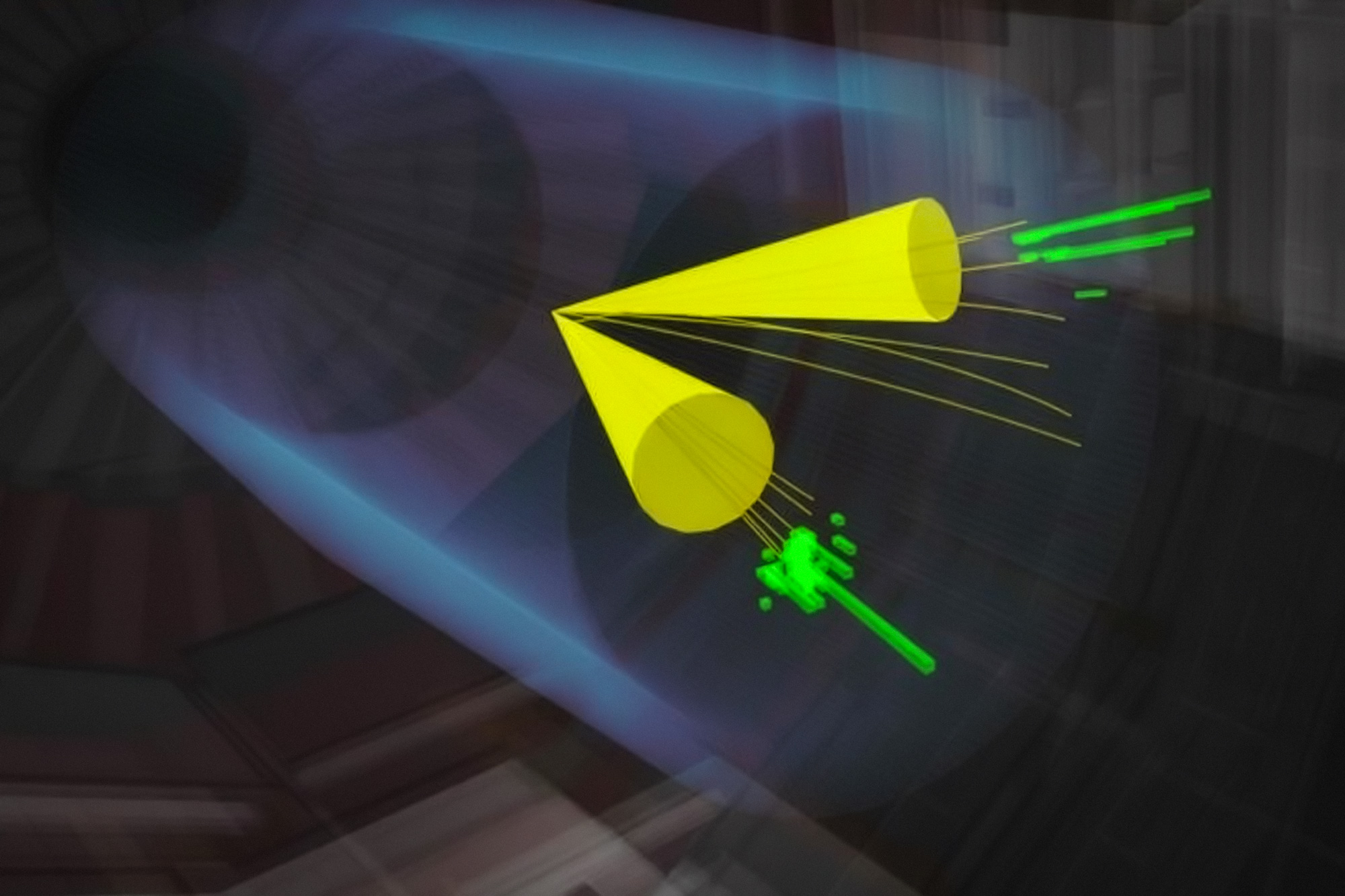
A new technique using grazing-angle particle interactions allows physicists to directly measure how gluons behave under extreme nuclear density — the particles that literally hold the universe together.