Scientists Create Star-Like Plasma by Blasting Metal With Laser in Trillionths of a Second
Researchers capture the split-second chaos that unfolds when powerful laser flashes transform matter into superheated plasma, tracking electron behavior in unprecedented detail.
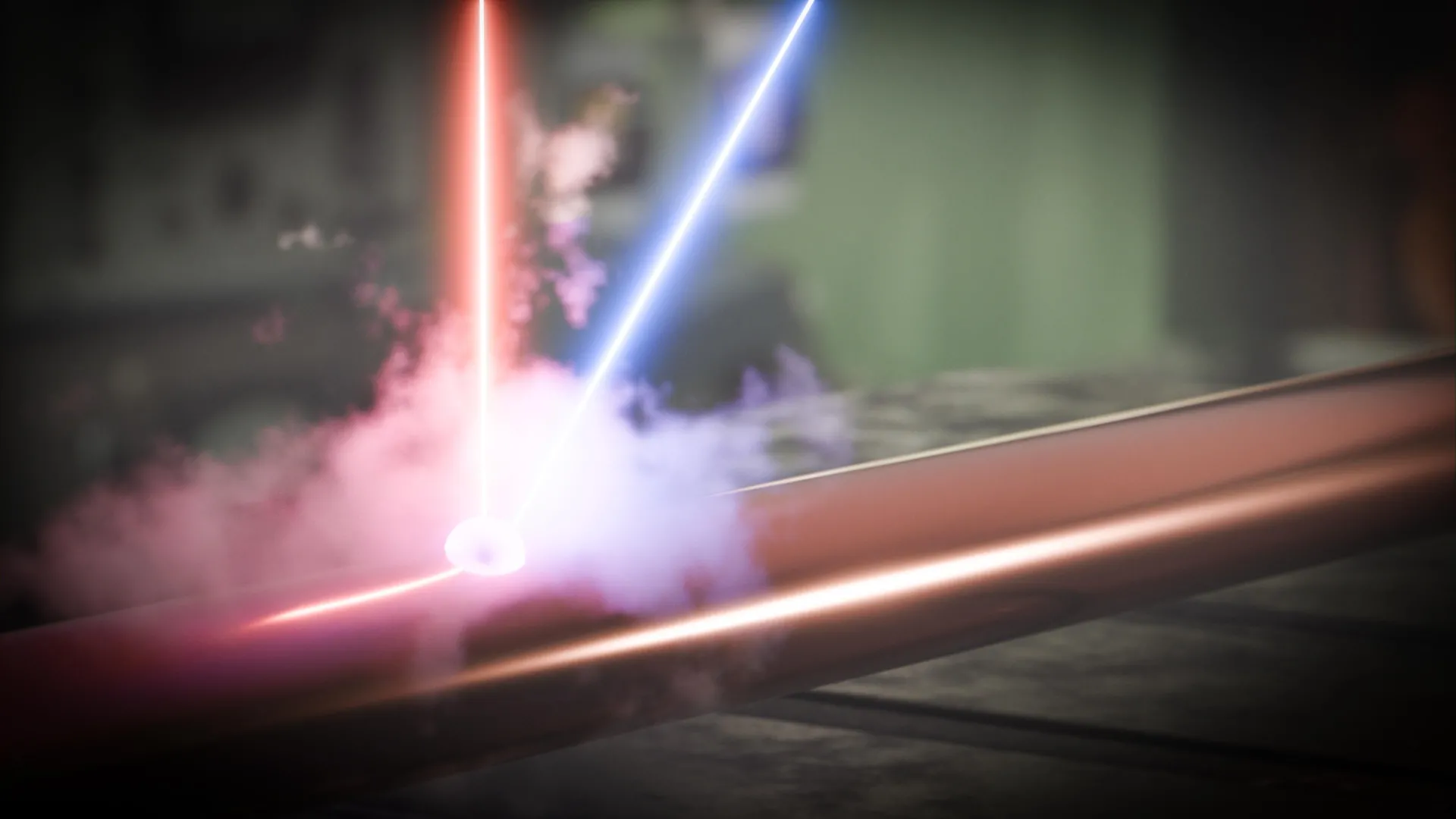
Scientists at Helmholtz-Zentrum Dresden-Rossendorf have achieved a remarkable breakthrough in extreme physics, successfully capturing the rapid formation of star-like plasma when powerful laser flashes strike matter. Using cutting-edge technology that combines two advanced laser systems, researchers tracked how copper atoms lose and regain electrons in trillionths of a second, creating and dissolving highly charged ions in what they describe as an almost cinematic sequence.
The experiment utilized both an X-ray free-electron laser and the high-intensity optical laser ReLaX at the HED-HiBEF experimental station at the European XFEL in Schenefeld near Hamburg. This innovative approach allowed the team to observe ionization processes with unprecedented detail, providing new insights into how high-energy lasers interact with matter under extreme conditions. The breakthrough also introduces promising new methods for improving diagnostics in laser fusion research.
The ionization process occurs incredibly rapidly, unfolding within picoseconds or just a few trillionths of a second. To capture such rapid changes, researchers needed even shorter laser pulses with durations of just 25 and 30 femtoseconds. "These are exactly the conditions provided by the two lasers," explained Dr. Lingen Huang, head of experimentation in HZDR's Division of High-Energy Density. This ultrashort pulse technology enabled researchers to observe plasma formation and evolution almost in real time.
The experimental process begins with an intense burst of light striking a copper wire approximately one-seventh the thickness of a human hair. The energy delivered reaches about 250 trillion megawatts per square centimeter over a tiny area for an extremely brief moment, creating conditions typically found only in extreme cosmic environments such as near neutron stars or during gamma-ray bursts. The copper wire instantly vaporizes, producing plasma with temperatures reaching several million degrees.
Using a pump-probe approach, researchers employed a second laser pulse to examine the plasma as it formed. This probe pulse, generated by the European XFEL, emits intense flashes of hard X-rays that interact with the plasma, allowing scientists to capture sequential snapshots similar to frames in a movie. The X-ray pulses are precisely tuned to interact with highly charged copper ions that have lost 22 electrons, enabling researchers to measure the temporal development of stimulated X-ray emission and track exactly how many ions are present at any given moment.