Scientists Develop Soil-Powered Fuel Cell That Could Replace Underground Batteries
Revolutionary device uses soil microbes to generate electricity for sensors, offering sustainable alternative to toxic batteries in precision agriculture.
The physics desk
Physics from the quantum to the cosmos: particle physics, quantum computing, astrophysics, cosmology and the discoveries that change what is possible.
Revolutionary device uses soil microbes to generate electricity for sensors, offering sustainable alternative to toxic batteries in precision agriculture.

Breakthrough discovery shows chiral phonons can transfer motion to electrons, opening door to revolutionary orbitronics computing that doesn't require batteries or electricity.

Mathematician Hong Wang and collaborator Josh Zahl proved that rotating a needle through all orientations in three dimensions requires a certain minimum volume — resolving one of the most stubborn open problems in harmonic analysis.

Researchers at the Perimeter Institute constructed a mathematical framework for spacetime that respects Lorentz symmetry but is organized like a quasicrystal — patterned without being periodic.

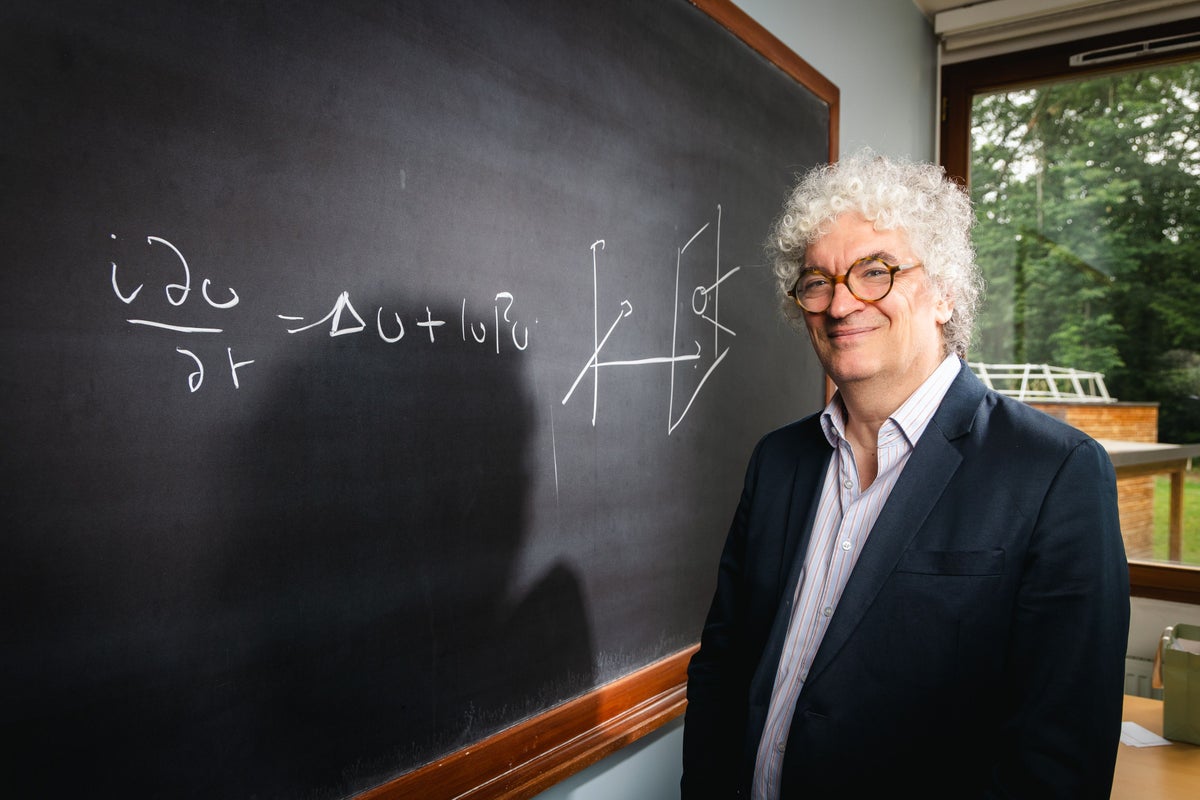
Frank Merle's decades of work on nonlinear evolution equations — showing how chaotic waves eventually decompose into stable forms — earned him the 2026 Breakthrough Prize in Mathematics.

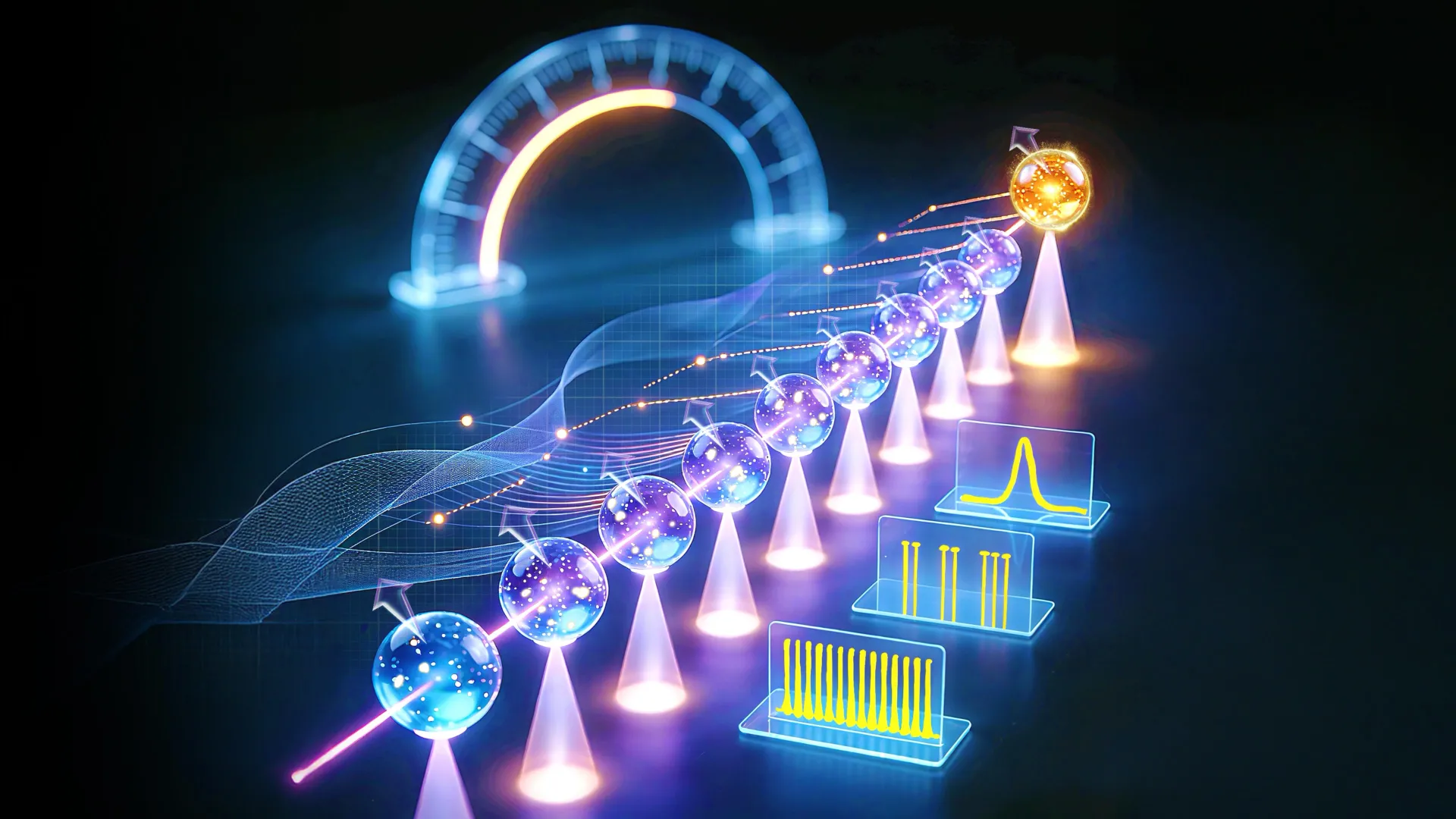
Breakthrough quantum sensing approach using Rydberg atom chains could dramatically improve measurement of low-frequency electric fields while enabling ultra-compact detectors.

Scientists observe exotic quantum state where electrical and thermal conductivity move in opposite directions, contradicting the established Wiedemann-Franz law by more than 200 times.

The UC Santa Barbara physicist who co-discovered asymptotic freedom and built quantum chromodynamics into a pillar of the Standard Model received one of the largest individual science awards in the world at a Santa Monica ceremony Saturday.

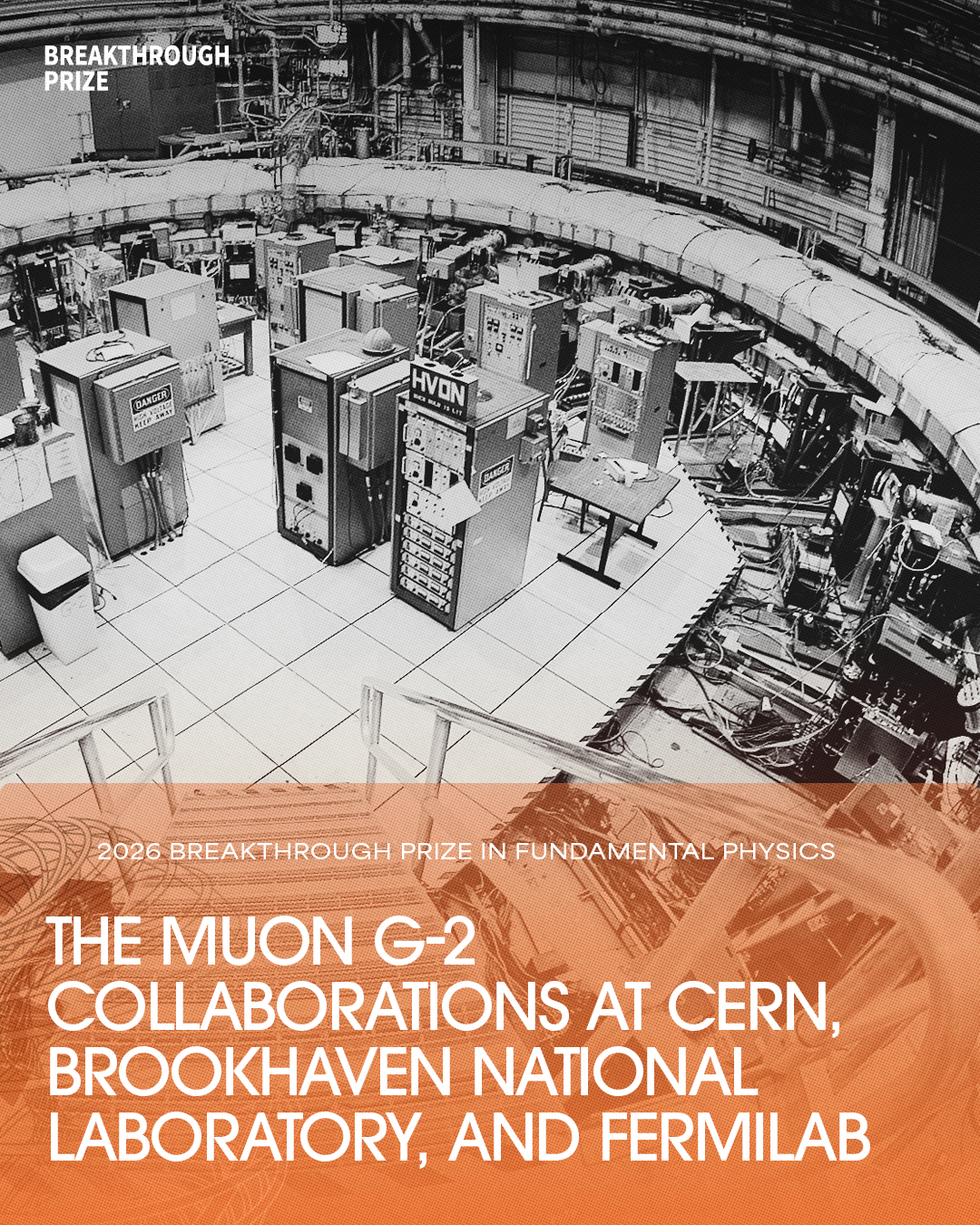
Three generations of scientists at CERN, Brookhaven, and Fermilab shared the $3 million prize for measuring the muon magnetic anomaly to 127 parts per billion precision, with tantalizing hints that new physics may lurk beyond the Standard Model.

Breakthrough experiment measures key reaction creating selenium-74, shedding new light on supernova nucleosynthesis while revealing gaps in current theories.

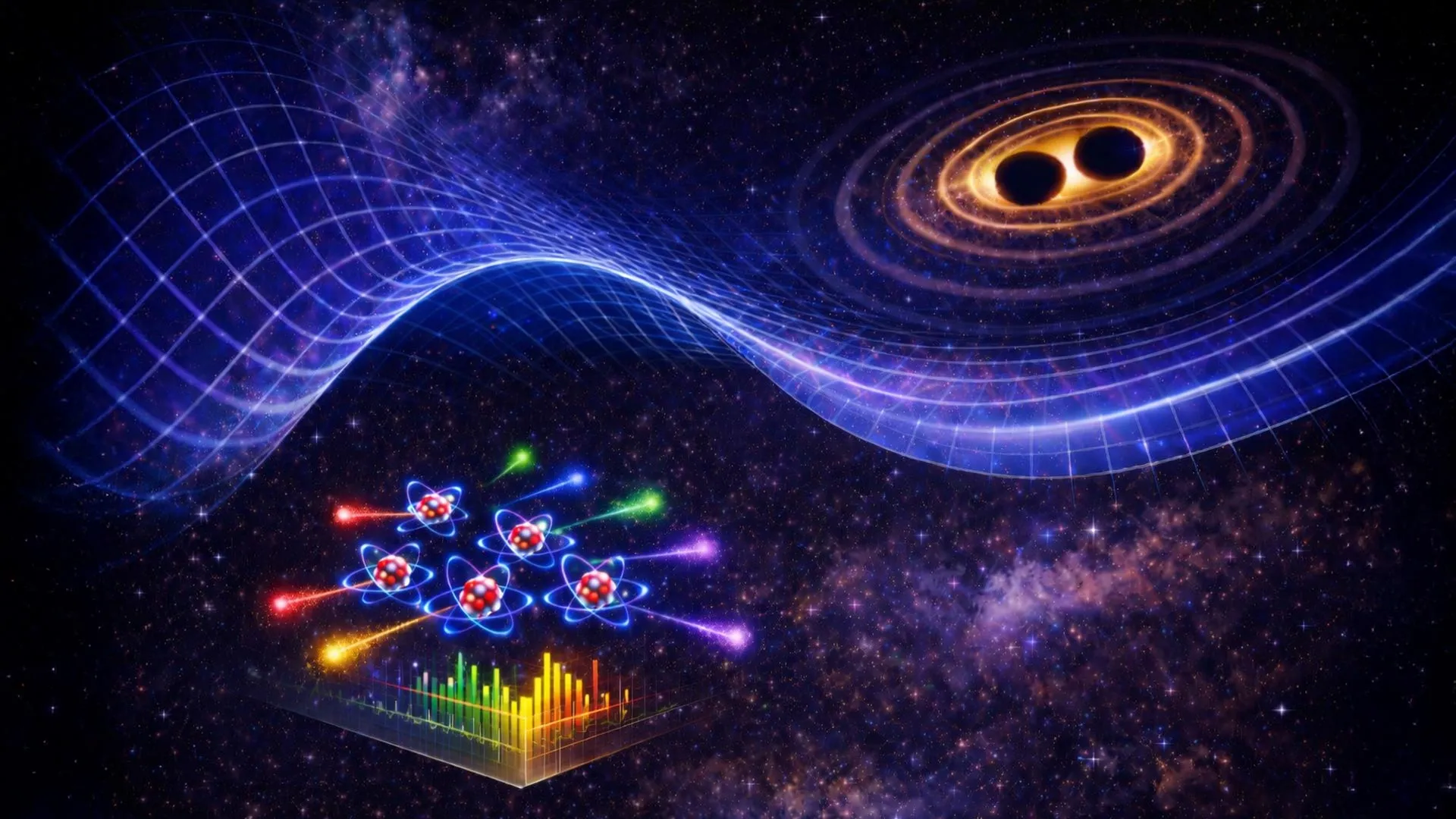
Revolutionary theory proposes detecting cosmic ripples through subtle frequency shifts in atomic light emission, potentially enabling ultra-compact detectors.

New quantum system at Chalmers University could finally protect quantum information from destructive environmental interference while enabling large-scale quantum computers.
Researchers propose detecting spacetime ripples by observing how they subtly change photon frequencies, potentially enabling ultra-compact gravitational wave detectors.
Breakthrough observation reveals electrons behaving as nearly frictionless fluid while violating the Wiedemann-Franz law by over 200 times.
Revolutionary quantum sensing approach using Rydberg atoms could lead to ultra-compact detectors with micrometer-scale resolution.

Astronomers using LOFAR and India's uGMRT radio telescopes documented the dramatic reawakening of a dormant black hole in galaxy J1007+3540, with new plasma jets stretching nearly one million light-years.
New quantum sensing method using Rydberg atoms could dramatically improve measurement capabilities while enabling compact detector designs.
Swedish researchers develop theory for new quantum systems that protect information while enabling large-scale computing architectures.

Researchers found that plasma core rotation—not just cross-field drift—causes uneven heat loading in tokamak divertors, enabling better designs for future fusion plants.

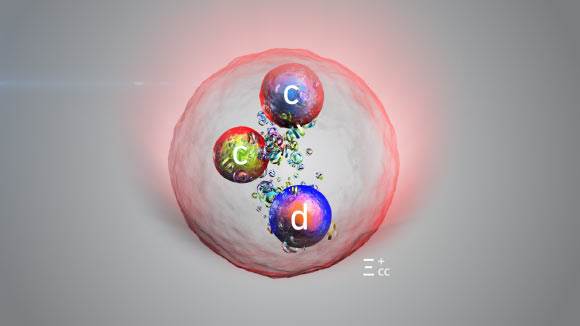
The Ξcc⁺ particle—containing two charm quarks and one down quark—was detected with a 7-sigma confidence level, the first discovery from CERN's upgraded detector.

Multiple landmark findings published in early 2026 — including spacetime quasicrystals and a new gravity anomaly — are pushing the Standard Model of particle physics to its limits.
Breakthrough quantum sensing approach using Rydberg atom chains could dramatically improve low-frequency electric field measurements with compact, highly accurate detectors.
Scientists propose revolutionary detection method that could lead to ultra-compact detectors using cold-atom systems, observing frequency shifts in emitted photons.
Breakthrough experiment directly measured how arsenic-73 captures protons to form selenium-74, shedding new light on the mysterious origin of proton-rich elements in supernovas.
Revolutionary new detection method could lead to ultra-compact gravitational wave detectors using cold-atom systems.

New theory suggests dark matter consists of multiple components that interact differently depending on their cosmic environment.
Swedish researchers propose revolutionary quantum system combining giant atoms and superatoms to protect quantum information while enabling large-scale computation.
Scientists observe exotic quantum state where electrical and thermal conduction separate by 200-fold, opening new frontiers in quantum technology.
Scientists observe exotic quantum state where electrons move collectively, breaking the Wiedemann-Franz law by more than 200 times.

A Nobel laureate-led team at STScI measured the universe's expansion rate at 73.50 ± 0.81 km/s/Mpc using a new unified statistical framework, confirming beyond doubt that the 'Hubble tension' between early- and late-universe measurements cannot be explained away.