Scientists Use AI to Discover New Physics Laws in Fourth State of Matter
Machine learning reveals hidden patterns in dusty plasma interactions, capturing complex forces with 99% accuracy and overturning long-held assumptions about particle behavior.
The physics desk
Physics from the quantum to the cosmos: particle physics, quantum computing, astrophysics, cosmology and the discoveries that change what is possible.

Machine learning reveals hidden patterns in dusty plasma interactions, capturing complex forces with 99% accuracy and overturning long-held assumptions about particle behavior.

Scientists have used machine learning to uncover entirely new laws of nature in dusty plasma, achieving over 99% accuracy in modeling complex particle interactions.

New compressed spectral-temporal coherent modulation femtosecond imaging technique reveals ultrafast phenomena in unprecedented detail with a single shot.

Scientists discover cerium magnesium hexalluminate isn't a quantum spin liquid as thought, but something potentially more intriguing involving competing magnetic forces.

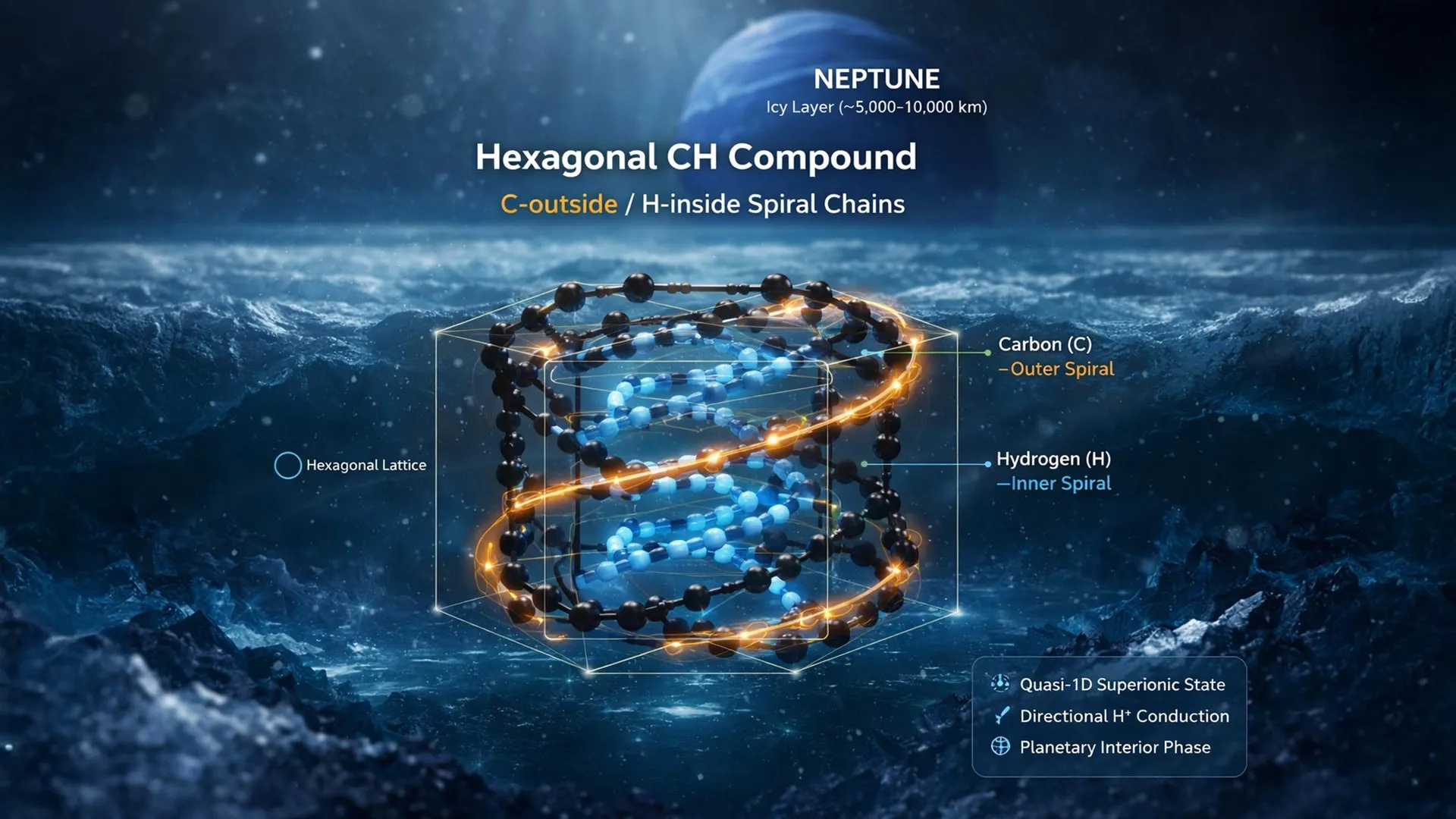
Advanced computer simulations reveal carbon and hydrogen could form exotic "superionic" structures in ice giant interiors, reshaping planetary science understanding.

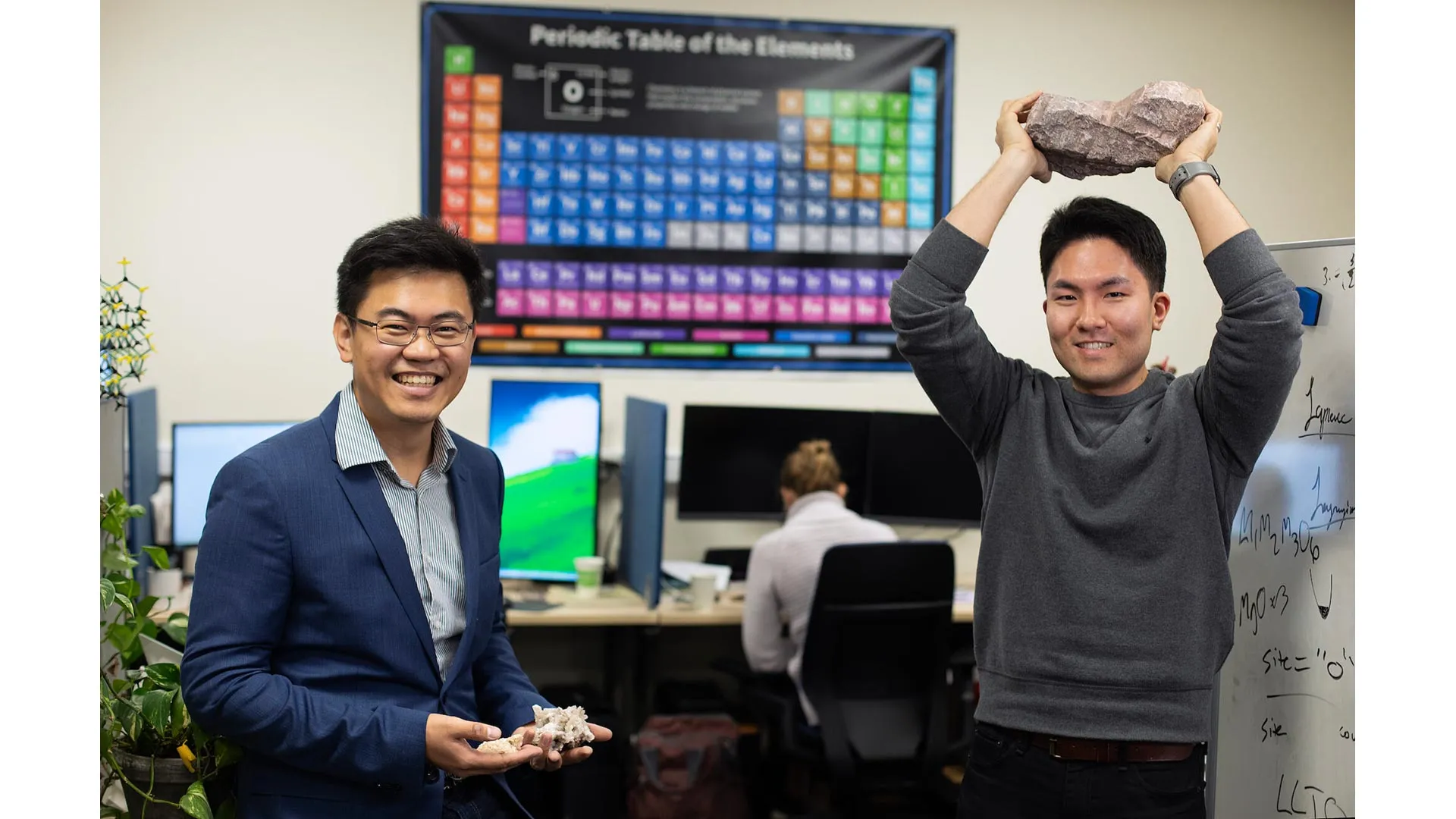
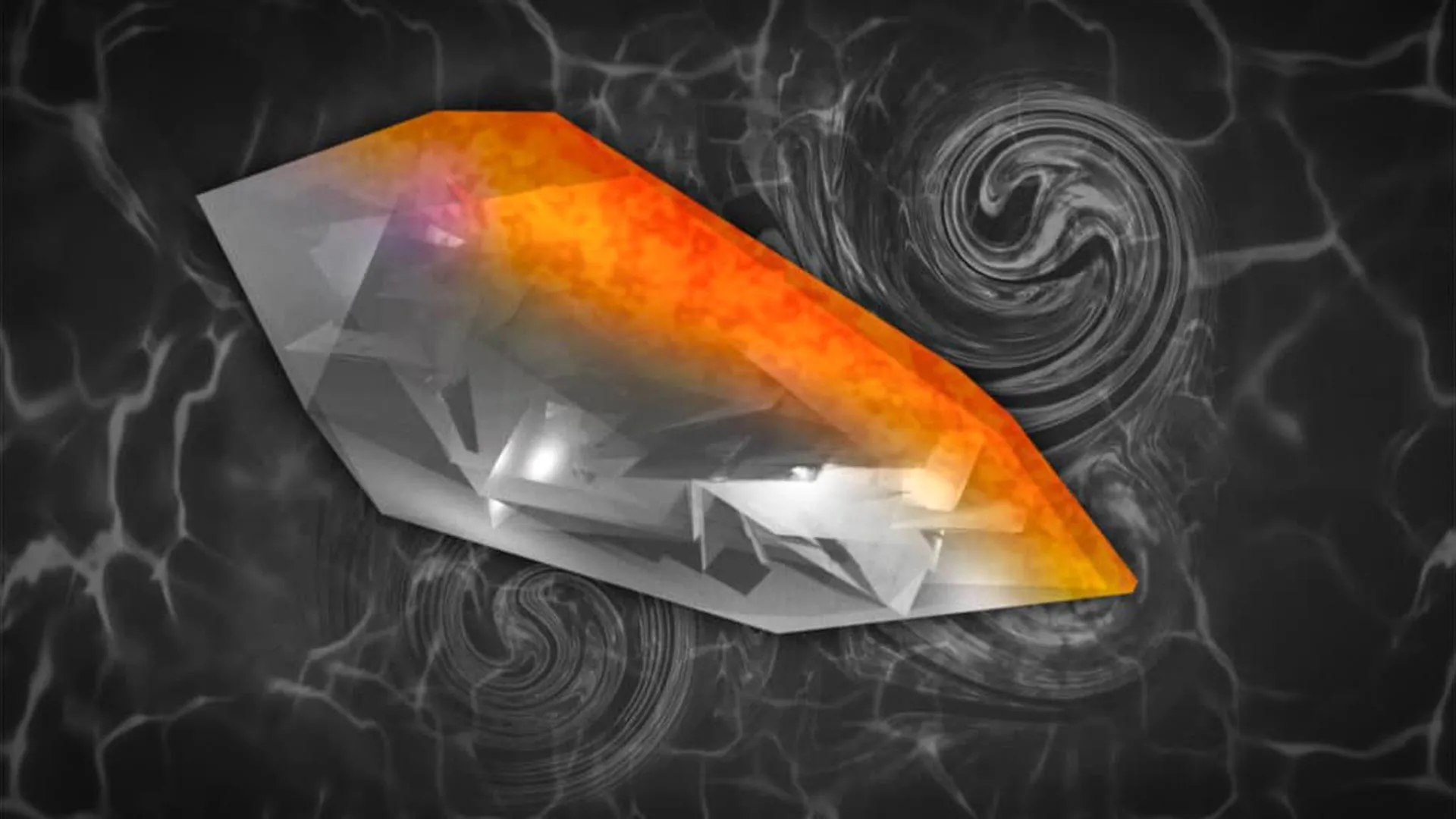
Researchers finally cracked the mystery of why the widespread mineral couldn't be grown in laboratories by discovering nature's built-in reset mechanism.

New imaging technique reveals hidden structural changes in ultrafast phenomena, turning split-second events into detailed movies for the first time.

A magnetic crystal once thought to host an exotic quantum state has revealed a completely different mechanism, solving a physics puzzle through atomic tug-of-war.

Breakthrough in arsenic trisulfide manipulation achieves nanoscale precision without expensive manufacturing tools, opening new possibilities for optical devices.

Advanced simulations reveal carbon and hydrogen forming a strange hybrid phase where atoms behave part solid, part fluid under crushing planetary pressures.

New imaging technique reveals structural changes invisible to previous methods, turning ultrafast phenomena into detailed movies for the first time.
Scientists at India's IISc found that electrons in single-layer graphene conduct heat and electricity in opposite directions near the Dirac point, shattering the Wiedemann-Franz Law.

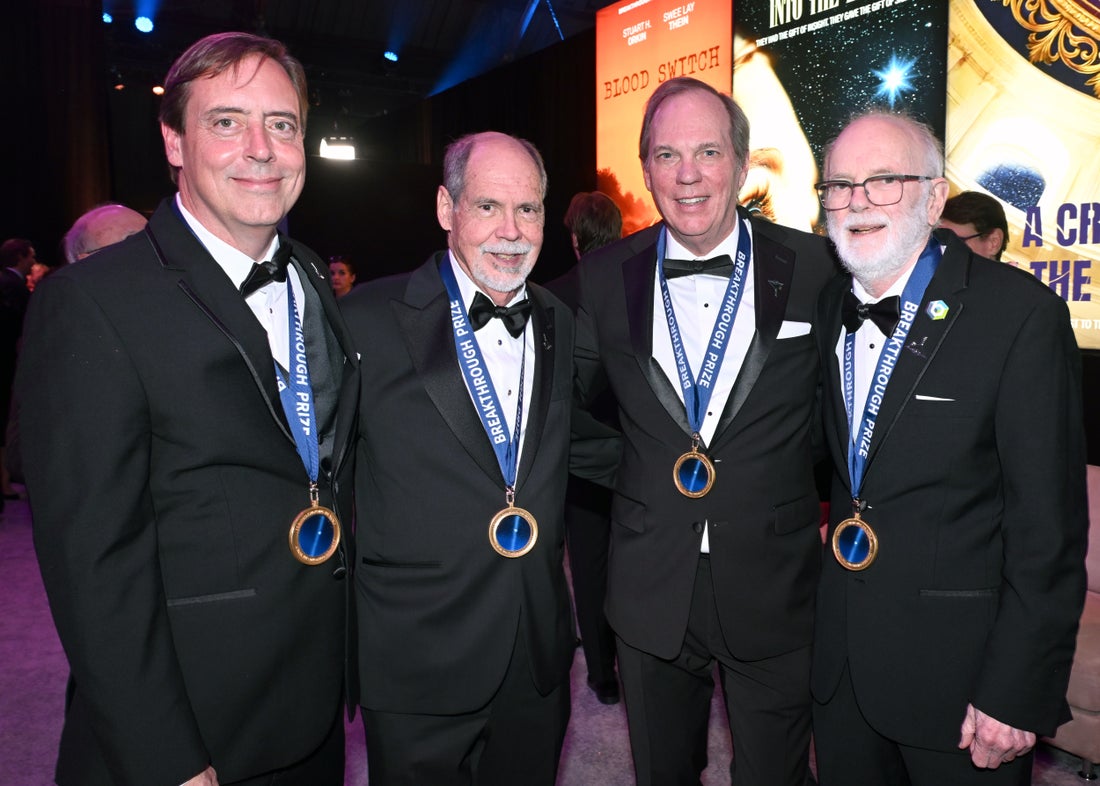
A 60-year multigenerational collaboration measured the muon's magnetic moment at 127 parts per billion — 30,000 times more precise than the 1965 baseline — revealing a persistent deviation.

Scientists have developed breakthrough imaging that reveals both brightness and structural changes in ultrafast phenomena, turning fleeting events into detailed 'movies' of plasma formation and electron movement.

Deep inside ice giant planets, carbon and hydrogen atoms form an unusual 'superionic' state where hydrogen spirals through rigid carbon frameworks. The discovery could explain these worlds' mysterious magnetic fields.

A new paper in Physical Review Letters proposes that stochastic gravitational waves generated in the first moments after the Big Bang could have been converted into dark matter particles — a mechanism never before proposed that could solve one of physics' most fundamental mysteries.

Researchers at PPPL discovered that plasma rotation — not just cross-field particle drifts — explains why tokamak exhaust hits one side far harder than the other, a finding critical for designing divertors that can survive in working power plants.

Using a planet-spanning network of radio telescopes to track how stellar winds bent the jets of Cygnus X-1, researchers calculated that roughly 10% of all infalling energy escapes as jets traveling at half light speed — confirming a key assumption of astrophysics.

Revolutionary discovery harnesses "chiral phonons" to generate orbital motion in electrons, opening path to next-generation computing without heavy magnetic materials.

Breakthrough reveals how tiny defects block mineral formation in labs but get washed away in nature over millions of years.

The Nobel laureate's discovery of asymptotic freedom, made in 1973, provided the theoretical cornerstone of quantum chromodynamics and completed the Standard Model.

The HETDEX survey has increased the known number of these cosmic structures tenfold, revealing the vast hydrogen reservoirs that powered galaxy formation 10-12 billion years ago.
Breakthrough in orbitronics uses chiral phonons to transfer orbital motion directly to electrons. The discovery could enable new computing systems that process data using electron orbital motion instead of charge.
Researchers successfully grew the mineral in laboratory conditions by understanding atomic-level defects. The discovery could revolutionize how high-tech materials are manufactured.
The topological qubit result, independently verified by a Dutch university team, is the first demonstration of any quantum platform crossing the widely accepted benchmark for practical fault-tolerant computation.
New Year 2 data from 7.8 million galaxies shows dark energy may be evolving over time, adding to a growing tension with the prevailing Lambda-CDM model.

Electrons in graphene flow like a frictionless liquid, violating the Wiedemann-Franz law by more than 200 times and revealing exotic quantum behavior.

A Chalmers University team merged two quantum physics concepts — giant atoms and superatoms — into a system that uses quantum self-interference to shield qubits from decoherence, the primary barrier to scalable quantum computing.

Northwestern researchers create device using dirt microbes to generate electricity, offering sustainable power for underground sensors without toxic materials.
Breakthrough in chiral phonons opens door to orbitronics field, where data is processed using orbital motion of electrons instead of traditional charge or spin.