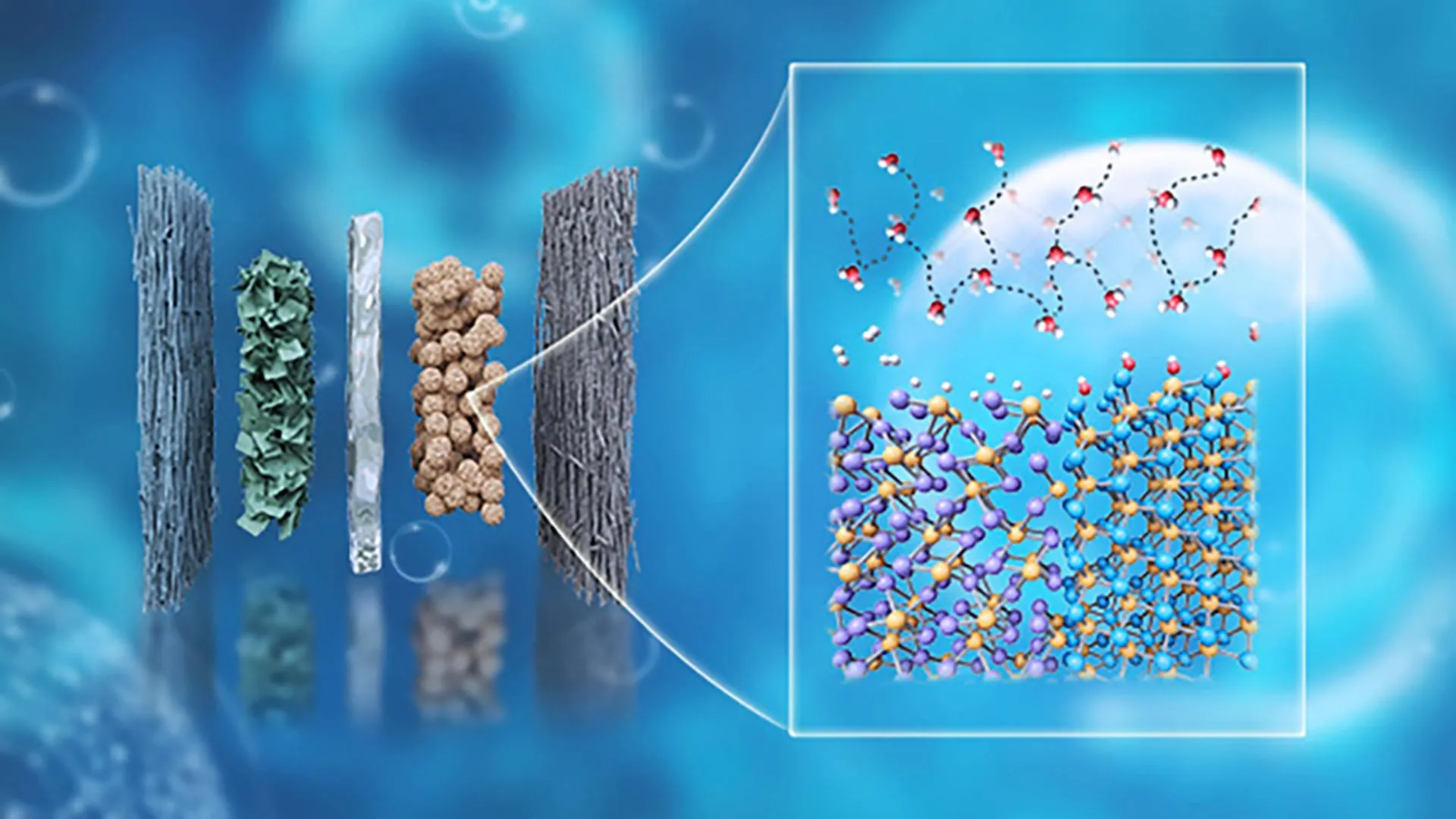
Ancient Chemistry Unlocks Futuristic Glass That Traps CO2 and Hydrogen
Scientists adapt centuries-old glassmaking techniques to improve revolutionary porous materials for clean energy and gas storage applications.

Scientists have successfully adapted traditional glassmaking chemistry to enhance a futuristic class of materials that could revolutionize clean energy and gas storage technologies. Researchers from TU Dortmund and the University of Birmingham discovered how to fine-tune metal-organic framework (MOF) glass using sodium and lithium compounds, making these advanced materials easier to process and shape for practical applications.
MOF glasses represent a breakthrough in materials science, combining metal atoms connected by organic molecules to create porous structures capable of trapping gases like carbon dioxide and hydrogen. The international research team, whose findings were published in Nature Chemistry, showed that introducing small amounts of sodium or lithium compounds can dramatically alter both the structure and processing characteristics of these materials.
The chemical additives work by lowering the temperature at which MOF glass softens and making it flow more easily when heated, addressing a major manufacturing challenge. Dr. Dominik Kubicki from the University of Birmingham explained that conventional MOF glasses soften only at temperatures above 300°C, close to their degradation point, making manufacturing difficult and limiting broader applications. The new approach makes processing more practical and cost-effective.
The breakthrough draws inspiration from millennia of human glassmaking experience. "Glass has been part of human civilization for millennia. From ancient Mesopotamia to modern fiber-optic cables, small amounts of chemical modifiers make it easier to process glass and change its functional properties," Kubicki said. The research team successfully applied this ancient principle to cutting-edge hybrid materials.
To understand exactly how the additives work, researchers used advanced atomic-level analysis techniques, including high-temperature Nuclear Magnetic Resonance spectroscopy. Their studies revealed that sodium ions become integrated into the glass network structure, weakening some internal connections and enabling the improved processing characteristics. The discovery creates new possibilities for designing customized MOF glasses for applications ranging from gas separation and chemical storage to advanced coatings and clean energy systems.