Ancient Chemistry Unlocks Revolutionary Glass That Traps CO2 and Hydrogen
Researchers adapt centuries-old glassmaking techniques to create advanced materials for clean energy and gas storage applications.

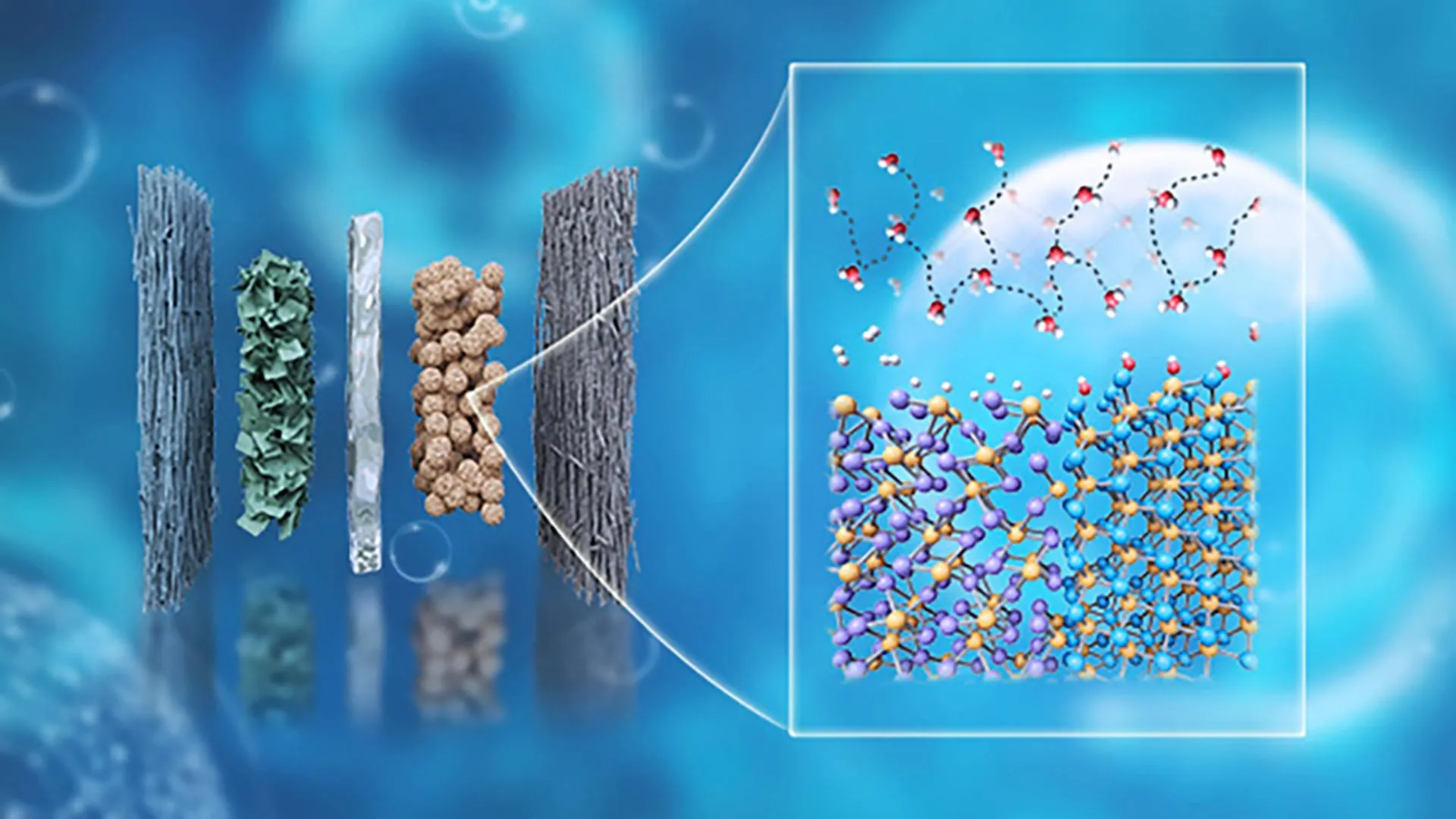
Scientists have successfully adapted ancient glassmaking chemistry to develop a revolutionary type of porous glass capable of trapping gases like carbon dioxide and hydrogen, potentially accelerating the development of clean energy technologies and advanced manufacturing applications. The breakthrough combines traditional techniques with cutting-edge materials science to create metal-organic framework (MOF) glasses that can be more easily processed and shaped for practical use.
The international research team, including scientists from TU Dortmund University and the University of Birmingham, published their findings in Nature Chemistry, demonstrating how small chemical additives containing sodium and lithium can dramatically improve the properties of MOF glass. These compounds, similar to those used in conventional glassmaking for centuries, lower the temperature at which the material softens and improve its flow characteristics when heated, making manufacturing significantly more practical.
"Glass has been part of human civilization for millennia. From ancient Mesopotamia to modern fiber-optic cables, small amounts of chemical modifiers make it easier to process glass and change its functional properties," said Dr. Dominik Kubicki from the University of Birmingham. The challenge with MOF glasses has been their extremely high softening temperatures—above 300°C—which occur dangerously close to their degradation point, severely limiting manufacturing options and broader commercial applications.
The research focused on ZIF-62, one of the best-known MOF glasses, which maintains its internal porous structure even after being melted and cooled back into a glassy state. These pores make the material valuable for gas separation, membrane applications, and catalysis. Professor Sebastian Henke from TU Dortmund University explained that their approach mirrors conventional silicate glass modification: "Our study shows the same principle can be transferred to hybrid metal-organic glasses, disrupting the network structure to tune melting behavior and mechanical properties."
Advanced analysis techniques revealed exactly how sodium additives alter the material at the atomic level, with researchers using high-temperature solid-state Nuclear Magnetic Resonance spectroscopy to understand the integration process. The sodium ions become incorporated into the glass network and strategically weaken specific connections within the structure, creating the desired flow properties. This discovery creates a new framework for designing customized MOF glasses for applications including gas separation, chemical storage, advanced coatings, and clean energy systems, bringing these futuristic materials significantly closer to real-world manufacturing and deployment.