Scientists Capture Rare 'Double Ring-Slip' in Sandwich Molecules, Unveiling Hidden Chemistry
Researchers at OIST successfully characterized an unstable intermediate structure in metallocene formation for the first time.
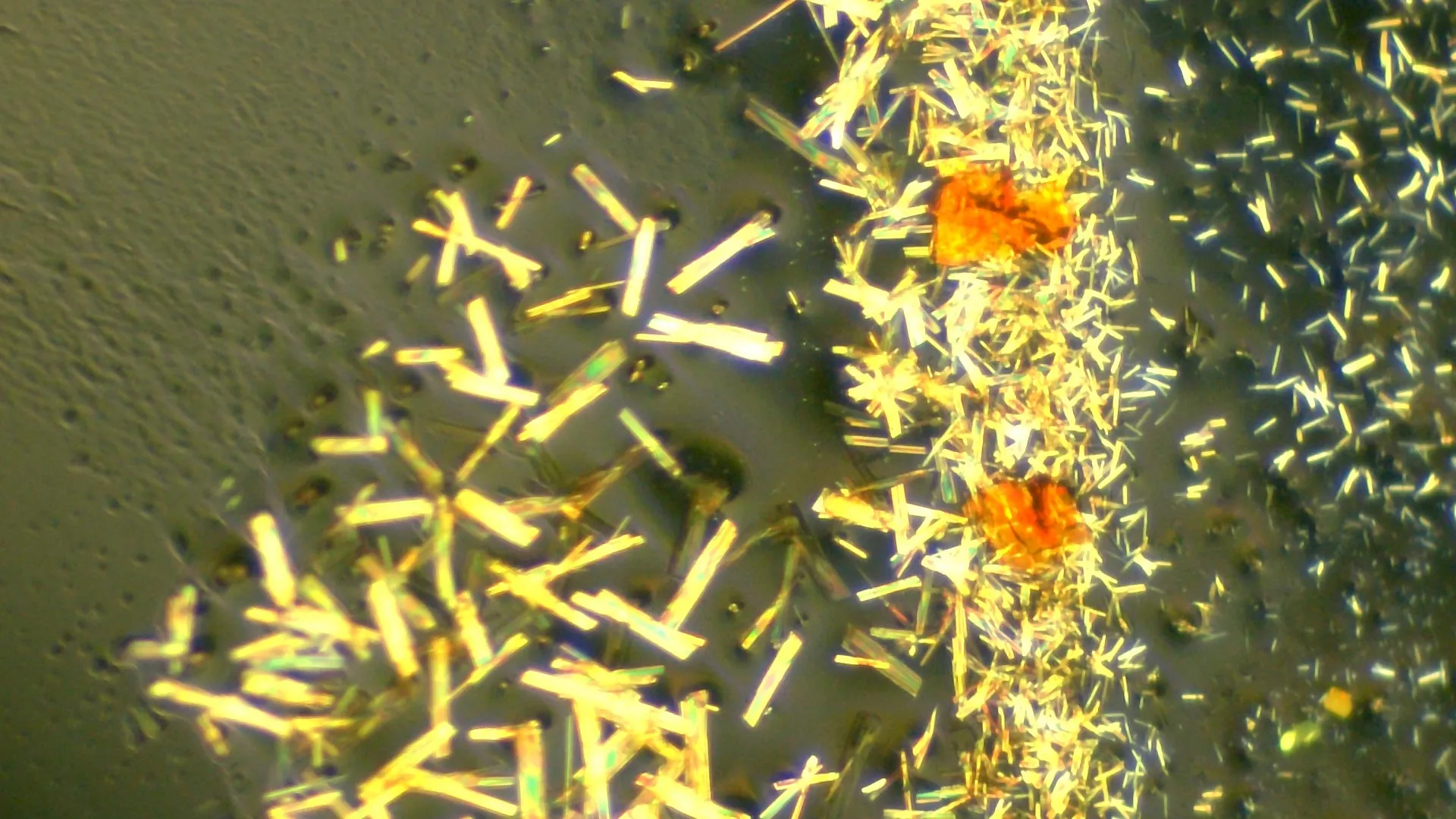
Scientists at the Okinawa Institute of Science and Technology have captured and fully characterized a rare intermediate structure that forms during the creation of metallocenes, providing unprecedented insight into how these important "sandwich" molecules assemble and transform. The discovery, published in the Journal of the American Chemical Society, represents the first complete structural evidence of a doubly ring-slipped intermediate in metallocene chemistry.
Metallocenes have played a major role in organometallic chemistry since their discovery in the 1950s, featuring a distinctive structure where a metal atom sits between two carbon rings. These compounds are widely used in catalysts, advanced materials, energy technologies, sensors, and drug delivery systems. However, researchers have long struggled to understand how they form because many intermediate stages are highly unstable and disappear almost instantly during synthesis.
Dr. Satoshi Takebayashi's Organometallic Chemistry Group made the breakthrough while studying ruthenium compounds. During reactions that were expected to produce unusual 20-electron ferrocene derivatives, the team unexpectedly obtained standard 18-electron products instead. This surprising result led them to investigate further, ultimately isolating and characterizing the elusive intermediate structure using single-crystal X-ray diffraction.
The characterized intermediate features what researchers call a "double ring-slip," where both carbon rings partially detach from the metal atom. In this configuration, each carbon ring shifted from bonding through all five carbon atoms to bonding through only one carbon atom. Ring-slippage is a known phenomenon in metallocene chemistry, but this marks the first time scientists have fully documented a double ring-slipped structure at the molecular level.
The team combined several analytical techniques, including NMR spectroscopy, mass spectrometry, and computational modeling to map the reaction pathway in detail. Their analysis revealed another unstable stage in the process involving a single ring-slipped intermediate. The research provides new tools for designing responsive materials based on metallocene chemistry and offers fresh insight into how these molecules can be engineered for specific applications in catalysis and materials science.