Scientists Solve 200-Year-Old 'Dolomite Problem' That Stumped Geologists
Researchers finally cracked the mystery of why the widespread mineral couldn't be grown in laboratories by discovering nature's built-in reset mechanism.
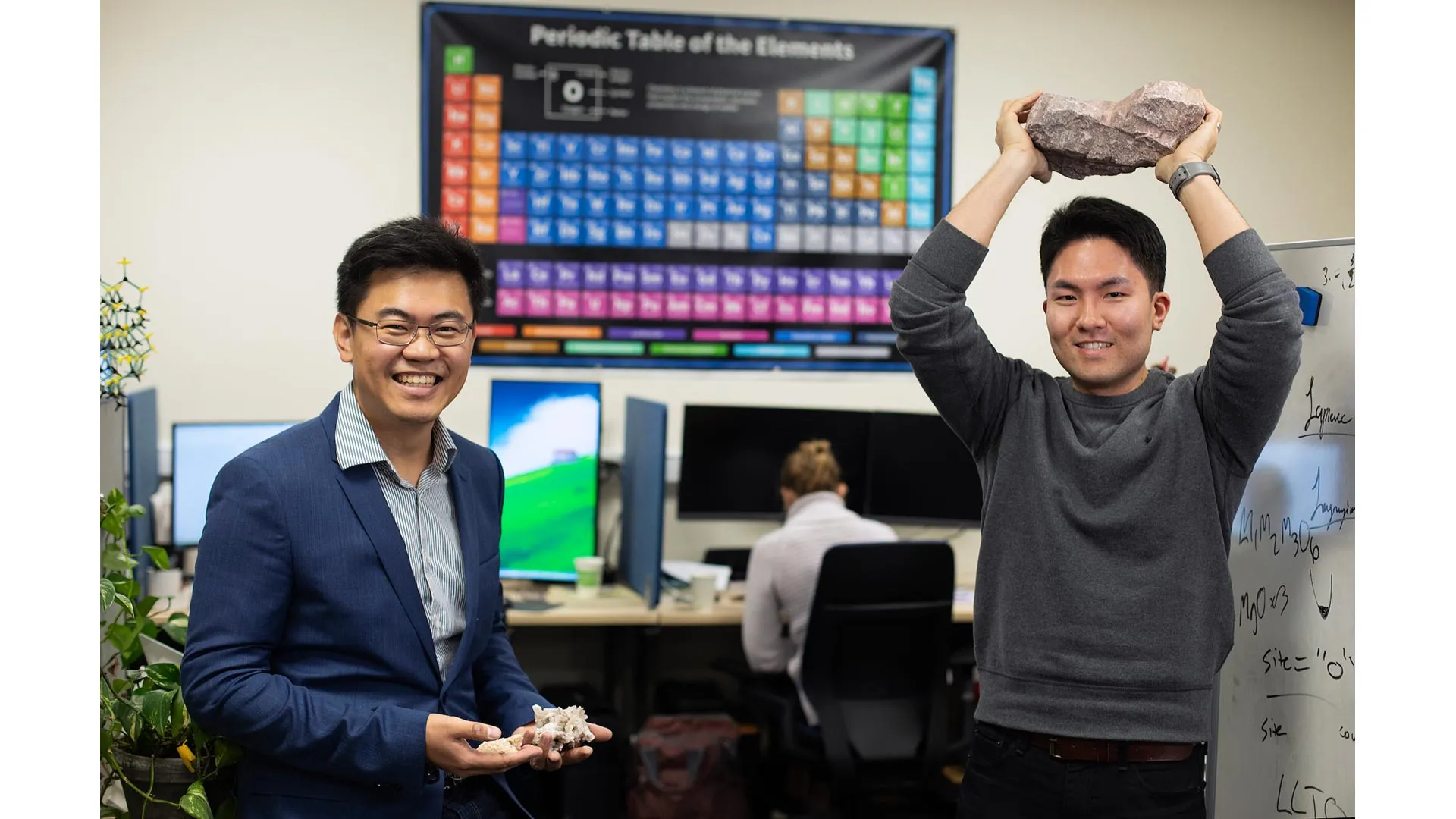
After more than two centuries of failed attempts, scientists have finally succeeded in growing dolomite in laboratory conditions, solving one of geology's most persistent puzzles known as the "Dolomite Problem." The breakthrough, achieved by researchers from the University of Michigan and Hokkaido University in Japan, reveals why this abundant mineral found in iconic locations like the Dolomite mountains in Italy and Niagara Falls had resisted all previous efforts at artificial synthesis.
Dolomite presents a unique challenge because of its complex layered structure, which alternates between calcium and magnesium ions. When scientists attempted to grow the mineral in water under conditions thought to mirror natural formation, the process would stall almost immediately. The team discovered that as dolomite crystals grow, calcium and magnesium atoms often attach randomly instead of aligning correctly, creating structural defects that block further development and could theoretically take up to 10 million years to form a single well-ordered layer.
The key insight came from understanding that these defects are not permanent obstacles in natural environments. Atoms that attach incorrectly are less stable and more likely to dissolve when exposed to water cycles such as rainfall or tidal changes. Over geological time scales, this natural washing process repeatedly clears away flawed areas, allowing properly arranged layers to form gradually. "If we understand how dolomite grows in nature, we might learn new strategies to promote the crystal growth of modern technological materials," said Wenhao Sun, the Dow Early Career Professor of Materials Science and Engineering at the University of Michigan.
To test their theory, the researchers developed sophisticated atomic-level simulations using software created at Michigan's Predictive Structure Materials Science Center. The software calculates energy interactions between electrons and atoms for certain arrangements, then uses crystal structure symmetry to predict energies for other configurations. This approach dramatically reduces the computational power needed for such complex calculations while maintaining accuracy.
The discovery has implications far beyond understanding geological processes. The team's success in mimicking nature's approach to overcoming crystal growth defects could inform the development of new materials for technology applications. Brian Puchala, one of the software's lead developers and an associate research scientist at Michigan, noted that the breakthrough demonstrates how studying natural processes can reveal new strategies for materials engineering, potentially revolutionizing how scientists approach the creation of advanced crystalline materials.