Scientists Finally Crack 200-Year-Old Dolomite Mystery Using Atomic Simulations
Breakthrough discovery reveals why the common geological mineral has resisted laboratory growth, potentially reshaping materials science approaches.
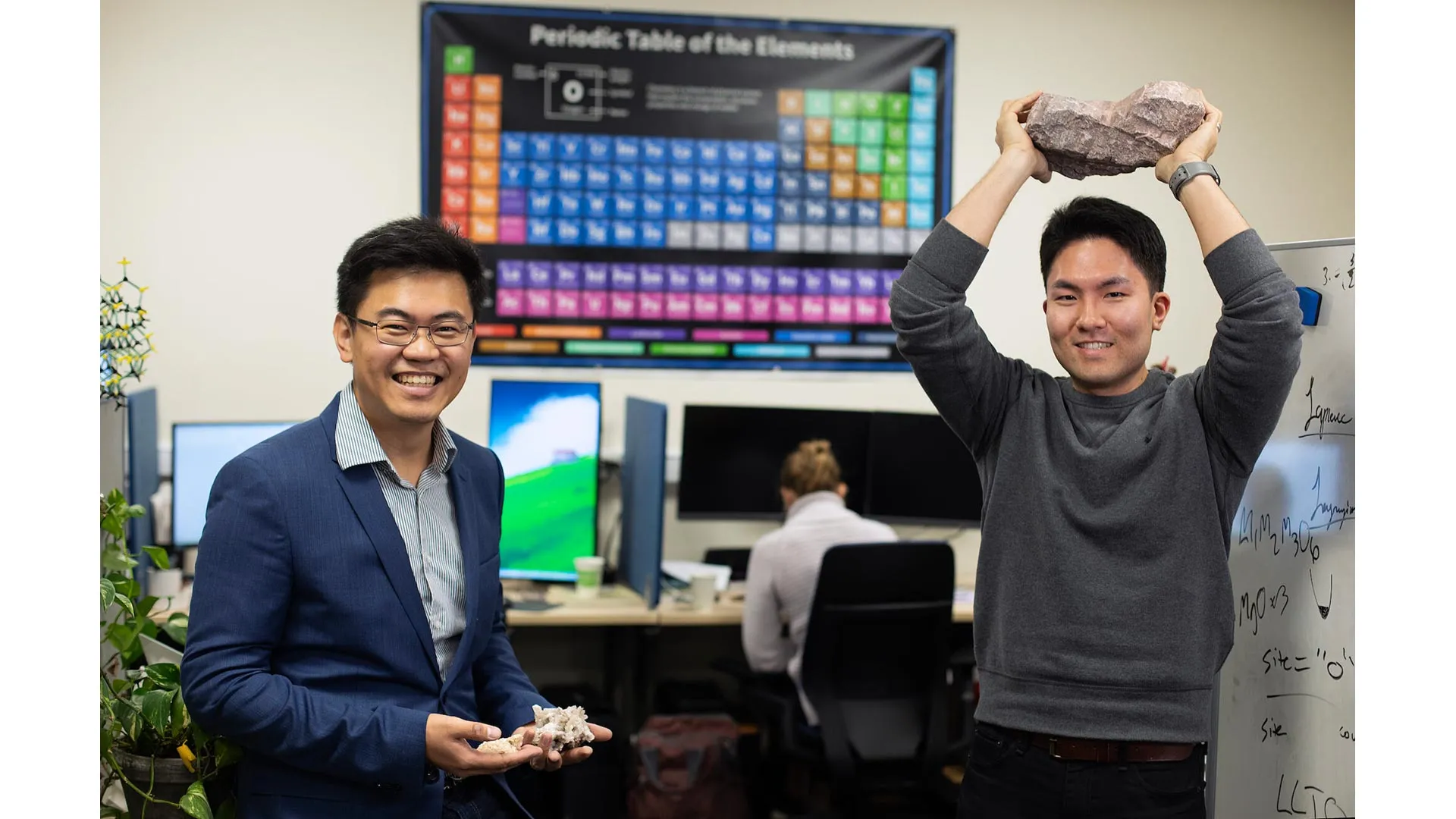
Geologists have spent two centuries puzzling over why dolomite — a magnesium-calcium carbonate mineral that makes up enormous portions of ancient limestone formations around the world, including the Italian Alps that gave it its name — almost never forms in modern surface environments, even though the chemical conditions that should produce it appear to be widely present. A team of researchers from the University of Michigan and Hokkaido University has now used quantum mechanical computation to identify the mechanism responsible, resolving one of geology's most stubborn open questions in a paper published this week in the journal Science.
The answer, according to lead researcher Wenhao Sun and postdoctoral fellow Joonsoo Kim, comes down to a counterintuitive feature of crystal growth: dolomite's magnesium and calcium atoms must arrange themselves in a precisely ordered alternating pattern, and at room temperature, the crystal lattice grows too quickly for that ordering to be achieved. The magnesium ions, surrounded by tightly bound water molecules, resist releasing those water molecules fast enough to slot into the correct positions in the growing crystal. The result is a disordered structure that is not true dolomite but a magnesium-poor cousin called protodolomite.
The quantum calculations reveal why higher-energy conditions — elevated temperatures, greater pressure, or extended time — allow true dolomite to form: they provide enough activation energy for the magnesium ions to shed their hydration shells and settle into the ordered arrangement the crystal requires. This explains why ancient dolomite deposits formed under burial conditions or in hydrothermal environments but essentially no new dolomite is found forming in modern seawater or lake sediments at room temperature, despite seawater being chemically saturated with respect to dolomite.
The team's key computational insight was identifying that periodic dissolution — a process in which parts of the growing crystal temporarily dissolve and re-precipitate — actually helps achieve the correct ordered structure by allowing misplaced ions to escape and reattach in the right positions. Previous models had treated dissolution as a defect or failure mode of crystal growth; Sun and Kim's quantum calculations show it is instead a necessary correction mechanism that operates on specific timescales determined by temperature and ion hydration energetics.
"We've known for decades that dolomite was forming somehow in ancient sediments and that we couldn't replicate it in the lab," Sun said in a statement released by the University of Michigan. "The quantum picture tells us exactly what was different — it wasn't magic chemistry in ancient oceans, it was the conditions that allowed the crystal to take its time and get the ordering right."
The practical applications extend well beyond geology. Dolomite is a significant industrial mineral used in steel production, magnesium refining, and as a construction aggregate. Understanding the precise conditions under which ordered dolomite can be synthesized at lower temperatures could reduce energy costs in magnesium metal production, which currently requires mining existing dolomite deposits and roasting them at extremely high temperatures.
The findings also have implications for carbon sequestration research. Dolomite formation captures significant quantities of CO2 in mineral form over geological time, and Earth system models that include dolomite formation in ancient oceanic conditions have consistently failed to match observed carbon isotope records because the formation mechanism was poorly constrained. Sun and Kim's work provides a thermodynamic framework that climate modelers can use to improve reconstructions of ancient atmospheric carbon levels.
The research was supported by the U.S. Department of Energy Office of Science and the Japan Society for the Promotion of Science.