Planck Standard
  1. Physics

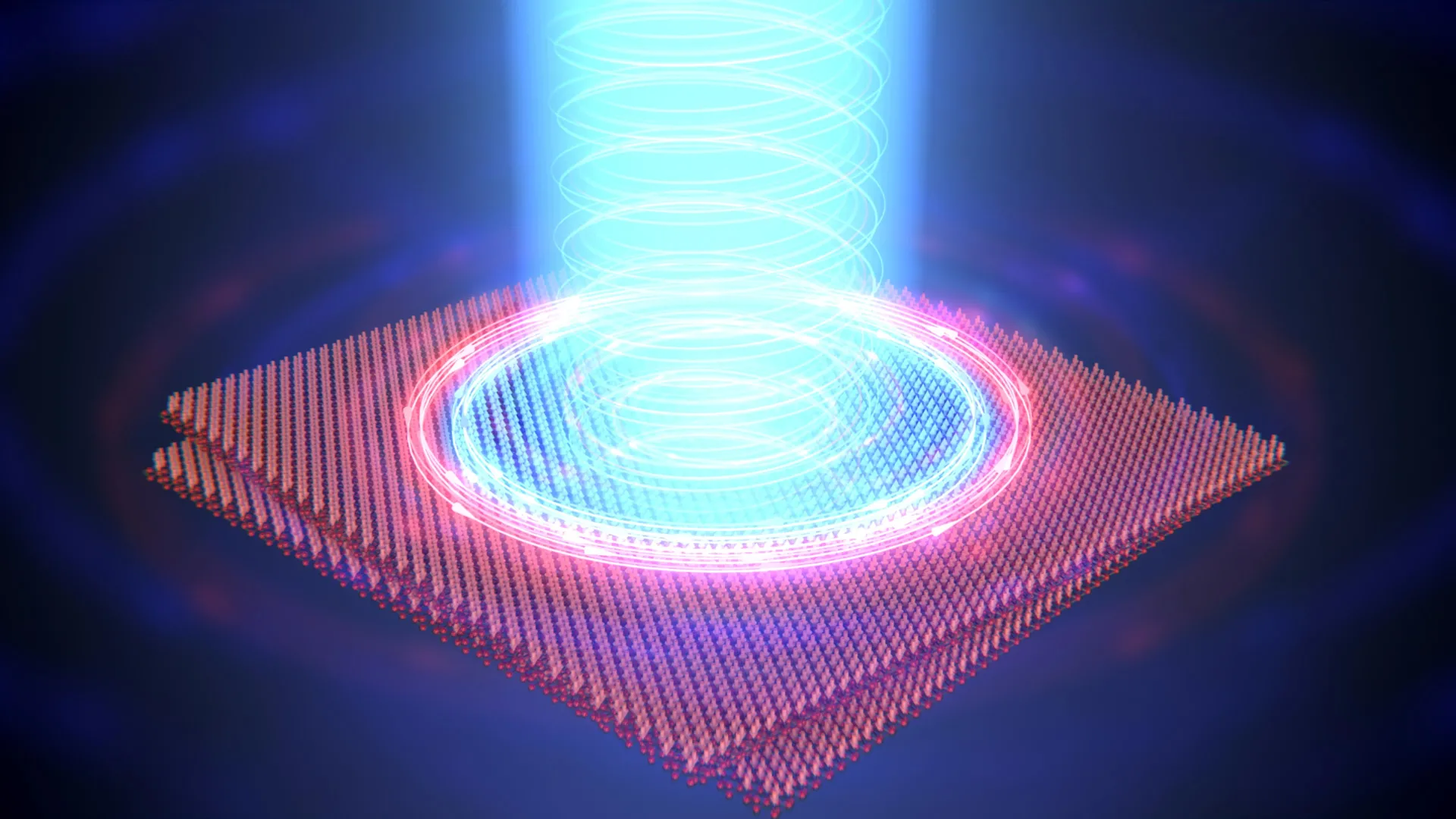
    Maryland Physicists Stacked a Two-Dimensional Magnet on a Two-Dimensional Ferroelectric and Got a Room-Temperature Multiferroic That Switches Its Magnetism With a Small Voltage, 3,000 Times Without Wearing Out

    Neither long-range magnetic order nor ferroelectric order survives easily in a sheet a few atoms thick, and getting both to coexist at 19°C was thought to be extraordinarily hard. Cheng Gong's team did it by building each order in its own layer and pressing the layers together.

    4 min read

  2. Physics

    The Spin Seebeck Effect Only Worked at a Thin-Film Surface

    A NIMS and University of Tokyo team coated yttrium iron garnet powder with platinum and pressed it into bulk, scattering nanoscale interfaces throughout the material. Thickness no longer caps the output.

    3 min read

  3. Physics

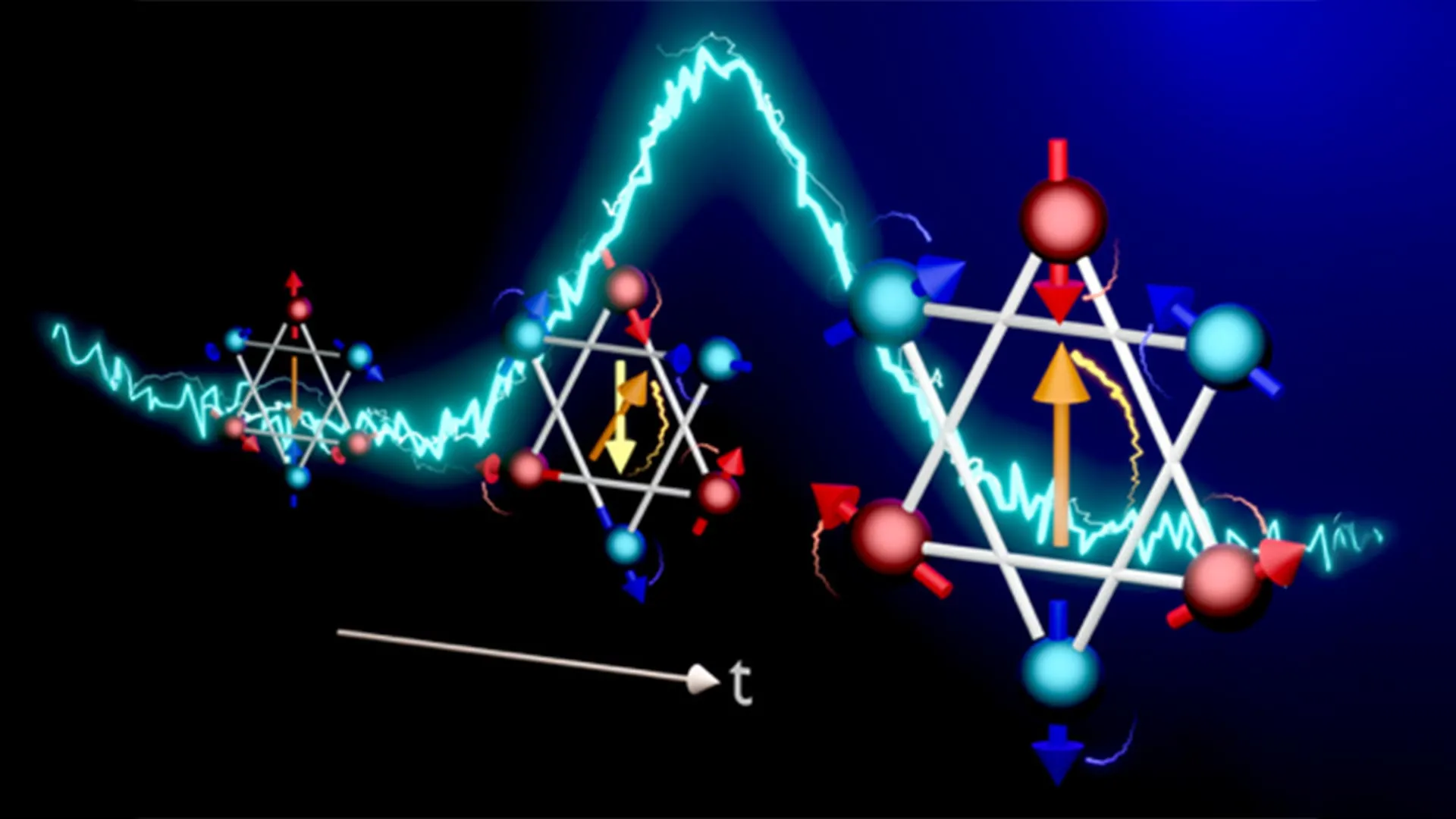
    University of Tokyo Scientists Film Electron Spins Flipping Inside an Antiferromagnet in 140 Trillionths of a Second — Revealing Two Hidden Mechanisms

    Professor Ryo Shimano's team used ultrafast laser pulses to capture frame-by-frame footage of magnetic switching in manganese-tin — a material that had been almost entirely invisible to physicists — and discovered a heat-free switching pathway that could enable magnetic memory and logic ten times faster than today's best MRAM chips.

    5 min read