Scientists Film Electron Spin Flipping in 140 Trillionths of a Second — A Potential Revolution in Computer Memory
Researchers at the University of Tokyo have filmed in unprecedented slow-motion detail the moment electron spins flip inside an antiferromagnet, revealing two switching mechanisms that could power next-generation ultra-fast, low-energy memory chips.
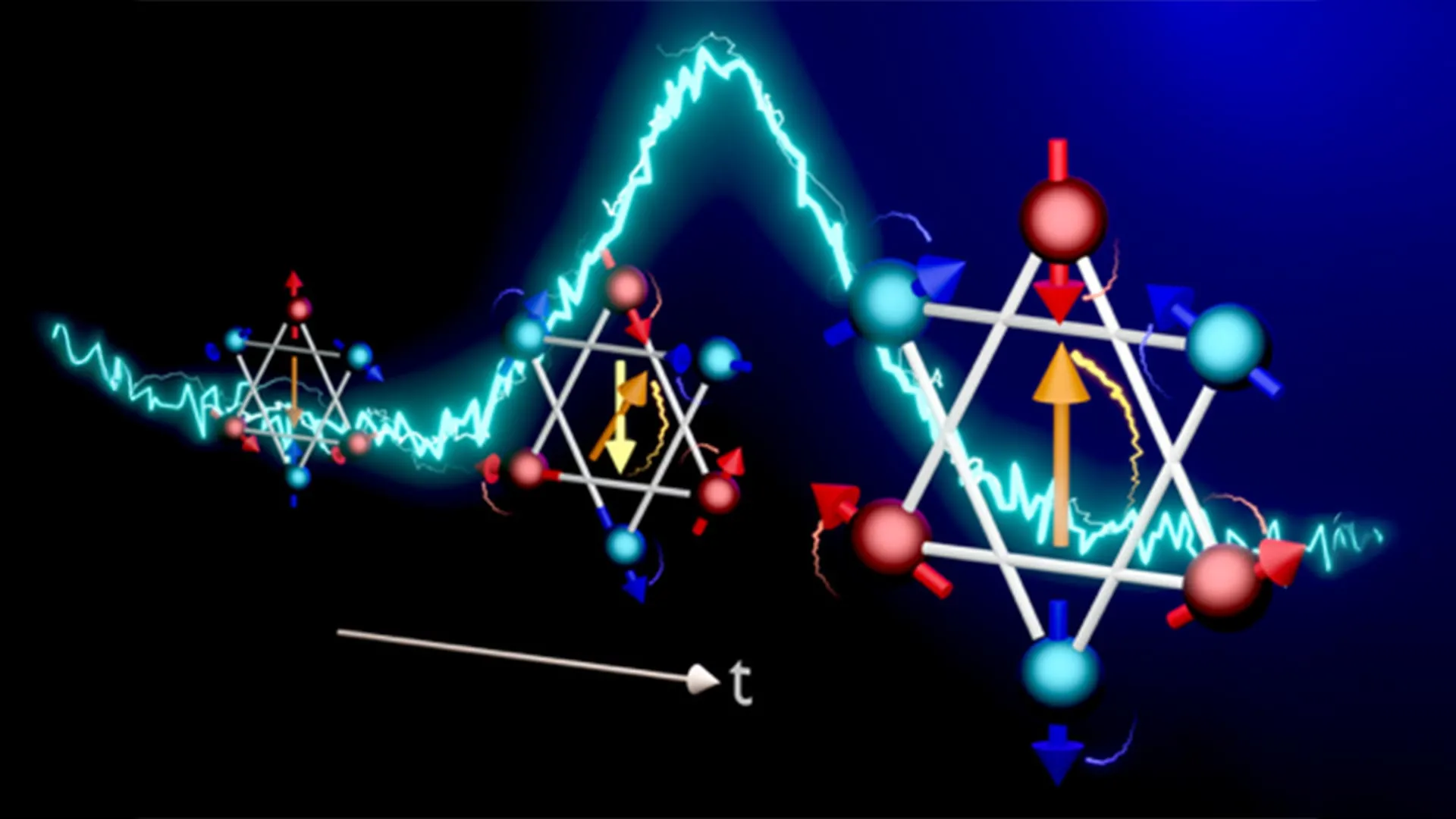
For decades, physicists working on next-generation computer memory have focused intently on antiferromagnets — materials in which neighboring electrons' magnetic orientations, called spins, point in opposite directions and cancel each other out. This near-invisibility to conventional measurement techniques has made antiferromagnets among the hardest materials to study, even as their theoretical properties — ultrafast switching, immunity to stray magnetic fields, zero external magnetic signature — have made them deeply attractive candidates for tomorrow's data storage. Now, a team led by physicist Ryo Shimano at the University of Tokyo has directly filmed, in unprecedented slow-motion detail, the exact moment electron spins flip inside an antiferromagnet, completing the process in just 140 picoseconds — 140 trillionths of a second.
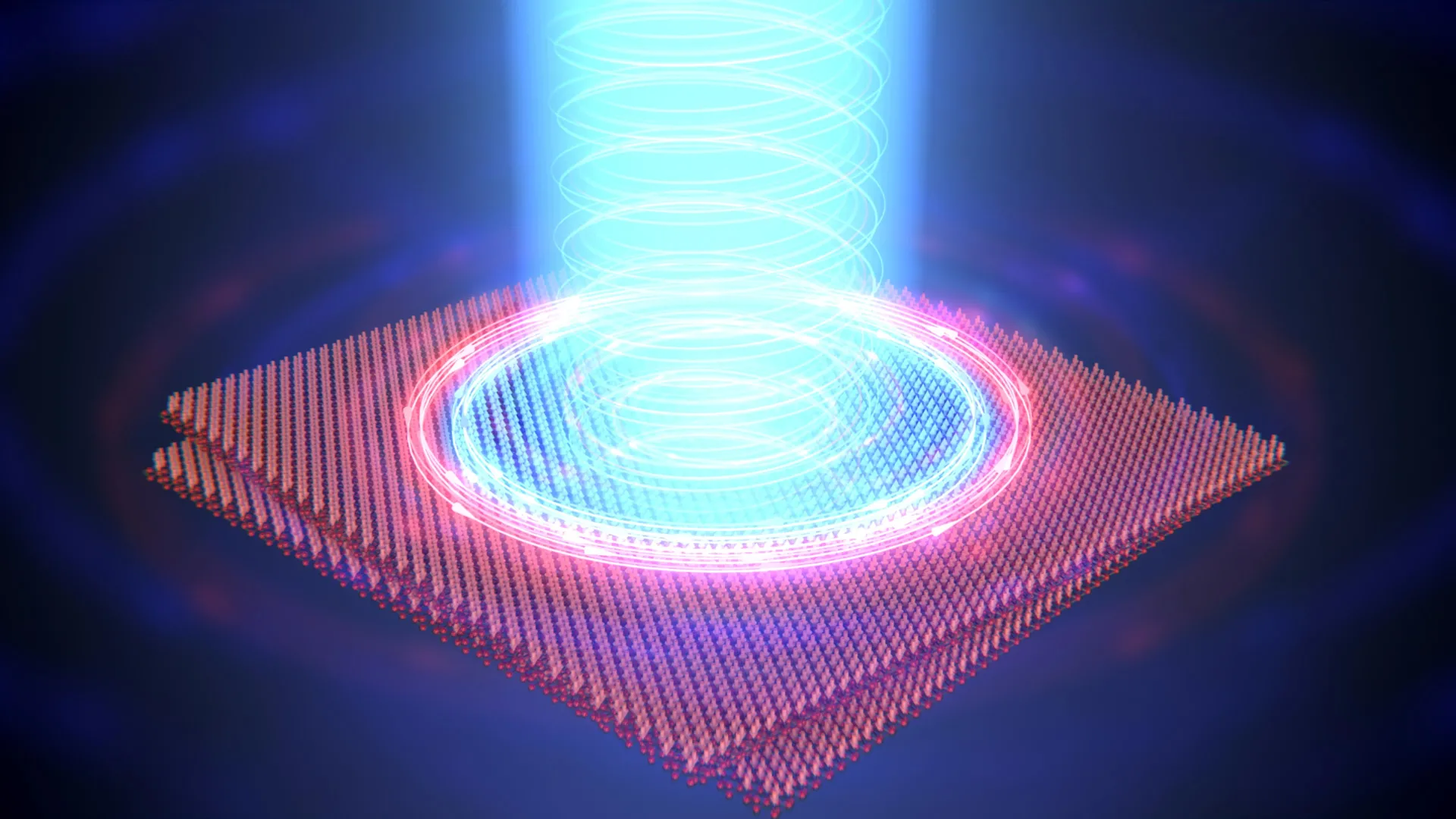
The experiment, published in Nature Materials, used a thin film of manganese-tin, a compound designated Mn₃Sn that has attracted intense scientific interest because of its unusually strong and controllable magnetic properties despite being antiferromagnetic. Shimano's team fired sequences of ultrafast electrical pulses through the film while illuminating it with precisely timed flashes of light. By incrementally adjusting the delay between each current pulse and its corresponding light pulse, the researchers built a frame-by-frame record of the magnetization changes occurring inside the material — essentially a slow-motion video of a process that completes in less time than it takes light to travel the width of a human hair.
What the team discovered surprised them. Rather than a single switching mechanism, the experiment revealed two entirely distinct pathways by which the antiferromagnet transitions between magnetic states. The first pathway is heat-driven: strong electrical currents generate enough thermal energy to push the spin configuration over an energy barrier and into a new orientation. This mechanism had been theoretically predicted and was broadly expected. The second mechanism was far more significant: a direct interaction between the electrical current and the electron spins, operating without any meaningful generation of heat, that causes the flip through a fundamentally different physical process.
"This second pathway is especially significant because it suggests a way to control magnetic states quickly and efficiently without wasting energy as heat," the team noted. The implications for computing are considerable. Modern computer memory relies on magnetic materials to store binary data as distinct magnetic states, and the search for faster, more energy-efficient magnetic memory has driven the field of spintronics for more than three decades. Antiferromagnets are among the most promising candidates for next-generation spintronic devices: they can switch states far faster than conventional magnetic materials, are immune to external magnetic interference, and produce no stray magnetic field — properties that make them both faster and more physically compact than today's ferromagnetic memory technologies.
The current measurements are technically capped at 140 picoseconds due to the temporal resolution of the experimental apparatus, but Shimano's group believes the material's true switching speed may be considerably shorter — potentially reaching into the femtosecond regime, which would make it billions of times faster than a silicon transistor switching at gigahertz rates. The work also opens a new experimental window into a class of materials that had previously resisted optical study. The team's use of precisely timed light pulses to probe antiferromagnetic dynamics is expected to be adapted by laboratories worldwide, unlocking a new generation of experiments on compounds that were previously considered too magnetically opaque to investigate.