Decades of Spintronics Theory Were Wrong, Chinese Scientists Find — And It Could Unlock Better Chips
A team from the Chinese Academy of Sciences has shown that the standard explanation for a key magnetic phenomenon used to design memory and sensor devices for twenty years was fundamentally incorrect.

A team of scientists from the Chinese Academy of Sciences and the Chinese University of Hong Kong has upended one of the central tenets of spintronics — the field that aims to build ultrafast, ultralow-power electronic devices by exploiting electron spin — after showing that the widely accepted theoretical explanation for a key magnetic phenomenon has been fundamentally incorrect for roughly two decades. The finding, published in the journal National Science Review in February 2026, is being described by outside researchers as one of the most consequential theoretical revisions in the field since its founding.
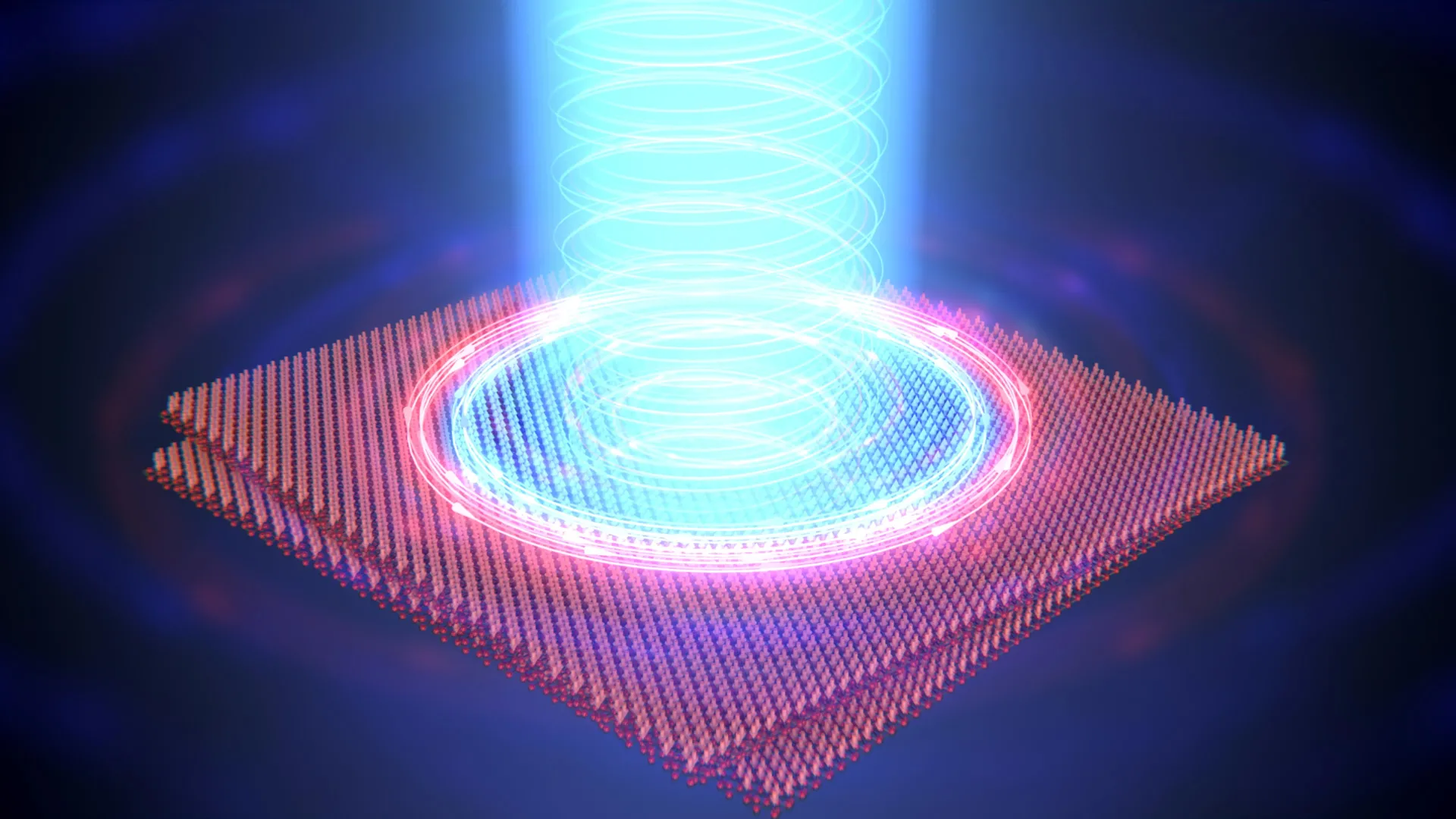
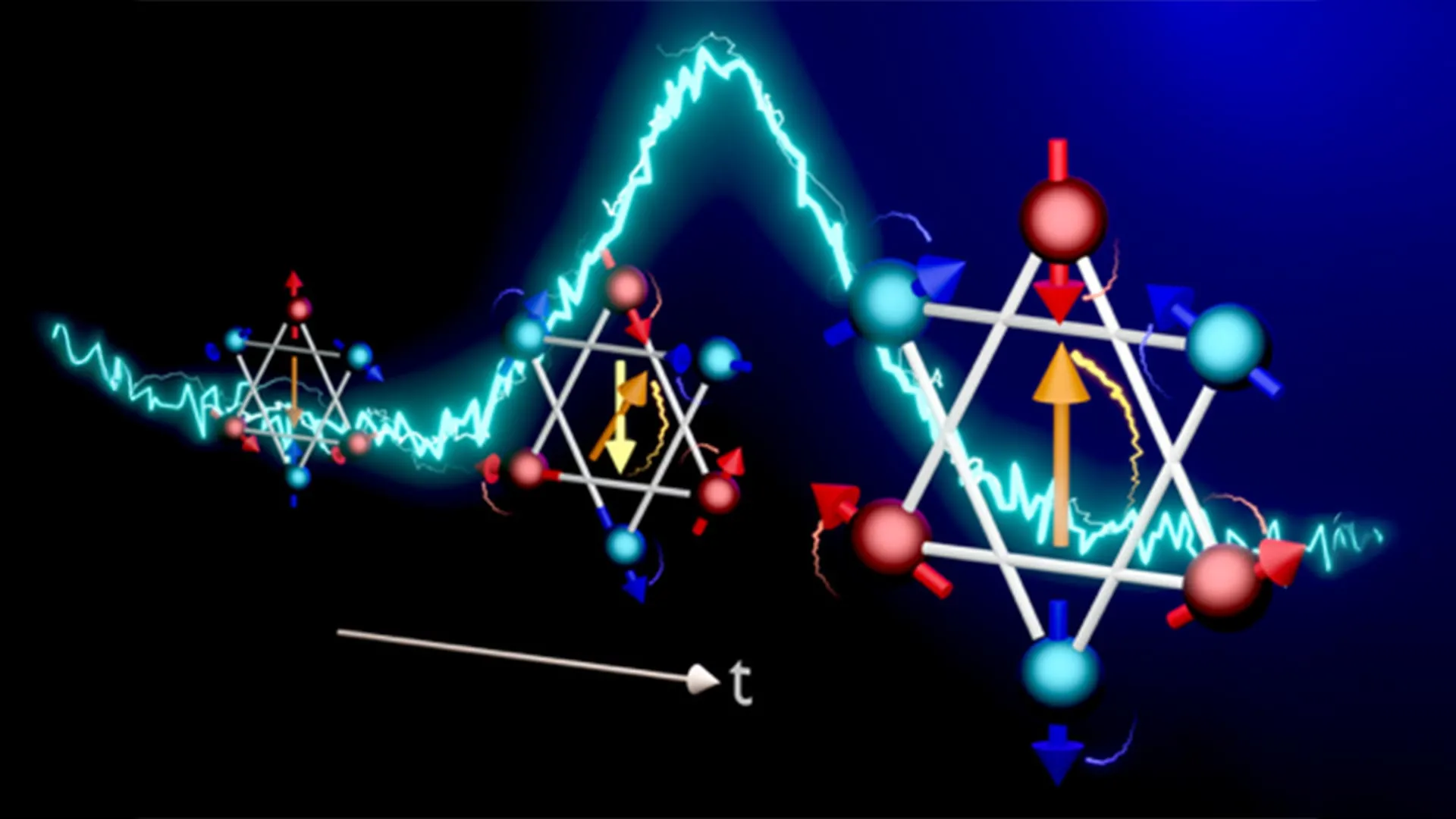
The controversy centers on a property called unusual magnetoresistance, or UMR — the tendency of certain magnetic thin-film structures to change their electrical resistance in ways that depend on the direction of an applied magnetic field. For approximately twenty years, the dominant explanation for UMR in these systems was a mechanism called spin Hall magnetoresistance, or SMR, which attributes the resistance changes to a quantum property of electrons involving their spin angular momentum — how the electron's intrinsic 'spin' interacts with its motion through the crystal lattice. Spintronic device engineers have been using SMR as the theoretical foundation for designing magnetic memory, magnetic sensors, and spin-orbit torque devices. Dozens of spintronic device architectures, and billions of dollars in research investment and semiconductor development programs, have been guided by this assumption.
Professors Lijun Zhu of the Institute of Semiconductors at the Chinese Academy of Sciences and Xiangrong Wang of the Chinese University of Hong Kong led experiments that showed the SMR explanation was wrong in the systems where it was most broadly applied. Using precise transport measurements and a newly developed theoretical framework, the team demonstrated that the observed UMR effects arise instead from 'electron scattering at interfaces under the combined influence of magnetization and an applied electric field' — a mechanism the authors call two-vector magnetoresistance, or 2VMR. The two mechanisms can produce nearly identical experimental signatures, which is why the error went undetected for so long. Only recently, with experimental precision sufficient to isolate individual interface contributions, did it become possible to distinguish between them.
The implications for device engineering are significant. If the dominant mechanism producing UMR in real devices is 2VMR rather than SMR, then many of the optimization strategies researchers have been using to improve spintronic device performance — tuning material properties to maximize the spin Hall effect — may have been targeting the wrong physical phenomenon. The finding does not invalidate the devices built on the old theory; devices designed to exploit UMR still work. But it means that the reasons they work were misunderstood, and that better, more efficient devices may be achievable by designing to the correct mechanism. Practical applications affected include spin-orbit torque magnetic RAM (SOT-MRAM), one of the most promising next-generation memory technologies under development at companies including Samsung, TSMC, and several U.S. defense contractors.
The paper has been received with a mixture of surprise and cautious skepticism in the broader spintronics research community. Several prominent researchers outside China have told science publications that the experimental evidence presented by Zhu and Wang is technically rigorous, but that independent replication is needed before the field revises its foundational assumptions. Stuart Parkin of the Max Planck Institute for Microstructure Physics, a pioneer in spintronics whose work on giant magnetoresistance contributed to the Nobel Prize in Physics awarded to Albert Fert and Peter Grünberg in 2007, called the paper 'thought-provoking and worth serious attention.' The authors have invited the broader community to test the 2VMR framework and have shared their experimental protocols openly.