A Gentle Squeeze Reshapes the Magnetism of Altermagnets, Oak Ridge Neutron Study Shows
Squeezing tiny crystals of manganese telluride and iron sulfide between titanium plates shifted their magnetic domains and electrical behavior, a possible lever for future spintronic chips.
A light mechanical squeeze can substantially change the magnetic and electrical behavior of altermagnets, a newly studied class of magnetic materials, according to researchers at the Department of Energy's Oak Ridge National Laboratory. The findings, reported November 4, point to a simple way to control materials that could one day underpin faster, more energy-efficient electronics.
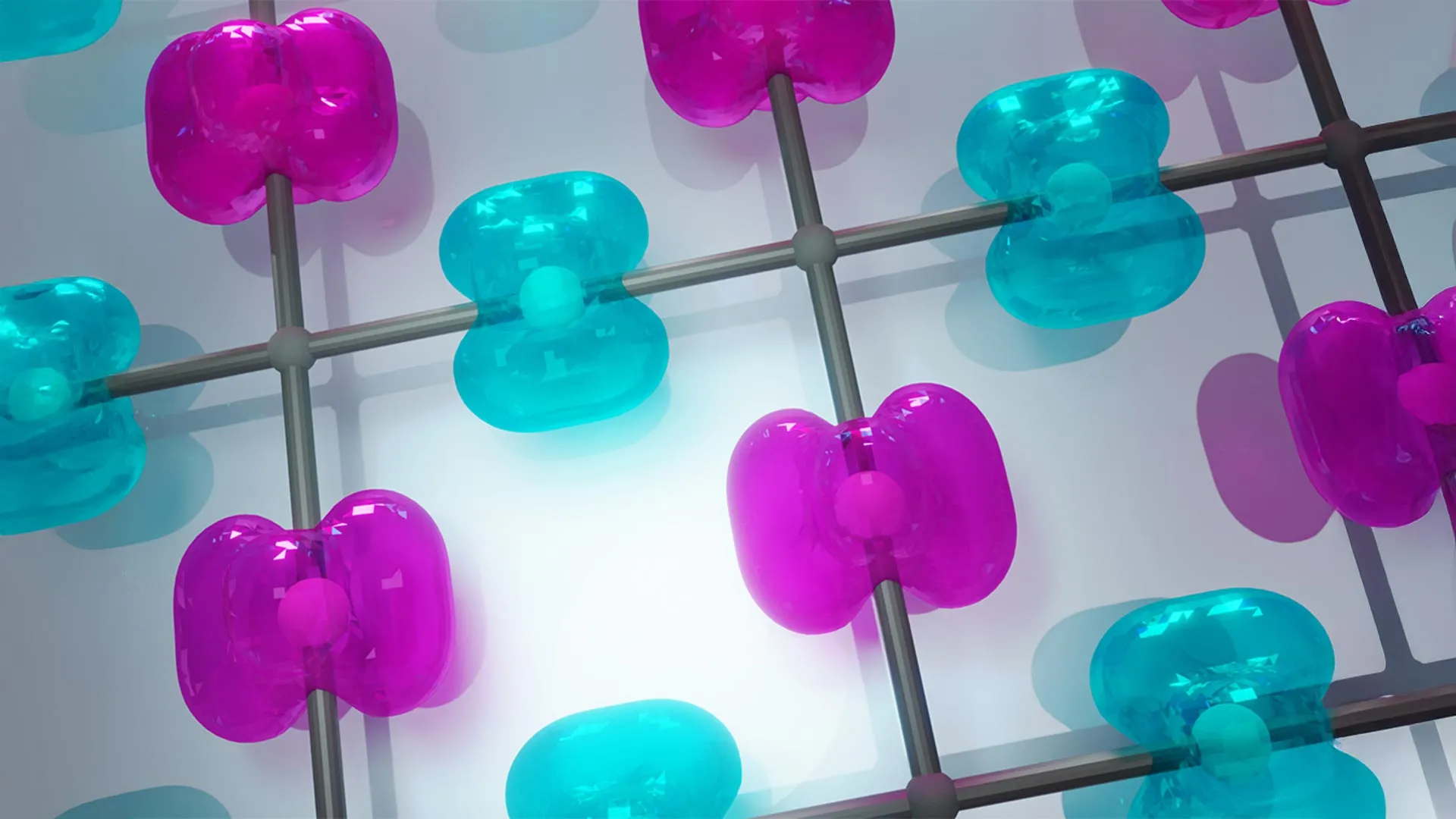
Altermagnets sit between the two familiar kinds of magnetism. Like antiferromagnets, they have no net magnetization, so they do not stick to a refrigerator. But their electrons behave as if they carried a magnetic bias, which makes them useful for spintronics, a field that uses the spin of electrons as well as their charge to store and move information. The challenge has been finding practical ways to tune them.
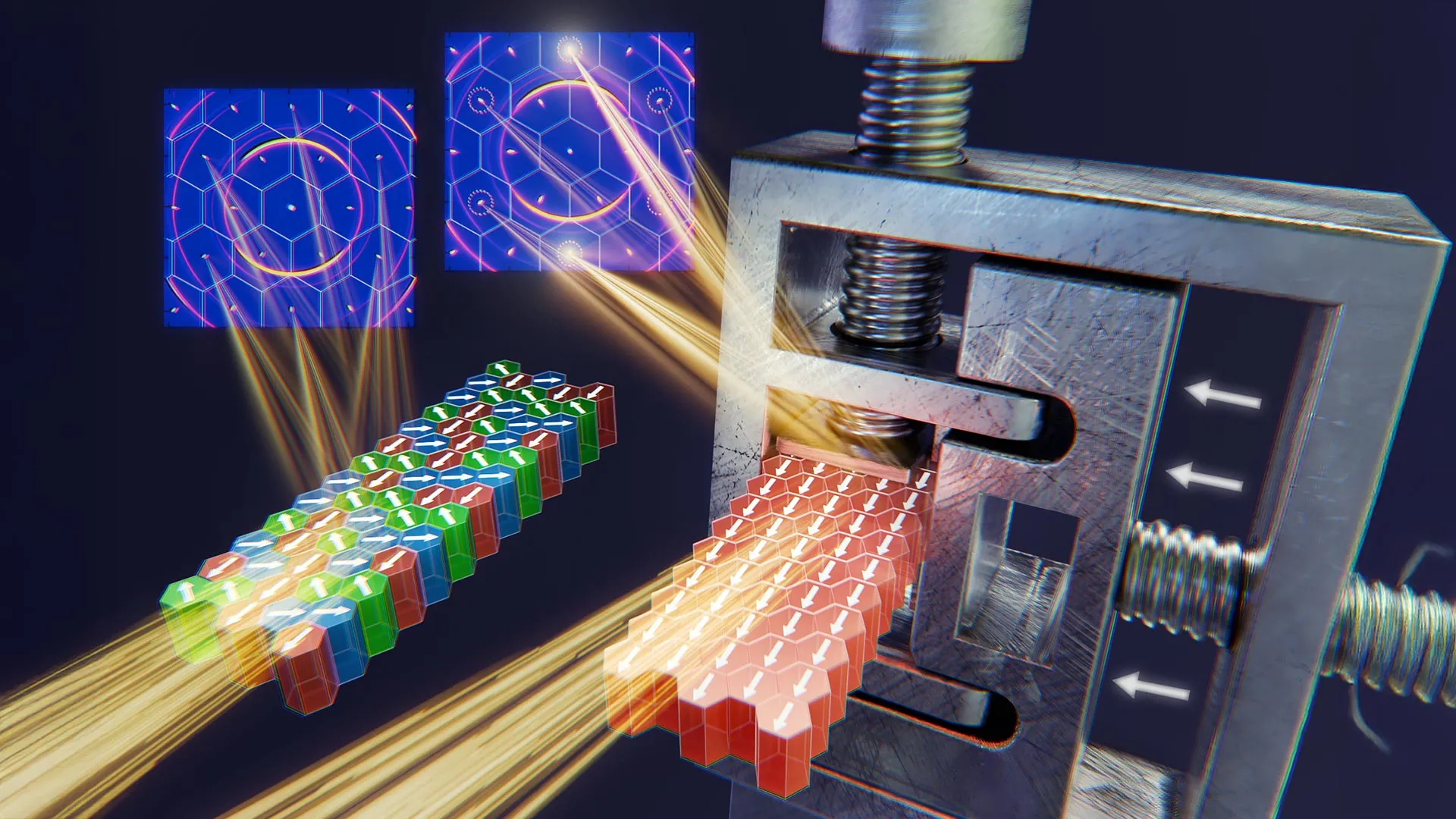
The ORNL team tried pressure. They placed tiny crystals of manganese telluride and iron sulfide between two titanium plates and compressed them gently. They then probed the crystals with neutron diffraction at the lab's Spallation Neutron Source, a DOE Office of Science user facility. Neutrons are well suited to the job because they scatter off the magnetic order inside a material and reveal how its magnetic domains, regions with distinct magnetic arrangements, are laid out.
The squeeze changed the relative populations of those domains. Strain also altered the anomalous Hall effect, an electrical phenomenon in which a current develops a sideways voltage without an external magnetic field, showing that the mechanical change fed through to the material's electrical behavior. "By controlling the magnetic domains, we can directly influence the transport behavior," said Pengcheng Dai of Rice University, a former ORNL neutron scientist who is a senior author. Feng Ye, an ORNL neutron scientist and co-author of both papers, said that a small mechanical squeeze between two plates can reveal entirely new magnetic behavior, and credited neutron scattering with exposing the underlying change.
The work was published as two linked studies. One, in Advanced Materials, is titled "Uniaxial Strain Tuned Magnetism of the Altermagnet Candidate H-FeS" and lists Weiliang Yao, Feng Ye and Pengcheng Dai among its authors. The other, in Physical Review X, is titled "Strain-Tunable Anomalous Hall Effect in Hexagonal MnTe," and its authors include Zhaoyu Liu, Sijie Xu, Rafael Fernandes and Dai. Co-authors on the papers include Emilia Morosan and Qimiao Si.
The practical promise is control. If strain can switch the domain structure and the electrical response of a material, designers might build devices where pressure from a tiny actuator sets the magnetic state, avoiding the large currents or fields that conventional magnetic memories need. Backers of spintronics also point to wireless communication and quantum computing as possible applications. The researchers caution that suitable materials still have to be identified and developed. Manganese telluride and iron sulfide are test beds, and the leap from a crystal squeezed between plates in a lab to a working chip is long. But the experiments show that altermagnets respond to mechanical tuning in a clean, measurable way, which is the first thing an engineer needs to know.