Physics
Dying Star Could Create New Universe Instead of Black Hole
Scientists propose that massive stellar collapse might trigger the birth of a tiny cosmos inside the dying star.
The physics desk
Physics from the quantum to the cosmos: particle physics, quantum computing, astrophysics, cosmology and the discoveries that change what is possible.
Scientists propose that massive stellar collapse might trigger the birth of a tiny cosmos inside the dying star.
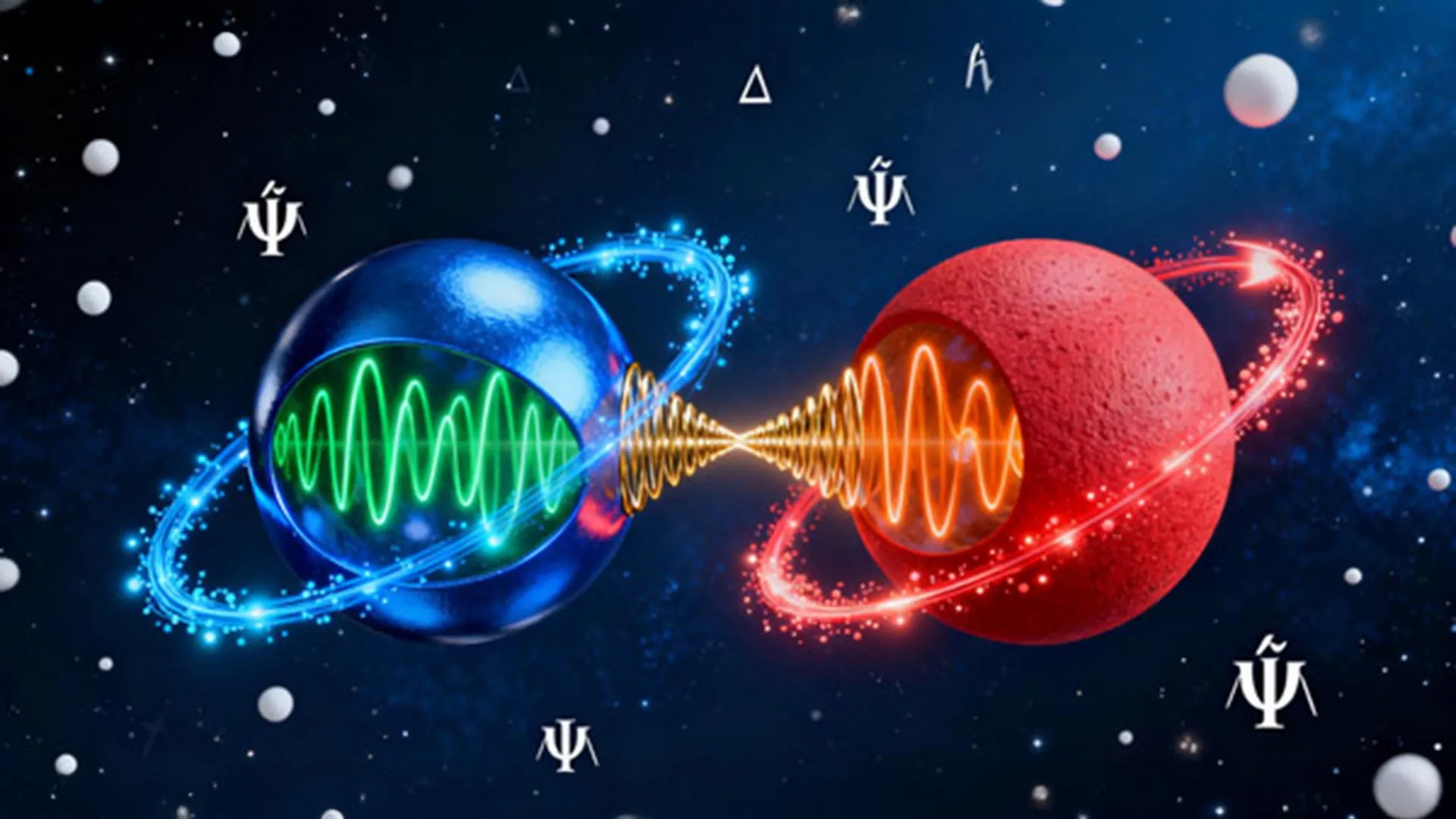
RIKEN scientists develop technique for quantum systems to synchronize in only one direction while remaining stable against manufacturing flaws and environmental noise.

University of Hong Kong engineers turned a single silicon carbide transistor into an artificial neuron that fires reliably at just thousandths of a degree above absolute zero.
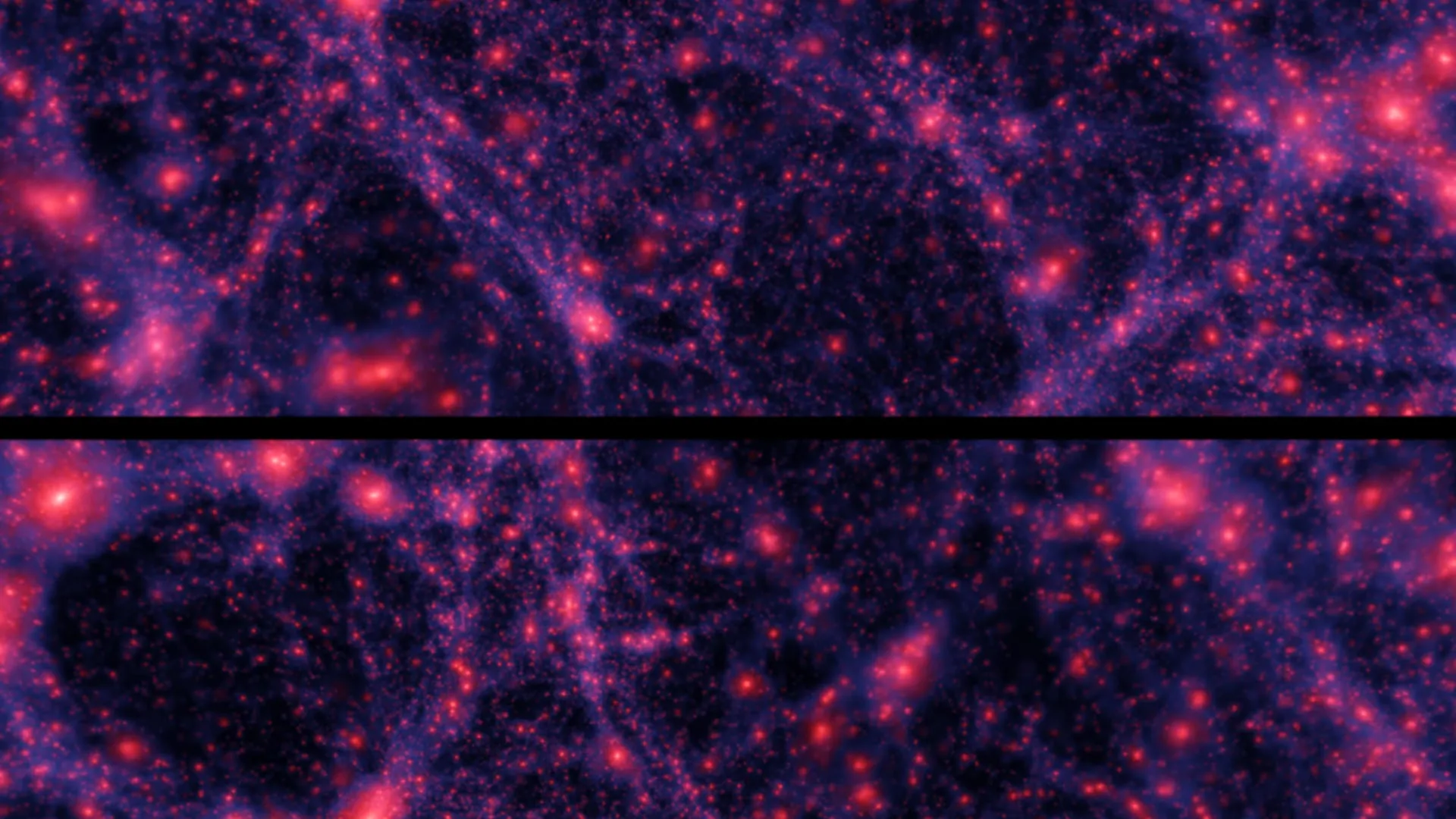
Transfer learning dramatically reduces simulation costs for cosmological research, yet scientists warn the technique could overlook truly novel phenomena.

Revolutionary propulsion system combines chemical and electric thrusters using a single green fuel, potentially enabling CubeSats to explore deep space.

A Cal Poly team shows that periodically driving a material with shifting magnetic fields can create quantum phases that have no equivalent in any static material — and may bolster quantum computers.

China's JUNO detector achieves breakthrough measurements using just 59 days of data, boosting confidence for solving neutrino mass mystery.
JUNO detector reduces measurement uncertainties by factor of 1.6 using just 59 days of data, bringing scientists closer to solving neutrino mass hierarchy mystery.
RIKEN researchers develop technique combining quantum effects to create robust nonreciprocal synchronization for practical quantum technologies.

New research suggests the most powerful cosmic rays may be ultraheavy atomic nuclei that retain energy better while traveling through space than previously thought.
The JUNO experiment achieved breakthrough results using just 59 days of data, improving measurement accuracy by 60% compared to decades of previous research combined.
RIKEN researchers developed a breakthrough method that maintains quantum synchronization despite manufacturing flaws and environmental noise, potentially advancing practical quantum technologies.
JUNO detector delivers most precise measurements of neutrino oscillation parameters using just 59 days of data, advancing the quest to solve fundamental particle mysteries.
RIKEN researchers develop breakthrough technique combining two quantum effects to create stable nonreciprocal synchronization of sound particles, advancing practical quantum technologies.
New research reveals artificial intelligence can become too dependent on familiar patterns, potentially overlooking evidence of something truly new in the universe.
New dual-mode system uses single fuel for both rapid maneuvers and efficient long-distance travel, potentially transforming small satellite capabilities.

New analysis argues that physicists may be confusing existence with occurrence, creating fundamental misunderstandings about the nature of reality.
Transfer learning dramatically reduces simulation costs but may struggle to recognize truly groundbreaking discoveries, new study reveals.
Scientists demonstrate machine learning can slash simulation costs by factor of ten, yet warn AI might overlook truly novel physics by relying too heavily on familiar patterns.

Breakthrough achieves four times more energy flow than conventional systems, opening door to better chip cooling and precision heat engineering applications.
New research suggests the mysterious Amaterasu particle and similar cosmic rays may be atomic nuclei heavier than iron that retain energy across vast distances.
Breakthrough technology uses single fuel to power both rapid maneuvers and efficient long-distance travel, potentially transforming small satellite missions.

University of Chicago researchers discovered an elegant way to generate complex entangled quantum states without complicated hardware, potentially advancing quantum computing and sensing technologies.
The breakthrough technology could give small satellites unprecedented flexibility in space missions, combining rapid acceleration with highly efficient long-range travel.
New research suggests the most powerful cosmic rays could be atomic nuclei heavier than iron, potentially explaining how these extreme particles reach Earth with unprecedented energies.
Revolutionary propulsion system combines chemical and electric thrusters using single fuel, potentially transforming small satellite capabilities with NASA-supported mission testing technology in orbit.
New research suggests the most extreme cosmic rays could be ultraheavy atomic nuclei from distant explosions, not protons as previously thought.
Researchers achieved up to four times more energy flow than conventional systems using nanoscale gold metamaterials, potentially revolutionizing chip cooling and energy technologies.

A University of Chicago team showed that giving paired atoms opposite energy shifts can conjure complex entangled states using only standard lab tools and tunable lasers.

Researchers at Carnegie Mellon, Stanford and Purdue showed that patterning microscopic gold structures can boost radiative heat transfer up to fourfold, a result that could reshape cooling for electronics and energy systems.