MIT Split the Qubit's Job in Two. One Half Holds the Data, the Other Half Does the Talking
The 'arm qubit' design uses a quarton coupler to keep storage and communication apart. In simulation it holds state as long as the best existing designs while operating faster.

Every superconducting qubit built today is asked to do two contradictory things at once. It has to sit still and hold a fragile quantum state for as long as possible, which means isolating it from the outside world. And it has to interact strongly with neighboring qubits and with control electronics, which means the opposite. Designers have been trading one against the other for twenty years: make it more isolated and operations get slower, make it more connected and the state decays faster.
Researchers at MIT have proposed a way out that is close to obvious once stated. Stop asking one object to do both jobs. Their design, which they call the arm qubit, splits the device into two coupled modes — one dedicated to storing the quantum information, the other dedicated to talking to everything else. The two are joined by a quarton coupler, a circuit element the group has developed that provides strong coupling where it is wanted while suppressing the unwanted interactions that would otherwise let noise leak back into the storage mode.
The results, published in Physical Review Applied and posted earlier to arXiv, come from detailed simulation rather than a fabricated chip. In those simulations the arm qubit reaches coherence times matching the state of the art for superconducting qubits while performing operations faster than existing designs, and it reads out more cleanly. Faster gates plus unchanged coherence means more computation fits inside the window before the state falls apart, which is the ratio that actually governs whether error correction can keep up.
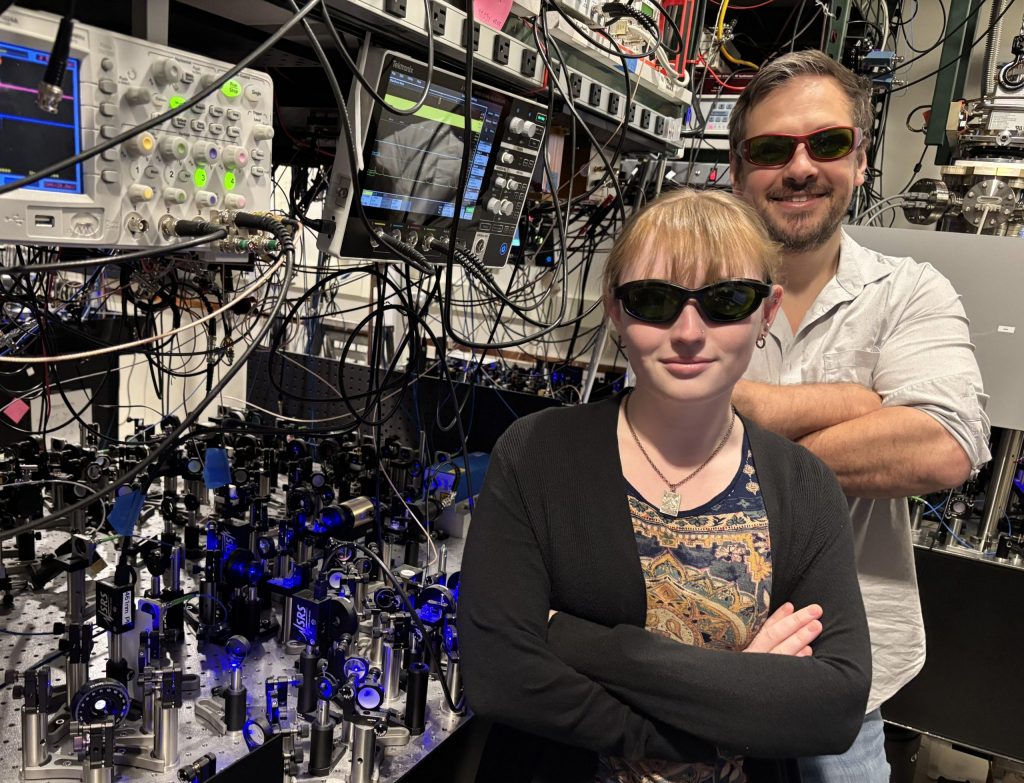
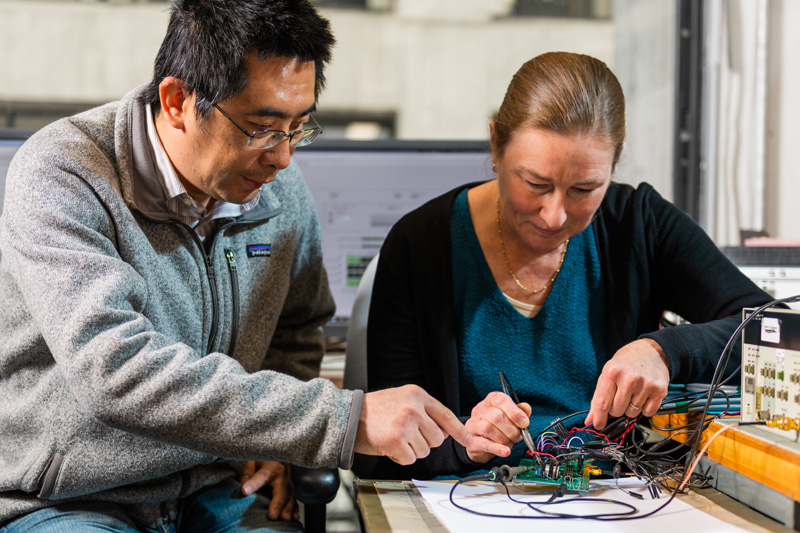
"This work feels like a big step," said Alec Yen, a recent MIT doctoral graduate and one of the co-authors. "It is a new architecture that shows how much these systems can be engineered." The lead author is Jeremy Kline, a graduate student in electrical engineering and computer science, with undergraduate Stanley Chen also contributing. The senior author is Kevin O'Brien, an MIT associate professor and principal investigator at the Research Laboratory of Electronics.
The distinction between simulated and demonstrated matters here. Superconducting circuit designs routinely look excellent in modeling and then meet fabrication defects, stray two-level-system losses in the oxide layers, and packaging problems that the model did not contain. The team's next step is to fabricate the arm qubit and measure it, then work out how to integrate it into a full quantum processor with the control and readout hardware around it.
What makes the approach interesting beyond one device is that it is architectural rather than material. Most gains in qubit coherence over the past decade have come from better materials and cleaner fabrication — chasing down the sources of loss atom by atom. Restructuring what a qubit is supposed to do is a different lever, and it is one that compounds with the materials work rather than competing with it.