Fermilab and MIT Crack a Key Barrier to Scalable Quantum Computing With a Chip That Works Inside an Ion Trap
A DOE-funded collaboration successfully integrated cryogenic control electronics directly into an ion-trap quantum system, offering the first viable path to building quantum computers with tens of thousands of qubits.
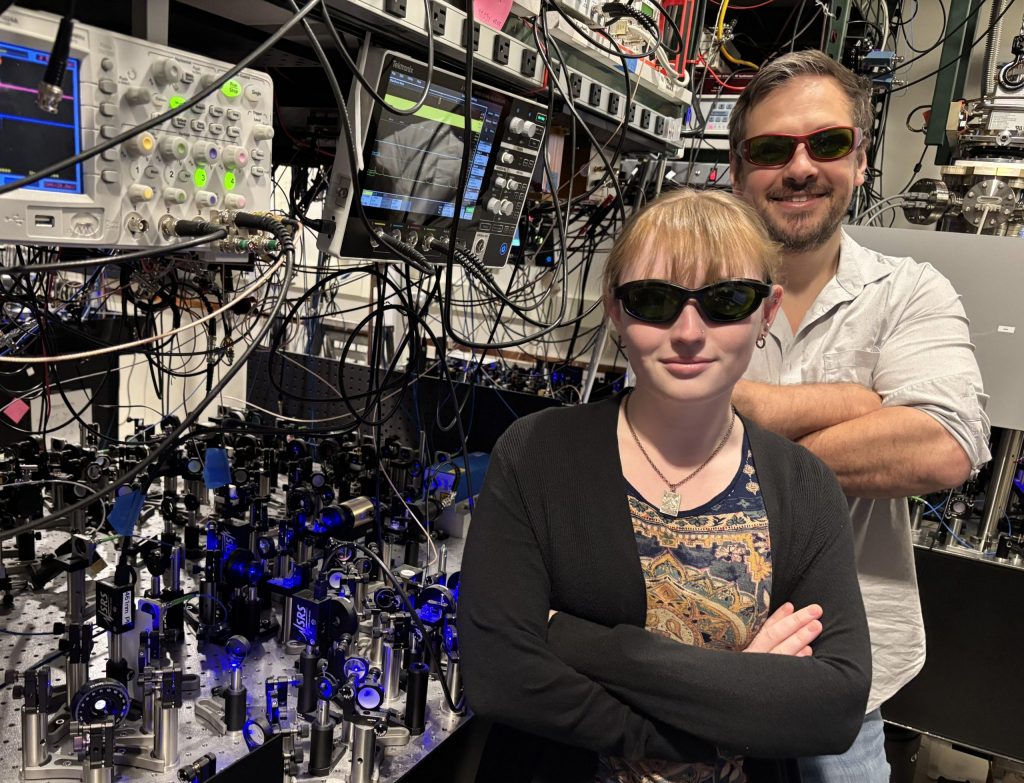
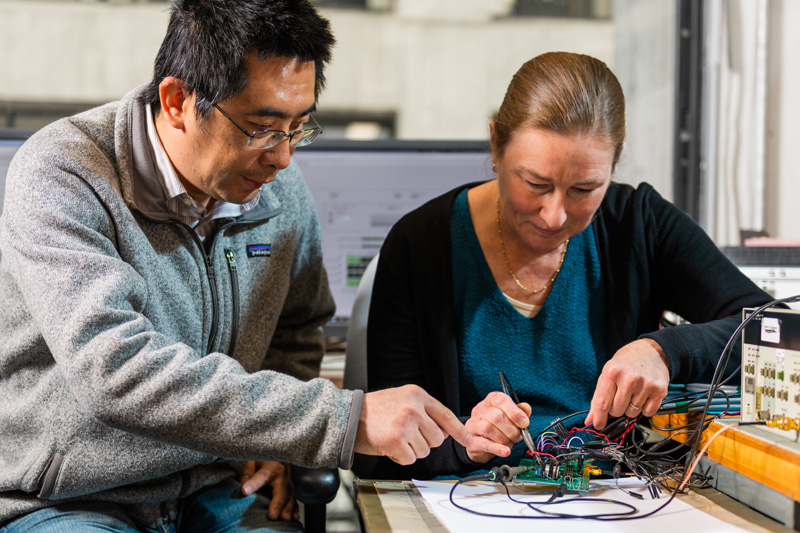
Scientists at Fermilab and MIT Lincoln Laboratory have demonstrated a critical step toward building scalable quantum computers, successfully integrating cryoelectronic control circuits directly into an ion-trap quantum computing system — a technical achievement that could accelerate the timeline for practical quantum computing by years. The research, supported by two U.S. Department of Energy national quantum research centers, was described in a paper published in February 2026 and marks the first demonstration that ultralow-power cryogenic electronics can reliably manipulate individual trapped ions inside the ultracold environment required for quantum processing.
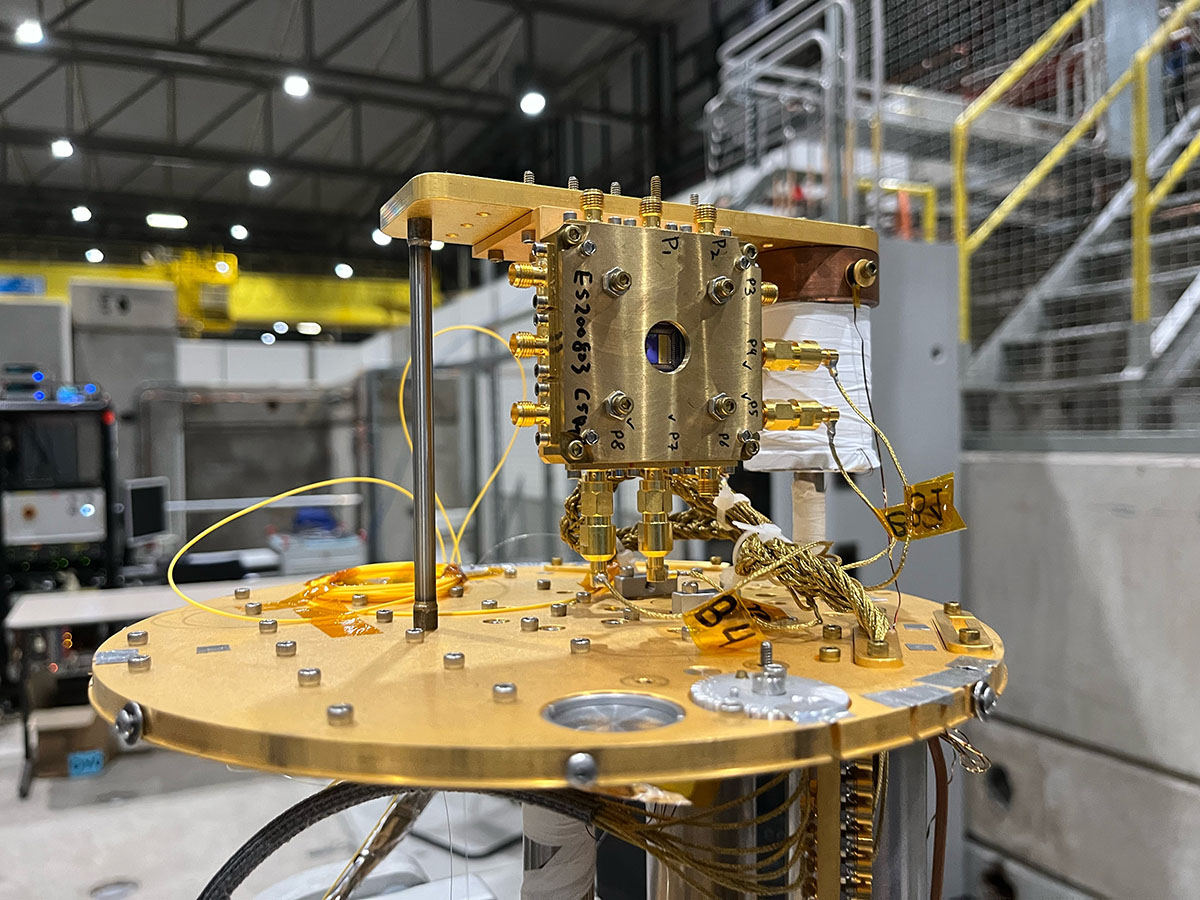
Ion-trap quantum computers are among the most promising architectures in the field, capable of achieving exceptionally high qubit quality — the measure of how accurately information can be stored and processed. The problem has always been scale. Current ion-trap systems use room-temperature electronics to control the individual electrodes that hold each ion in place, but as systems grow larger, the cables connecting those room-temperature controllers to the cold trap become a bottleneck, adding heat and noise that disrupts fragile quantum states. By moving control electronics inside the cryogenic chamber itself — a chip mounted directly adjacent to the ion trap, operating at temperatures approaching absolute zero — Fermilab and MIT Lincoln Laboratory have demonstrated a viable path around that fundamental bottleneck.
"By showing that low-power cryoelectronics can work inside ion-trap systems, we may be able to accelerate the timeline for scaling quantum computers, bringing closer into reach what seemed decades away," said Farah Fahim, head of Fermilab's Microelectronics Division and a lead researcher on the project. The collaboration was made possible through two DOE-funded National Quantum Information Science Research Centers: the Quantum Science Center, led by Oak Ridge National Laboratory, and the Quantum Systems Accelerator, led by Lawrence Berkeley National Laboratory, with Sandia National Laboratories coordinating the technical integration work.
The experiment revealed both promise and challenges. The cryogenic chips successfully trapped and manipulated individual ions, holding them at set positions and allowing researchers to measure the effects of electronic noise. However, transistors that performed well in Fermilab's laboratory environment performed less reliably in MIT Lincoln Laboratory's significantly colder experimental setup, and while circuits initially held voltages for milliseconds, further modifications will be required to extend hold times to the minutes or hours that large-scale quantum systems will require. Researchers say those challenges are engineering problems rather than fundamental barriers — the kind of obstacles that can be overcome iteratively rather than requiring new scientific breakthroughs.
The path to practical quantum computing remains long. The most advanced quantum systems today operate with hundreds to a few thousand qubits, while theoretical estimates suggest that cracking modern cryptographic systems or simulating complex molecular chemistry for drug discovery could require systems with millions of stable qubits. The cryoelectronics integration approach demonstrated at Fermilab and MIT could support architectures with tens of thousands of electrodes — a scale that would represent a qualitative leap from current capabilities. Industry observers noted that the research, funded through the DOE's quantum research centers rather than venture-backed startups, suggests that government investment in foundational quantum science is producing results with concrete engineering implications for the decade ahead.