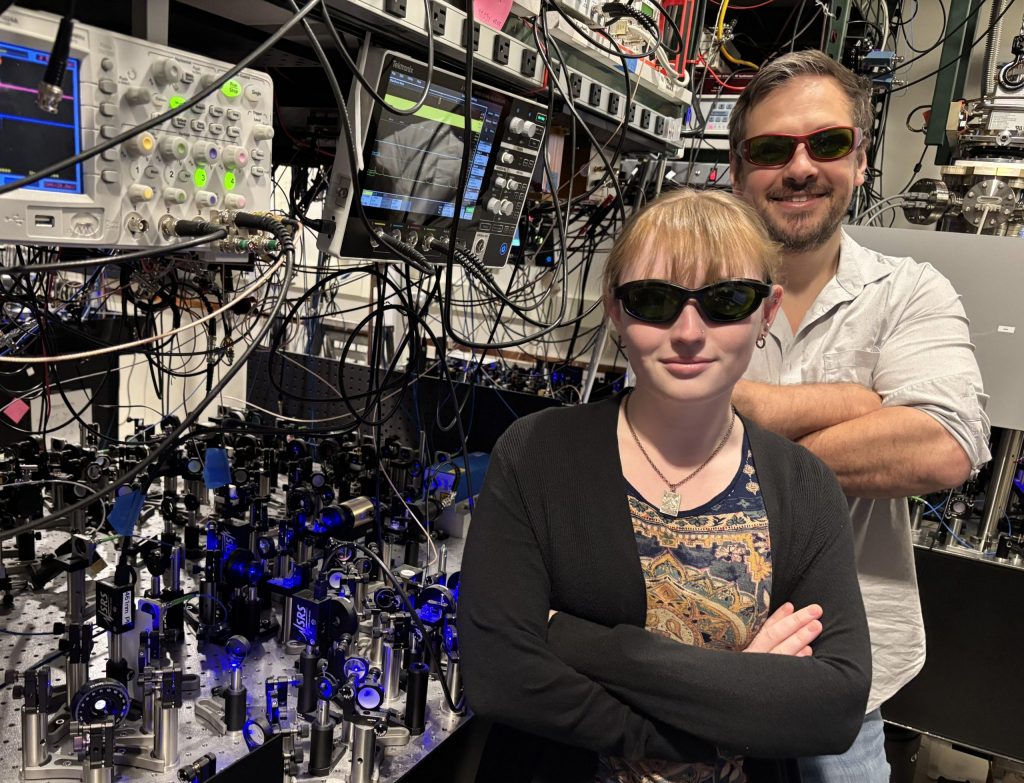
Fermilab and MIT Put Quantum Computer Controls Inside the Cryostat — A Breakthrough for Scaling Ion Traps
By operating control electronics at near-absolute-zero temperatures alongside the trapped ions themselves, researchers from Fermilab and MIT Lincoln Laboratory have demonstrated a path to millions of qubits that bypasses the wiring bottleneck that has stalled quantum computing scale-up.
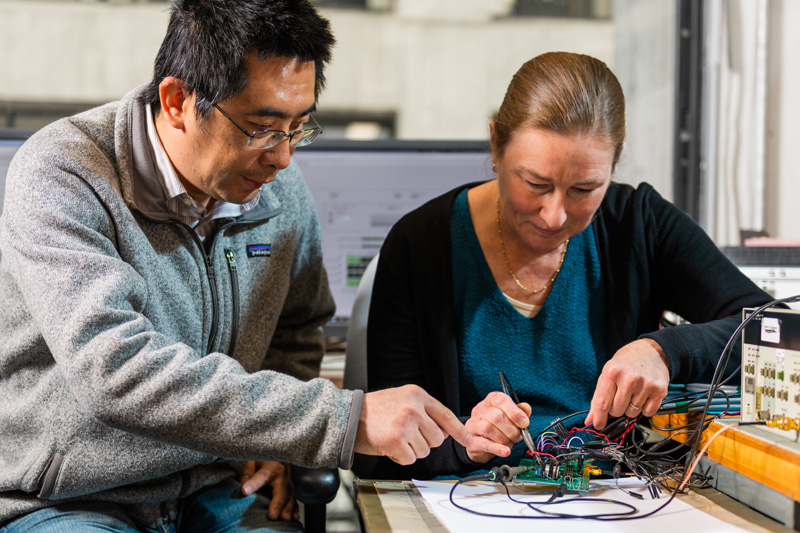
Physicists at Fermi National Accelerator Laboratory and MIT Lincoln Laboratory have demonstrated a critical step toward large-scale quantum computers by successfully controlling individual ions inside a cryogenic trap using specialized electronics built to function at extreme cold — a proof-of-principle experiment the team says could substantially accelerate the timeline for building quantum machines capable of solving problems that stump classical supercomputers.
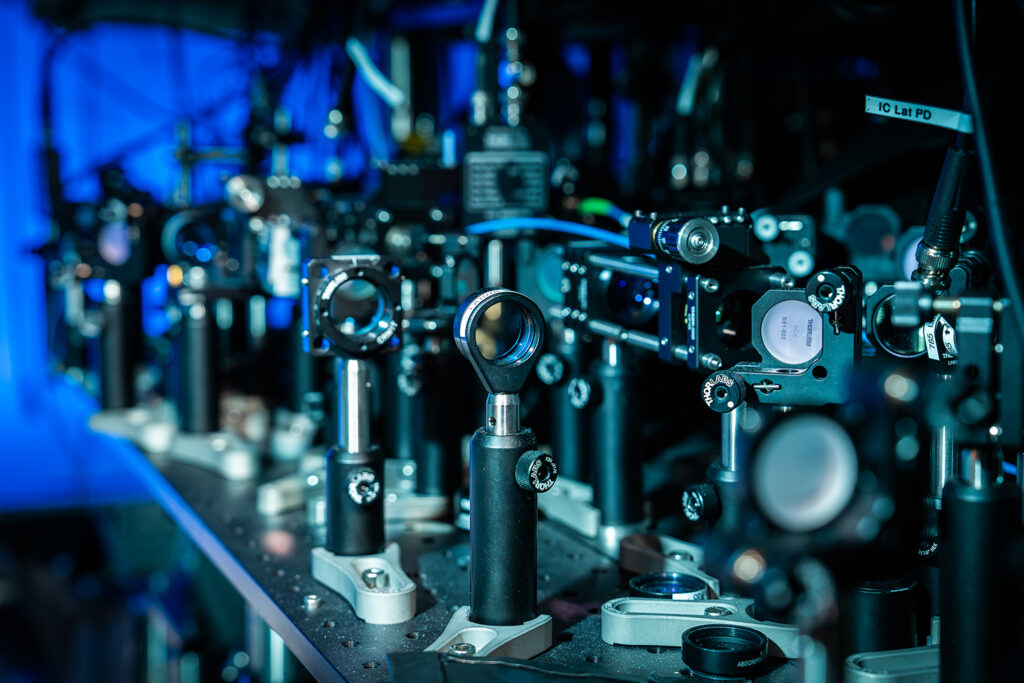
Ion traps are among the most promising platforms for quantum computing. They confine individual charged atoms — ions — in electromagnetic fields, manipulating them with precisely tuned laser pulses to perform quantum logic operations. Ion qubits maintain their delicate quantum states for longer than many competing technologies, and several companies including IonQ and Quantinuum have demonstrated some of the most accurate quantum gate operations ever recorded using this architecture. The central obstacle to scaling these systems from tens of qubits to the millions required for fault-tolerant quantum computing is wiring: as more qubits are added, the infrastructure of electrodes, laser beams, and control connections threading between room-temperature electronics and the cryogenic ion trap becomes exponentially more complex and unwieldy.
The Fermilab-MIT breakthrough addresses this scaling bottleneck head-on. The team built low-power cryoelectronics — specialized circuits designed to operate at temperatures mere fractions of a degree above absolute zero — and integrated them directly into MIT Lincoln Laboratory's ion-trap chip, replacing several categories of external room-temperature control lines. By demonstrating that these cryogenic circuits could reliably move individual ions to specified positions, hold them there, and accurately characterize electronic noise effects, the researchers showed it is possible to embed sophisticated quantum control logic inside the cold chamber rather than routing it from outside through long, thermally-leaky cables. "By showing that low-power cryoelectronics can work inside ion-trap systems, this approach may be able to accelerate the timeline for scaling quantum computers," said Farah Fahim, a physicist in Fermilab's Microelectronics Division who co-led the project. The full experimental results are published in a peer-reviewed journal.
The collaboration emerged from two US Department of Energy National Quantum Information Science Research Centers: the Quantum Science Center, headquartered at Oak Ridge National Laboratory, and the Quantum Systems Accelerator, headquartered at Lawrence Berkeley National Laboratory. Both centers were established under the 2018 National Quantum Initiative Act, which committed approximately $1.2 billion to quantum research infrastructure over five years. The Fermilab-MIT project represents a flagship demonstration of cross-institutional collaboration that the initiative was designed to catalyze, combining Fermilab's decade-long expertise in cryogenic electronics for particle physics experiments with MIT Lincoln Laboratory's world-leading ion-trap fabrication capabilities.
The next phase of the project will focus on directly integrating the cryoelectronics onto the same chip as the ion-trap electrodes — a tighter coupling that would reduce signal latency and allow a single chip to support tens of thousands of independently controlled electrodes. That electrode count is the key metric: existing commercial ion-trap quantum computers operate with fewer than 100 high-fidelity qubits, while the millions of fault-tolerant logical qubits needed to run algorithms that outperform classical systems will require an entirely new fabrication paradigm. By demonstrating that cryoelectronics and ion traps can share a cold, compact environment without interference, the Fermilab-MIT team has established a plausible engineering path toward that goal. Researchers at DOE's national laboratories emphasize that the breakthrough is a platform result — proving the concept works — rather than a commercial product. But in a field where the main obstacles have historically been physics rather than engineering, validating a new fabrication strategy represents a milestone that multiple quantum computing companies have said they are watching closely.