Blue Origin's Rocket Blew Up in Florida. Microphones 1,700 Kilometers Away Heard It
Sandia National Laboratories stitched together 36 infrasound stations and put the New Glenn explosion at 0.131 kilotons of TNT — a few percent of the propellant's chemical energy.

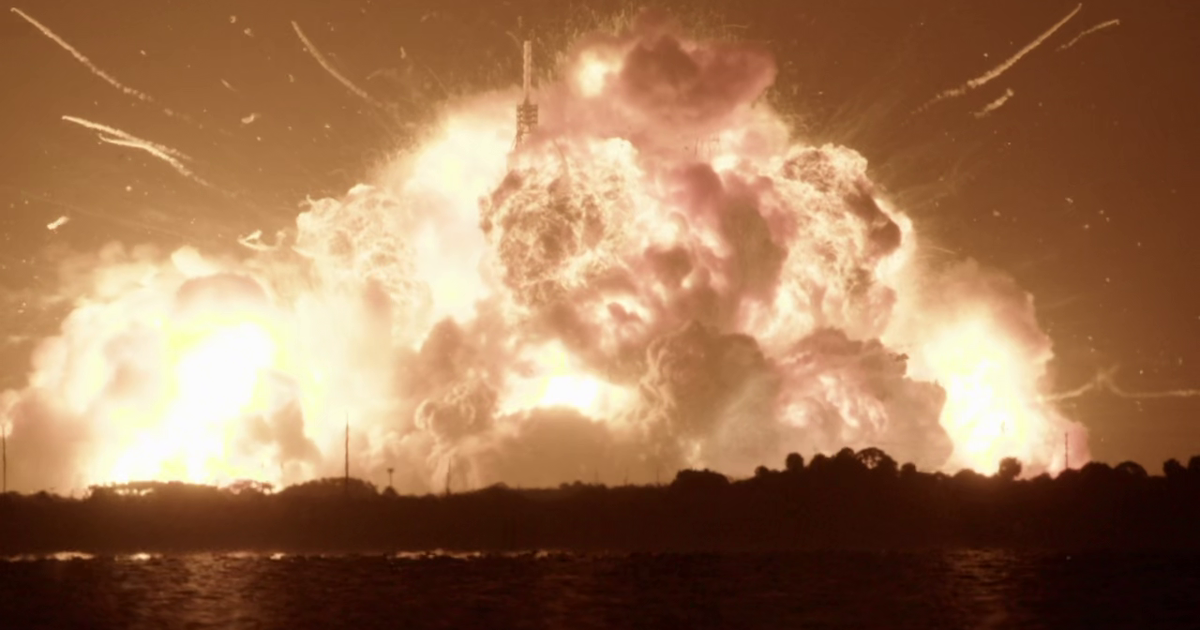
When Blue Origin's New Glenn rocket exploded at Launch Complex 36 at Cape Canaveral Space Force Station in May, the fireball was the part everybody saw. The part nobody saw traveled outward at the speed of sound in frequencies too low for human ears, and it kept going for more than a thousand miles.
Elizabeth Silber and Logan Scamfer of Sandia National Laboratories have now published an analysis of that signal in The Seismic Record, reconstructing the blast from 36 broadband microbarometer stations — instruments that measure minute pressure fluctuations in the atmosphere. The most distant station to register the event sat about 1,700 kilometers, or roughly 1,060 miles, from the pad. From the waveforms the pair put the explosive yield at approximately 0.131 kilotons of TNT equivalent.
That number is the interesting part, because it is small. Depending on how full the tanks were at the moment of failure, the blast converted only 3% to 4% of the propellant's available chemical energy into a rapid pressure pulse — or about 6% if the tanks were half empty. The rest burned, but it burned too slowly to contribute to the shock.
"In a large propellant accident, the fuel and oxidizer do not necessarily mix and react all at once," Silber said. The observation matches decades of controlled liquid-propellant tests, where engineers have repeatedly found that a catastrophic tank failure behaves much less like a bomb than the total energy inventory would suggest. Fuel and oxidizer have to find each other and mix at the molecular level to detonate, and in a collapsing vehicle most of them simply do not get the chance.
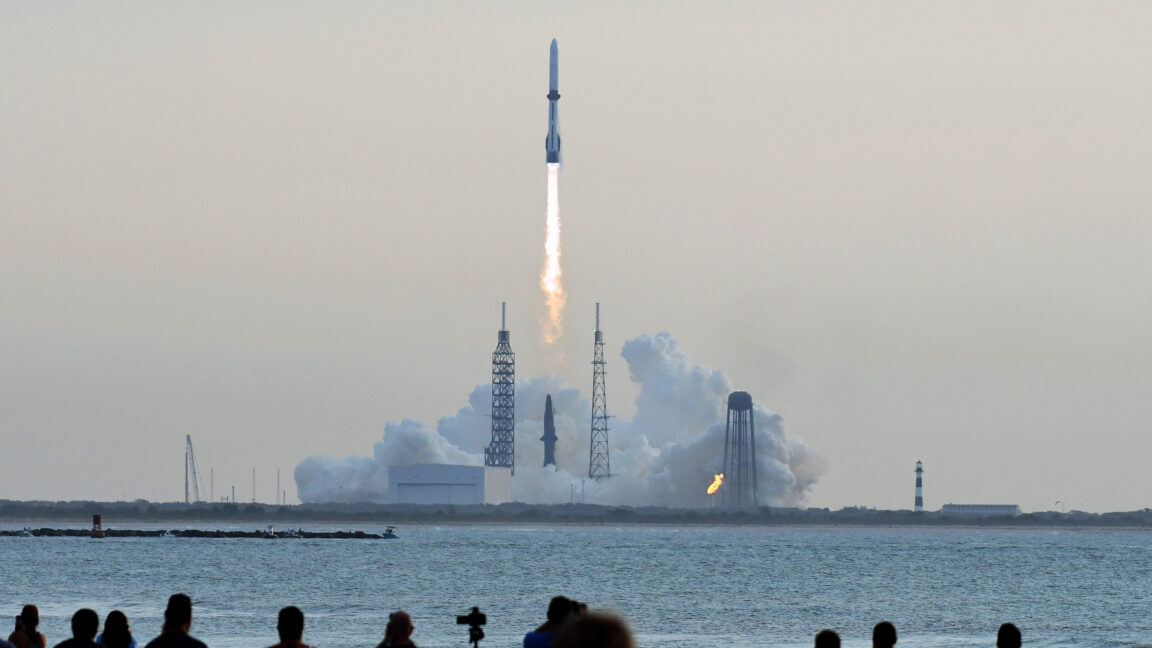
The measurement fills a specific gap. New Glenn burns liquid methane with liquid oxygen, a combination that has gone from exotic to standard in a decade — SpaceX's Starship, ULA's Vulcan and several Chinese heavy-lift vehicles all use variants of it — and there has been almost no observational data on what a methalox explosion sounds like at long range. Kerosene and hydrogen accidents have been studied since the Apollo era. Methane has not.
Infrasound monitoring exists in the first place because of nuclear test verification: the International Monitoring System operated under the Comprehensive Nuclear-Test-Ban Treaty maintains a global network of these sensors precisely because low-frequency sound crosses oceans. Volcanologists, meteor scientists and now launch-range engineers have inherited the infrastructure. What the Sandia work demonstrates is that the network can characterize a launch anomaly independently — without range telemetry, without video, without cooperation from the operator — and put a number on how much energy actually came out.
For a launch industry running more vehicles from more pads every year, that is a useful capability to have sitting in the background. It also gives accident investigators a physical yardstick that does not depend on anyone's account of what happened.